View Charts
Two Cent Pieces (1864-1873)
The United States Mint produced the Two Cent Piece from 1864 to 1873. The coin was manufactured primarily for circulation purposes, but the 1973 releases were struck solely for collectors. These coins, designed by James B Longacre, were composed of 95% Copper and 5% Tin and Zinc.
Two Cent Piece History
During the Civil War, gold and silver coins were subject to hoarding due to their intrinsic value, leaving a hole in circulating currency. On October 1, 1863, Mint Director James Pollock submitted his annual report which observed that the privately issued ‘Patriotic’ and merchant tokens that circulated during the Civil War were encroaching on the US Mint’s primary function. In March 1864, Pollock wrote to Treasury Secretary Salmon P. Chase, warning him that the Mint’s supply of nickel was running dangerously low, while the need and demand for cents were at an all-time high. To maintain the government's authority for circulating currency, the US Mint started churning out cheaper bronze-cent and two-cent pieces.
It is likely, according to numismatist Neil Carothers, that the two-cent piece was suggested in order to get as much small change into circulation in as little time possible. This was not a difficult task, as the Mint could strike a two-cent coin just as easily as a one-cent coin.
Following the end of the Civil War, people stopped hoarding as they did during wartime. However, gold and silver coins took a while to return to circulation. During this time, nickel-based three and five-cent coins were introduced, causing the demand for the two-cent pieces to fall dramatically. Mintages decreased each year until 1873 when only about 1,100 collectors' two-cent pieces were struck, and none were minted for circulation. 1873 marked the final year for the production of the Two Cent Piece.
Two Cent Piece Design
The obverse of the Two Cent Pieces features an escutcheon (shield) as a sign of strength and self-protection through unity. The upper half of the shield represents Congress, while the 13 vertical stripes beneath it symbolize the states. Laurel branches surround the shield, while a banner is displayed above it. The banner showcases the motto “IN GOD WE TRUST”.
Interestingly, this was the very first coin to have the phrase “IN GOD WE TRUST” inscribed on its surface. This feat was achieved through the initial efforts of Reverend Mark R. Watkinson of Ridleyville, Pennsylvania, and subsequent actions taken by Salmon Chase and James Pollock. The release of Longacre’s Two Cent Coin popularized the motto, and in March 1865 Congress passed legislation that ordered its future use on all US coins that could fit it.
In 1864, two types of Two Cent Pieces were produced: Large Motto and Small Motto. The Small Motto version is worth significantly more than the Large Motto, although both are desirable collectibles.
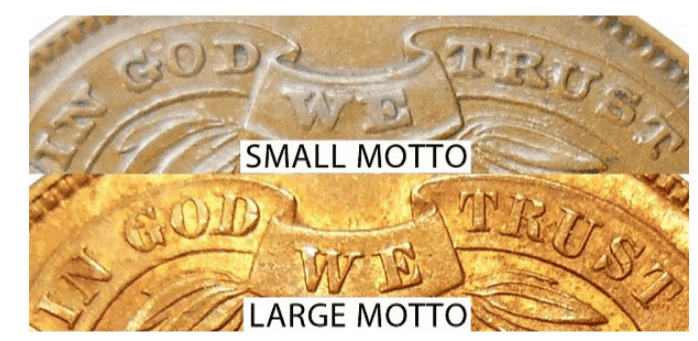
Image source: https://www.usacoinbook.com
From 1865 until 1872, only one type of the Two Cent Piece was struck. In 1873, the same design was used in two variations, Closed 3 (Proof only) and Open 3 (restrike).
The 1873 Two Cent Coins were only struck for collectors and were not circulated as tender.
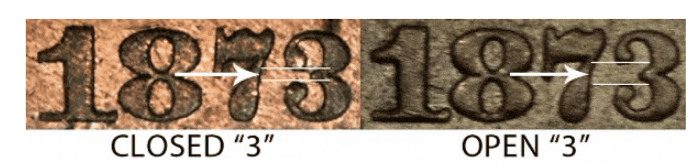
Image source: https://www.usacoinbook.com
Two Cent Piece Value
On average, Two Cent Pieces are a fairly valuable collector item. They generally range from $20-500, depending on their condition. However, there are a few varieties that stand out due to their rarity and/or low mintage.
1864 Two Cent Piece: Small Motto
Value: Between $230 and $19,900, depending on condition
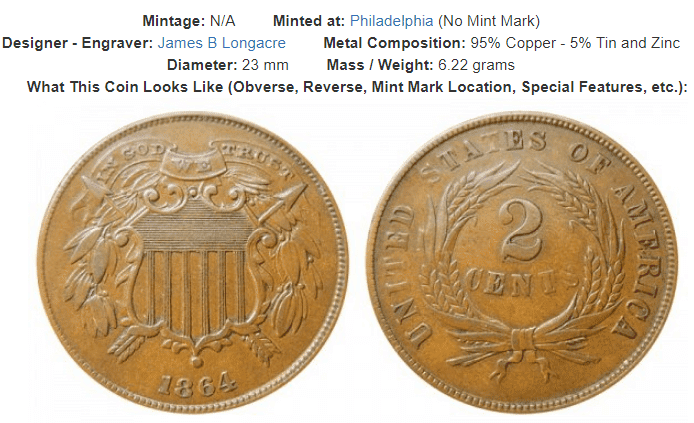
Image source: https://www.usacoinbook.com
1867 Two Cent Piece: Doubled Die
Value: Between $100 and $2,900, depending on condition
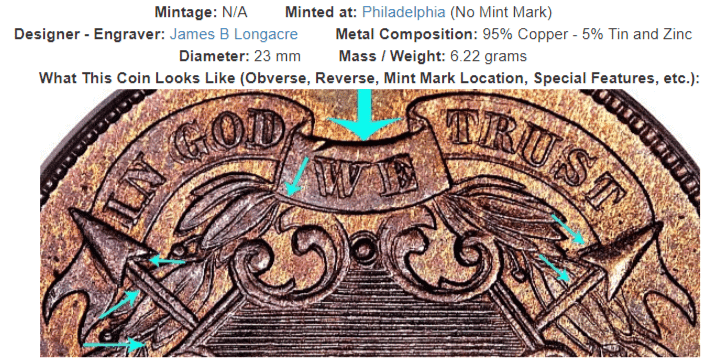
Image source: https://www.usacoinbook.com
1873 Two Cent Piece: Closed 3 - Proof
Value: Between $1,000 and $3,400, depending on condition
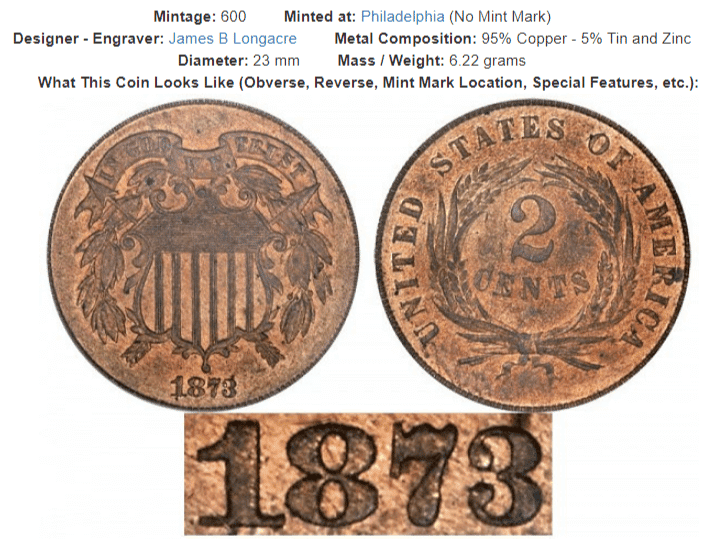
Image source: https://www.usacoinbook.com
1873 Two Cent Piece: Open 3 - Restrike
Value: Between $1,000 and $3,300, depending on condition
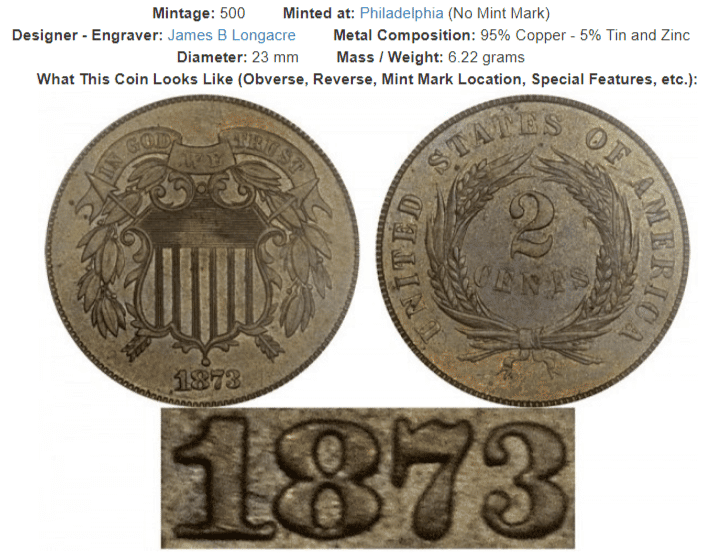
Image source: https://www.usacoinbook.com
In order to accurately determine the condition and grade of your Two Cent Piece, it is highly recommended to consult a numismatic professional. However, it is possible to gauge these factors on your own. One simple method to ascertain the condition of your Two Cent Piece is to examine the lettering in the coin’s “IN GOD WE TRUST” motto. The clearer and crisper the letters are, the more likely the value of the coin would be higher.
Collectors should also check the entire surface of the coin for any signs of wear and tear. Coins that are sent to professional grading companies such as PCGS or NGC may garner higher premiums if they receive a decent grade. Most Two Cent Pieces that earn a grade of EF (Extremely Fine) or higher can be sold for at least $50-$60 dollars. If you find one of these Two Cent Pieces in your possession, be sure to consult a professional to ensure you receive the highest quote possible.