View Charts
BUST HALF DOLLAR
The Bust Half Dollar was the initial rendition of the half-dollar coin. Minted from 1794 to 1839, these Bust Half Dollars were highly-sought while in circulation and they remain a collector's favorite today. The increased scarcity of Bust Half Dollars makes them a valuable addition to any precious metals portfolio.
DESIGN HISTORY
Flowing Hair Half Dollar (1794-1795)
Manufactured from 1794-1795 this coin was struck because Congress wanted coinage that would represent liberty. Designed by Robert Scot, the US Mint’s chief engraver at the time, this coin was introduced during a time in history when the Union was changing, as was this coin’s design. Due to the initial, simple techniques used to strike this coin, they tend to age unevenly, making it difficult for modern-day numismatists to grade. The obverse depicts Lady Liberty with hair flowing behind her. She is surrounded by stars and the inscription “LIBERTY” and the year of mintage. The reverse showcases an eagle with wings outstretched surrounded by the following inscription: “UNITED STATES OF AMERICA”.
FLOWING HAIR HALF DOLLAR
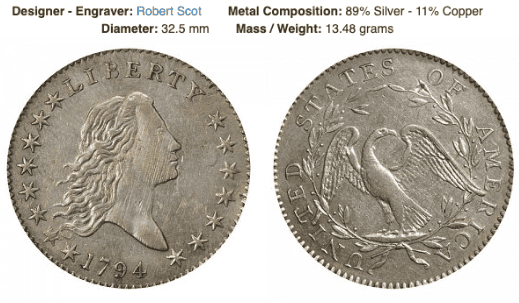
Image source: https://www.usacoinbook.com
DRAPED BUST HALF DOLLAR
The Draped Bust Half Dollar was minted beginning in 1796. At first, the reverse featured a small depiction of the American Eagle within laurel branches, with the inscription “UNITED STATES OF AMERICA”. This version of the Draped Bust half dollar is extremely rare as it was only minted for two years. The design was then changed to a heraldic eagle from 1801 until 1807. Because the Bust Half Dollar was manufactured using the same primitive technology as the Flowing Hair Half Dollar, they are also difficult to find in good condition. The obverse of the coins depicts a draped Lady Liberty surrounded by stars. The inscriptions include the word “LIBERTY” and the year of issue.
Draped Bust - Small Eagle Reverse (1796-1797)
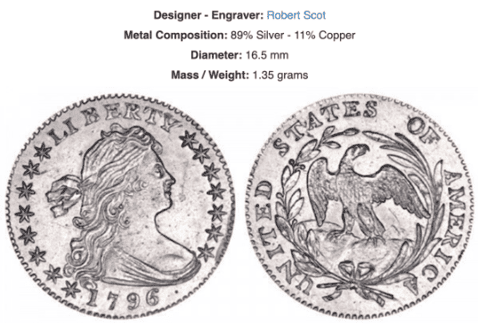
Image source: https://www.usacoinbook.com
Draped Bust - Heraldic Eagle Reverse (1800-1807)
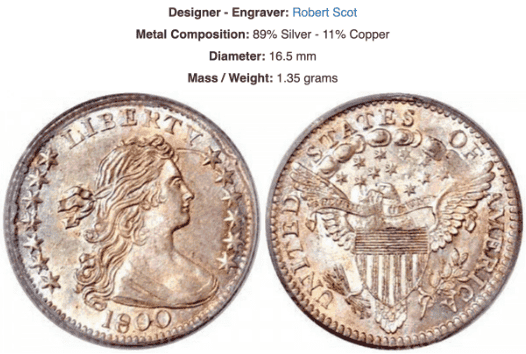
Image source: https://www.usacoinbook.com
CAPPED BUST HALF DOLLAR
Popular among investors throughout the years, the Capped Bust Half Dollar design was first struck in 1807. The first version of the Capped Bust was minted from 1807 until 1836 using a screw press, giving it a lettered edge. The next version of the coin was manufactured from 1836 until 1839, using a steam press. This tool was a technological advancement in terms of mass production capabilities however, the steam press made it more difficult to include individual details in the coin’s design. The obverse of these coins showcases a capped Lady Liberty facing left, surrounded by stars and the year of mintage. The word “LIBERTY” is featured on the cap. The reverse boasts a heraldic eagle with the inscriptions: “UNITED STATED OF AMERICA”, and the denomination. The denomination of 50 cents is presented differently, which you can see pictured below. Additionally, the motto “E PLURIBUS UNUM,” is included only on the Lettered Edge variation.
Lettered Edge & “50 C.” on the reverse (1807 - 1836)
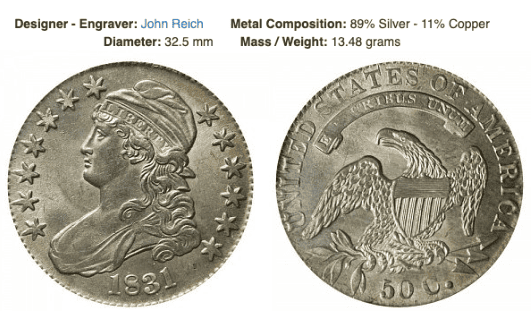
Image source: https://www.usacoinbook.com
Reeded Edge & “50 CENTS” on the reverse (1836-1837)
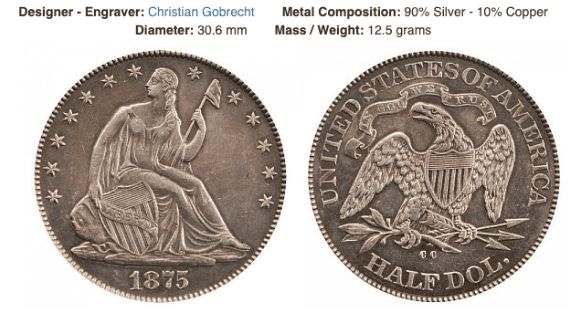
Image source: https://www.usacoinbook.com
Reeded Edge & “HALF DOL.” on reverse (1838 - 1839)
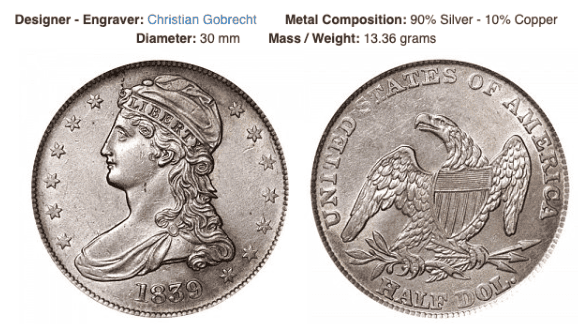
Image source: https://www.usacoinbook.com
PRICING
You might be wondering what the price point is for a Bust Half Dollar. The value of these historic coins depends on the year of mintage as well as the condition. The Bust Half Dollars struck earlier will be more costly due to their scarcity. You can expect prices to range from as low as $40 and hit as high as $30,000. Graded coins will also contribute to a higher price point. Investors of all levels will appreciate the Bust Half Dollar coins.
CONCLUSION
These coins represent a significant moment in the United States history, making them a highly-sought collector’s item. If you think you own a rare coin, be sure to get it verified by a trusted precious metals dealer. Bullion Exchanges is available for any questions during our normal busines hours.