View Charts
Buffalo Nickel Value and History (1913–1938)
Why the Buffalo Nickel Remains One of the Most Collected U.S. Coins
The Buffalo Nickel, also known as the Indian Head Nickel, is one of the most iconic and widely collected coins in American numismatics. Struck from 1913 to 1938, this five-cent piece is valued not for its metal content, but for its rarity, design, and historical significance. Today, collectors frequently search for Buffalo Nickel values to determine whether their coin is a common circulation piece or a rare, high-value variety.
While many Buffalo Nickels are affordable and accessible, certain key dates, mint errors, and high-grade examples can be worth thousands—or even hundreds of thousands—of dollars. Understanding what makes a Buffalo Nickel valuable is essential for collectors looking to identify rare coins and build meaningful collections.
What Is a Buffalo Nickel Worth Today?
In most cases, a Buffalo Nickel is worth between $2 and $30 in circulated condition, depending on date and wear. Uncirculated examples can range from $75 to $300+, while rare key dates and error coins can exceed $10,000 to $300,000+ at auction.
Unlike silver coins, Buffalo Nickels contain no precious metal value, meaning their worth is entirely driven by:
-
Rarity and mintage
-
Condition (grade)
-
Mint errors and varieties
-
Collector demand
Some of the most valuable Buffalo Nickels include overdates, doubled dies, and famous mint errors like the 1937-D 3-Legged Nickel.
Buffalo Nickel History: A Turning Point in U.S. Coin Design
The Buffalo Nickel was introduced in 1913, replacing the Liberty Head (V) Nickel as part of a broader movement to improve the artistic quality of U.S. coinage. Designed by renowned sculptor James Earle Fraser, the coin reflected a distinctly American identity rooted in Native American heritage and the frontier spirit.
Fraser’s design was selected over other concepts due to its originality and cultural significance. The obverse features a composite portrait of Native American leaders, while the reverse depicts an American bison—symbolizing strength and resilience.
The coin remained in production for 25 years before being replaced by the Jefferson Nickel in 1938, primarily due to striking difficulties and rapid wear of design details.
Design and Types: Type 1 vs Type 2 Buffalo Nickels
Buffalo Nickels were produced in two main design types in 1913:
Type 1 (Mound Design)
The buffalo stands on a raised mound, with the denomination “FIVE CENTS” positioned on the mound itself.
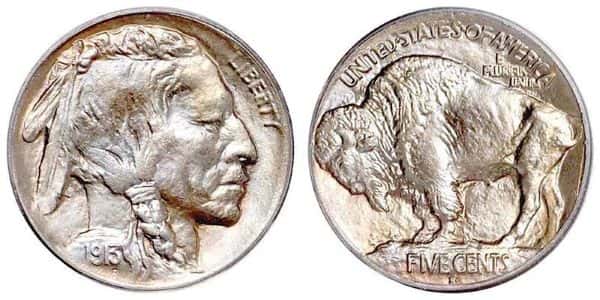
1913 Buffalo Nickel Type 1 (Mound Design) — Note the raised mound beneath the buffalo.
Type 2 (Flat Ground Design)
Later in 1913, the design was modified to place the buffalo on a flat surface, improving durability and readability.
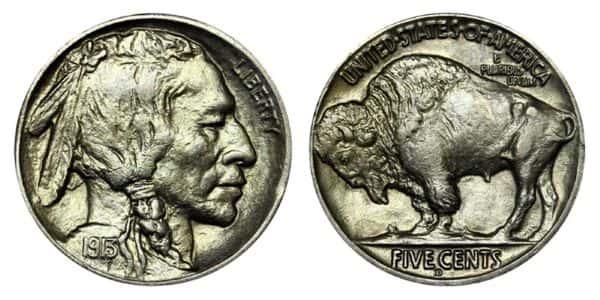
1913-D Buffalo Nickel Type 2 — Revised design with a flatter ground for improved wear resistance.
Key Dates and Rare Buffalo Nickel Varieties
While many Buffalo Nickels are common, certain dates and varieties are highly valuable due to rarity and collector demand.
1937-D 3-Legged Buffalo Nickel
One of the most famous mint errors in U.S. coinage, caused by over-polishing of a die.
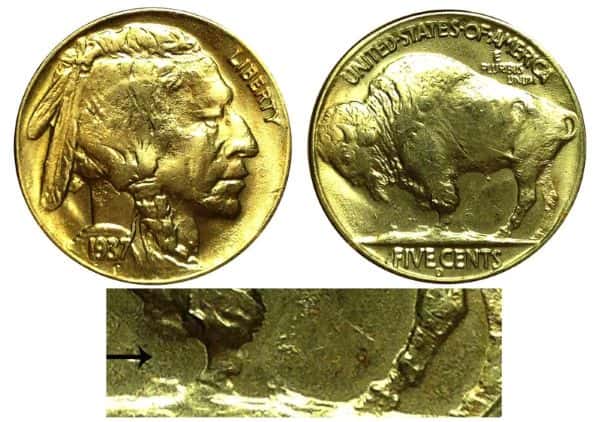
1937-D 3-Legged Buffalo Nickel — A famous mint error where one front leg is missing.
1918/7-D Overdate
A rare overdate error where a 1917 date was struck beneath a 1918.
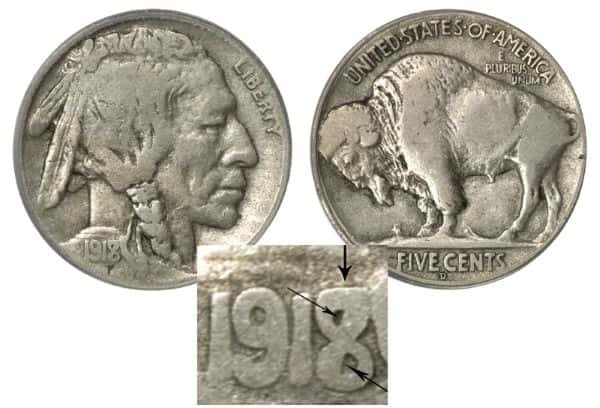
1918/7-D Buffalo Nickel — Overdate variety visible beneath the 1918 date.
1916 Doubled Die Obverse
Features strong doubling on the date and lettering, making it one of the most dramatic error coins in the series.
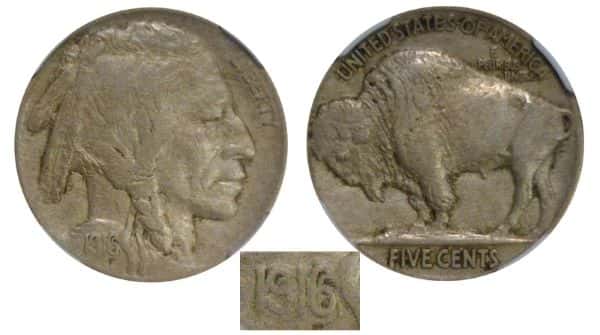
1916 Doubled Die Buffalo Nickel — Noticeable doubling on the date and inscriptions.
Buffalo Nickel Value Guide (By Type and Rarity)
Common Buffalo Nickel Values
-
Circulated: $2 – $30
-
Uncirculated: $75 – $300+
Key Date and Error Values
-
1918/7-D Overdate: $50,000 – $350,000+
-
1916 Doubled Die: $20,000 – $300,000+
-
1937-D 3-Legged: $500 – $125,000+
-
1926-S: $20 – $250,000+
Note: Values vary significantly based on grade, certification (PCGS/NGC), and market demand.
How to Identify a Valuable Buffalo Nickel
Collectors should look for several key indicators when evaluating Buffalo Nickels:
-
Date visibility: Worn dates significantly reduce value
-
Mint mark: Look for “D” (Denver) or “S” (San Francisco)
-
Strike quality: Full horn detail on the buffalo increases value
-
Errors and varieties: Overdates, doubled dies, and missing features
-
Condition: Higher-grade coins command strong premiums
Using a digital scale, magnification, and proper lighting can help identify rare varieties more accurately.
Collecting Buffalo Nickels: Tips for Beginners
Buffalo Nickels remain one of the most approachable series for new collectors. Their wide availability and range of values make them ideal for building a collection over time.
-
Start with common dates in higher grades
-
Focus on key dates as long-term additions
-
Purchase certified coins for authenticity
-
Avoid cleaned or damaged coins
-
Store coins in protective holders
The Lasting Legacy of the Buffalo Nickel
The Buffalo Nickel stands as a symbol of American heritage, combining artistic excellence with enduring collector appeal. From its depiction of Native American culture to its iconic bison reverse, the coin represents a uniquely American narrative that continues to resonate with collectors today.
While most examples remain affordable, the potential to discover rare and valuable varieties keeps interest in the series strong. Whether you are searching for a key date or building a complete collection, Buffalo Nickels offer a rewarding entry point into the world of rare U.S. coins.
Explore Buffalo Nickels and other collectible coins at Bullion Exchanges, where numismatic expertise meets trusted precious metals investing.
Image source: USA Coin Book