View Charts
Why Buy Palladium? 5 Smart Reasons to Consider It
 0
0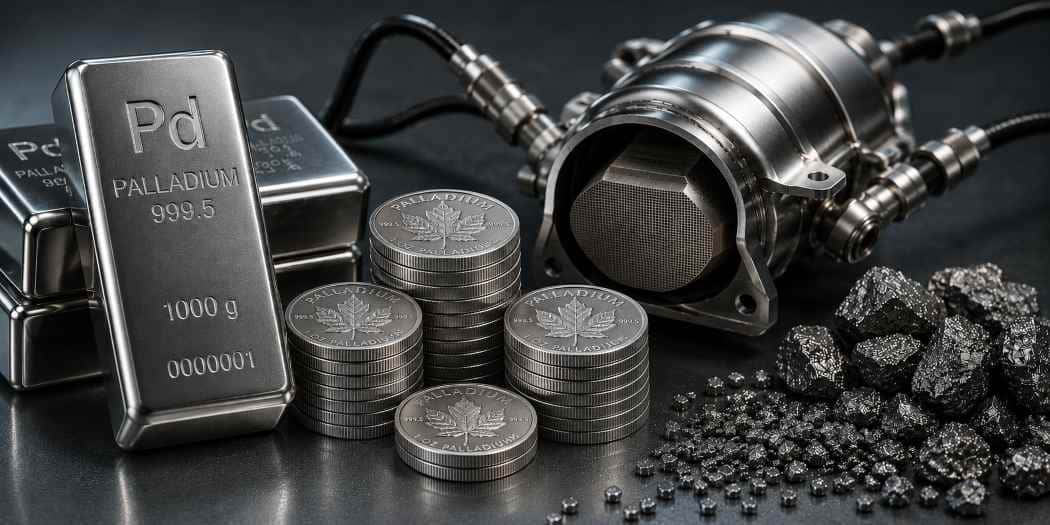
Palladium’s Market Role Is Changing, but Its Investment Case Remains Important
Palladium has become one of the more debated precious metals because its investment story sits at the intersection of scarcity, industrial demand, automotive technology, and market volatility. For years, palladium prices were driven heavily by gasoline vehicle demand, where the metal plays a critical role in catalytic converters that help reduce harmful emissions. That connection remains central, but the market is now more complex as investors weigh electric vehicle adoption, hybrid vehicle demand, emissions regulations, recycling trends, and concentrated mine supply.
This is why the question of why buy palladium deserves a more nuanced answer than simply calling it rare or industrial. Palladium is not gold, and it does not behave exactly like silver or platinum. It has a smaller market, fewer primary investment products, and stronger exposure to automotive manufacturing cycles. Those traits can increase risk, but they can also create opportunity when supply tightens, industrial demand surprises, or investor sentiment shifts quickly. For buyers who understand those dynamics, palladium can serve as a tactical precious metals allocation with distinct advantages.
1. Palladium Offers Scarcity That Few Industrial Metals Can Match
Palladium is part of the platinum group metals, a family of rare metals known for exceptional catalytic properties, durability, and resistance to corrosion. Unlike gold and silver, palladium is not mined in large quantities as a standalone primary product in many regions. Much of the world’s supply comes as a byproduct of mining for nickel, copper, and platinum group metals, which makes production less responsive to price increases.
That supply structure matters for investors because higher palladium prices do not always lead to quick new production. If demand improves, mining companies cannot simply bring large amounts of new palladium supply online the way producers of more abundant commodities might. New mine development is expensive, slow, and vulnerable to permitting delays, labor issues, energy costs, and geopolitical risk.
Scarcity alone does not guarantee price appreciation, but it can amplify price moves when demand strengthens or supply disruptions emerge. Palladium’s relatively small market size also means that changes in buying interest, industrial restocking, or investor positioning can have a larger effect than they might in deeper markets such as gold. For investors seeking exposure to a rare metal with genuine industrial importance, palladium’s constrained supply base remains one of its strongest long-term attributes.
2. Automotive Demand Still Gives Palladium a Powerful Industrial Base
Palladium’s biggest source of demand comes from the automotive industry, especially gasoline-powered vehicles that use catalytic converters to reduce emissions. This demand has been challenged by the long-term growth of electric vehicles, but the transition is not moving in a straight line. Hybrid vehicles, plug-in hybrids, and gasoline models remain important in many markets, particularly where charging infrastructure, affordability, and consumer preferences slow full EV adoption.
That creates a more balanced picture than the simple view that electric vehicles will immediately erase palladium demand. Battery electric vehicles do not use traditional catalytic converters, but hybrids and gasoline vehicles still do. At the same time, emissions standards remain strict in many major economies, requiring automakers to maintain high-performance catalyst systems in vehicles that continue using internal combustion engines.
This automotive link makes palladium different from gold, which is primarily monetary, and silver, which has a broader industrial footprint across solar, electronics, and investment demand. Palladium is more concentrated, but that concentration can be useful for investors who want targeted exposure to vehicle production, emissions regulations, and catalyst technology. When auto demand is stronger than expected or hybrid sales remain resilient, palladium can benefit from renewed attention.
3. Supply Concentration Creates a Built-In Risk Premium
One of palladium’s most important investment characteristics is where it comes from. Global supply is heavily concentrated in a small number of producing regions, especially Russia and South Africa, with additional output from countries such as Canada and the United States. This concentration gives palladium a geopolitical and operational risk profile that differs from more widely mined metals.
Russia’s role in palladium supply has drawn heightened attention in recent years because sanctions, trade restrictions, logistics challenges, and geopolitical tensions can affect how investors price supply reliability. South Africa also plays a major role, but the country’s mining sector has faced recurring concerns involving electricity availability, labor negotiations, infrastructure constraints, and production costs.
For investors, this does not mean palladium prices will always rise during geopolitical stress. However, it does mean the market often carries a supply-risk premium. When a large share of global output depends on a limited number of regions, any disruption can have an outsized impact on sentiment. This is one reason palladium can move sharply when news affects mining operations, sanctions policy, energy supply, or industrial logistics.
4. Palladium Can Add Diversification Beyond Gold and Silver
Investors often begin with gold and silver because those metals are more familiar, more liquid, and more widely discussed. Palladium offers a different type of precious metals exposure. Its price behavior is shaped less by traditional safe-haven demand and more by industrial use, supply constraints, automotive trends, and platinum group metal substitution.
That distinction can make palladium useful for diversification. Gold is often used as a hedge against inflation, currency weakness, financial stress, and central bank policy uncertainty. Silver combines monetary demand with industrial demand from solar energy, electronics, and manufacturing. Platinum has exposure to automotive catalysts, jewelry, chemical uses, and emerging hydrogen applications. Palladium, by contrast, is more tightly connected to gasoline vehicle catalyst demand and concentrated supply risk.
A diversified precious metals strategy does not require every metal to perform the same role. In fact, the value of diversification comes from owning assets that respond differently to market conditions. Palladium may underperform during periods when auto demand weakens or EV adoption accelerates, but it can outperform when supply risks rise, catalyst demand proves stronger than expected, or investors rotate into smaller precious metals markets.
5. Volatility Can Create Tactical Buying Opportunities
Palladium is not usually considered a quiet, slow-moving metal. Its market has a history of sharp rallies and steep pullbacks, partly because of its smaller size and concentrated demand profile. This volatility can be uncomfortable for investors who expect gold-like stability, but it can also create tactical opportunities for those who understand the risks.
When sentiment turns negative, palladium can fall quickly as traders focus on electric vehicle adoption, substitution by platinum, weaker auto production, or rising recycled supply. Yet the same market can rebound strongly if those fears become overextended or if supply problems emerge. This creates a metal that may appeal to investors with a higher tolerance for price swings and a willingness to take a longer view on industrial demand cycles.
Physical palladium buyers should also understand the difference between bullion value and numismatic value. Palladium bars and widely traded bullion coins are typically valued close to metal content plus premium, while collectible or limited-mintage palladium coins may carry additional value based on rarity, condition, design, and demand from collectors. Investors focused mainly on metal exposure often prioritize recognized bullion products, while collectors may be more interested in mintage, certification, and long-term numismatic appeal.
Palladium’s Future Depends on Technology, Supply, and Investor Timing
Palladium’s outlook is not one-dimensional. The metal faces real challenges from electric vehicle adoption, recycling growth, and potential substitution in catalyst systems. At the same time, hybrid demand, gasoline vehicle production, strict emissions standards, geopolitical supply risk, and limited mine flexibility continue to support its relevance.
This balance makes palladium best understood as a specialized precious metal rather than a simple alternative to gold or silver. It may appeal to investors who want exposure to a rare industrial metal with a history of strong price movements, concentrated supply, and meaningful automotive demand. The key is recognizing that palladium’s opportunity comes with higher volatility and more direct exposure to industrial trends.
For buyers evaluating whether palladium belongs in a portfolio, the strongest case rests on scarcity, supply concentration, diversification, and the possibility that the market is underestimating ongoing catalyst demand. As the transportation sector evolves, palladium will remain tied to one of the most important questions in the metals market: how quickly the world transitions away from combustion engines, and how much demand remains during that transition.