View Charts

Why Are Precious Metals Falling as Middle East Tensions Rise?
 0
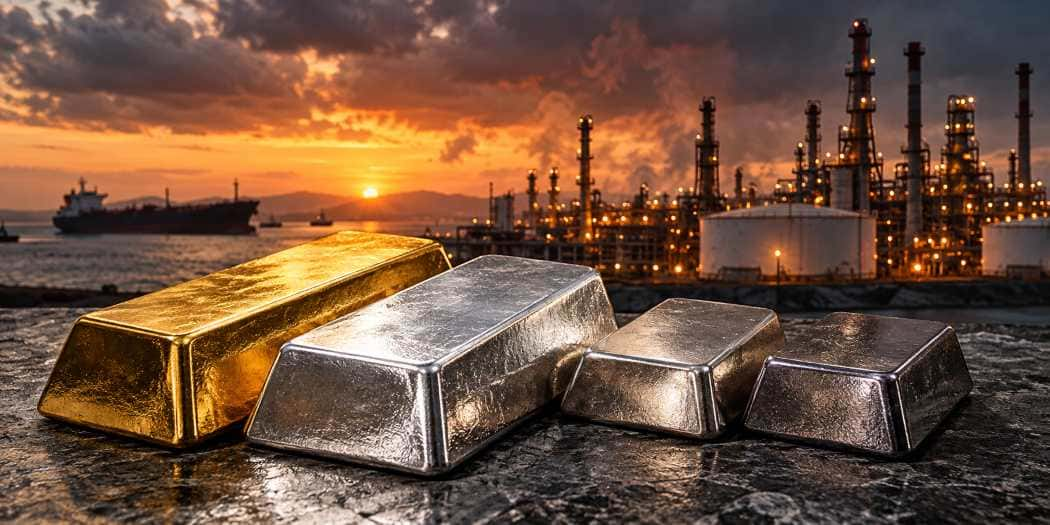
Why Is Geopolitical Uncertainty Pushing Gold and Silver Lower?
Gold, silver, platinum, and palladium are all retreating, even as renewed attacks on Saudi energy infrastructure heighten tensions in the Middle East. The reaction appears counterintuitive. Geopolitical threats often encourage investors to seek protection in precious metals, particularly gold. Yet the latest escalation presents another challenge for bullion: higher energy prices threaten to sustain inflation, potentially forcing central banks to maintain restrictive interest rates.
That conflict between safe-haven demand and monetary policy is central to the selloff. Gold is declining despite heightened uncertainty, silver is experiencing sharper losses, and platinum and palladium are also under pressure. The broad weakness suggests investors are reassessing economic conditions, although each metal faces distinct market forces.
The critical question is whether prolonged energy disruptions will reinforce expectations for higher interest rates, weaken industrial activity, or eventually generate enough financial uncertainty to revive demand for precious metals.
How Rising Oil Prices Are Changing the Inflation Outlook
Renewed attacks on Saudi energy infrastructure have raised concerns about the security of oil production and regional shipping routes. Even when facilities continue operating, the possibility of further disruptions can increase the risk premium embedded in crude prices. Traders must consider potential damage to production facilities, transportation networks, and energy supplies.
Brent crude has climbed above $110 per barrel amid the tensions, creating consequences beyond the energy industry. Higher petroleum prices can increase transportation, manufacturing, and distribution expenses, eventually feeding into consumer prices. If sustained, these pressures could make inflation more difficult for central banks to contain.
The recent oil-driven gold selloff identifies concerns about prolonged elevated interest rates as a significant source of pressure on bullion. Markets are treating the escalation partly as an inflation shock, rather than automatically rewarding traditional safe-haven assets.
The duration of the oil rally matters. A temporary disruption may have limited monetary-policy consequences, while persistent increases accompanied by supply-chain problems could influence inflation expectations for considerably longer.
Why Interest-Rate Expectations Can Overpower Safe-Haven Demand
Gold's reputation as an inflation hedge does not guarantee higher prices whenever inflation accelerates. Much depends on how policymakers respond.
When inflation remains elevated, central banks may keep borrowing costs high or consider additional tightening. That increases the appeal of interest-bearing alternatives, including government bonds, compared with bullion, which generates no income. Investors may consequently reduce precious-metals exposure even when geopolitical risks remain substantial.
Inflation-adjusted interest rates are particularly important. Rising inflation alone does not necessarily weaken gold; pressure can intensify when markets expect monetary policy to support higher real yields. Those expectations can influence prices before central banks announce any changes.
The Federal Reserve's official meeting calendar provides the schedule for upcoming policy decisions. Investors will be watching whether officials emphasize persistent inflation or growing evidence that restrictive borrowing costs are weakening economic activity.
The U.S. dollar adds another consideration. A stronger dollar can make dollar-denominated metals more expensive for international buyers, although its actual movement must be verified before attributing a particular selloff to currency strength.
Why Silver, Platinum, and Palladium Face Additional Pressure
Gold is primarily valued for its monetary, investment, and reserve-asset roles. Silver, platinum, and palladium have substantial industrial exposure, making their responses to an inflation shock more complicated.
Silver combines investment demand with applications in electronics, electrical infrastructure, solar technology, and manufacturing. Its comparatively volatile market can produce larger percentage swings than gold when traders rapidly adjust positions. Silver's sharper decline is consistent with that sensitivity, although it does not establish that widespread margin calls or forced liquidations are occurring.
Industrial demand provides longer-term context without guaranteeing immediate price support. The Silver Institute's World Silver Survey 2026 documents silver's extensive industrial applications, but consumption varies across sectors. Higher energy costs can increase manufacturing expenses and complicate demand expectations, adding to financial-market pressure.
Platinum faces a different combination of risks. Its applications include automotive emissions-control systems, chemical processing, petroleum refining, and other industrial activities. Expensive energy and restrictive financing conditions can pressure manufacturers, potentially affecting consumption. Supply concentration and mining economics remain important, but they do not insulate platinum from deteriorating economic expectations.
Palladium is particularly dependent on gasoline-vehicle catalytic converters. Expectations for vehicle production, automotive technology, and substitution between platinum-group metals can influence its price independently of gold. Higher borrowing costs may also affect vehicle affordability and manufacturers' investment plans.
The simultaneous declines therefore reflect overlapping pressures, not identical market conditions. Each metal has different demand characteristics, liquidity, and supply risks that can influence how far prices move.
What Could Change the Direction of Precious Metals?
The first development to watch is whether the energy shock intensifies or fades. Additional attacks on infrastructure, shipping disruptions, or deteriorating diplomatic conditions could sustain elevated crude prices. Evidence that facilities remain operational and supply routes are secure could ease inflation concerns, even without resolving the underlying conflict.
Interest-rate expectations provide the next test. If Treasury yields rise as markets anticipate prolonged restrictive monetary policy, bullion could remain under pressure. If economic growth weakens or policymakers become more concerned about recession risks, gold may regain support. Industrial metals could respond differently because weaker manufacturing activity can reduce consumption.
Relationships within the precious-metals complex also deserve attention. Investors can monitor gold spot prices alongside silver spot prices to determine whether silver continues underperforming or begins stabilizing. Persistent weakness in platinum and palladium would warrant closer examination of automotive and manufacturing expectations.
Physical bullion buyers should also distinguish spot-price movements from retail transaction costs. Dealer premiums, product availability, and resale spreads can change independently of the underlying metals. A lower spot price does not necessarily translate into an equivalent reduction in every bullion product's purchase price.
The Next Test: Inflation Shock or Economic Slowdown?
The current retreat exposes a difficult tradeoff. Geopolitical instability can increase demand for financial protection, but an accompanying energy shock may strengthen expectations for restrictive monetary policy. Which influence dominates depends on the duration and economic consequences of the disruption.
That balance could shift. Continued oil disruptions may initially reinforce inflation concerns, while a severe slowdown could redirect attention toward weaker growth, financial stress, and renewed safe-haven demand. Gold could benefit from that change even as industrial metals remain vulnerable to reduced manufacturing activity.
Investors should watch the durability of the oil rally, Treasury yields, dollar movements, Federal Reserve guidance, and whether silver and the platinum-group metals continue to underperform. Together, these indicators provide a more useful framework than assuming geopolitical tensions must automatically lift precious-metal prices.