View Charts

Why Higher Gold Prices Don't Quickly Increase Mine Production
 0
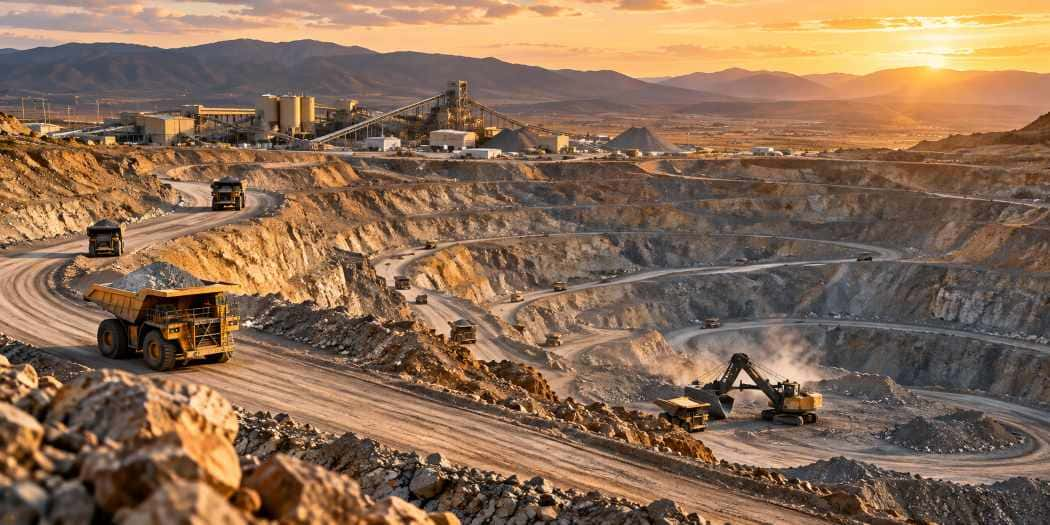
Gold Prices Rise Faster Than Mining Output
Gold prices can climb sharply without triggering a comparable increase in mine production. In 2025, the World Gold Council reported that the annual average gold price rose 44%, yet global mine output increased by only about 1%. The contrast reveals a fundamental difference between the financial market for gold and the industrial process required to produce it.
According to the World Gold Council's annual supply figures, mine production reached approximately 3,672 metric tonnes in 2025, compared with 3,650 tonnes in 2024. Although output reached a preliminary record, the increase was modest relative to the price movement. Higher prices can improve mining economics, encourage exploration, and extend the productive life of existing operations. They cannot immediately create new deposits, processing facilities, or infrastructure.
The explanation lies in decisions made years before gold reaches the market. Geological conditions, development costs, regulatory approvals, and operational capacity determine how quickly producers can respond to changing prices.
Finding Gold Is Only the Beginning
A commercially viable gold mine begins with a deposit that can be extracted profitably, not simply a geological discovery. Exploration companies must establish the deposit's size, depth, grade, and structure through drilling and technical analysis. Engineers then evaluate recovery rates, mining methods, processing requirements, and the cost of removing surrounding material.
A deposit may contain millions of ounces without supporting a profitable operation. Its economic potential depends on how much gold can actually be recovered and what extraction will cost. Higher prices can improve that calculation, but they cannot resolve geological uncertainty or eliminate the need for detailed feasibility studies.
The World Gold Council estimates that developing a gold mine typically takes 10 to 20 years from discovery to production. Many explored deposits never become operating mines. Even promising projects can require years of additional drilling, engineering, and investment before construction begins.
Rising prices can also make lower-grade deposits economically attractive. However, processing less concentrated ore often requires moving more rock to recover the same quantity of gold. A larger economically recoverable resource therefore does not necessarily translate into greater annual production.
Permitting, Financing, and Construction Create Long Delays
Once a deposit appears commercially viable, developers must navigate environmental assessments, land-use approvals, water requirements, and mine-closure obligations. Large projects may require extensive consultation with surrounding communities and Indigenous groups, along with infrastructure improvements that extend beyond the mine itself.
These requirements vary considerably by jurisdiction. Some projects advance relatively smoothly, while others face additional studies, legal challenges, or design changes. Strong gold prices may increase the incentive to proceed, but they do not automatically shorten regulatory timelines or resolve competing land-use concerns.
Financing adds another layer of complexity. Constructing a major gold mine can require substantial investment in roads, power systems, processing plants, equipment, and waste-management facilities. Much of that spending occurs before commercial production generates revenue, exposing developers to construction delays and changing economic conditions.
Mining companies therefore evaluate projects against long-term price assumptions rather than relying entirely on current market strength. A deposit that appears attractive during a price surge may become less compelling if construction costs increase, financing becomes expensive, or gold prices retreat before production begins.
These considerations help explain why companies do not immediately approve every available project when gold rises. A new mine represents a commitment lasting decades, and management must assess whether its economics can withstand unfavorable conditions throughout that period.
Existing Mines Cannot Simply Double Production
Operating mines can respond more quickly than undeveloped projects, but their flexibility is limited. Processing plants have designed capacities, mining equipment has physical constraints, and extraction must follow carefully planned sequences. Increasing output substantially may require new crushers, grinding circuits, ventilation systems, or additional permits.
Ore grades are particularly important. A mine can process more material yet recover fewer ounces if the average gold concentration declines. Companies may temporarily prioritize richer sections of a deposit, but doing so changes the timing of extraction and can affect future production.
Underground mines must develop tunnels, maintain ventilation, and secure working areas before reaching additional ore. Open-pit operations may need to remove large quantities of waste rock before accessing deeper mineralized zones. Neither process can accelerate indefinitely in response to stronger prices.
The United States illustrates the disconnect between market value and physical output. The USGS Mineral Commodity Summaries 2026 estimated domestic gold mine production at 160 tonnes in 2025, down from 163 tonnes in 2024. Although the figures do not establish a single cause for the decline, they demonstrate that production can fall during a period of substantially higher gold prices.
Equipment availability, labor requirements, maintenance schedules, and declining ore quality can further restrict output. Higher prices may improve a mine's profitability without changing these immediate operational realities.
Higher Prices Can Extend Mine Life Instead
One consequence of rising gold prices is often overlooked: Mining companies may choose to extract more of a deposit over time rather than maximize annual production. Material previously considered uneconomic can become profitable, allowing operators to revise reserve estimates and extend a mine's expected operating life.
Consider a processing plant capable of handling 10 million tonnes of ore annually. If the average grade declines from 1.5 grams of gold per tonne to 1.2 grams, the contained gold entering the plant falls by 20%, assuming unchanged throughput. Higher gold prices may justify processing the lower-grade material, but the operation would still need greater capacity or improved recovery to maintain its previous output.
This creates a distinction between producing gold profitably and producing more gold each year. A company may optimize long-term cash flow, adjust its mining sequence, or invest in improvements that increase total recoverable ounces without delivering an immediate production increase.
Expansions at existing operations can sometimes offer a faster route to additional supply than entirely new mines. Satellite deposits, upgraded processing equipment, and improved recovery technologies may increase production without requiring a completely separate facility. Nevertheless, these projects still demand engineering, capital investment, and sufficient accessible ore.
What Slow Mine Growth Means for Gold Supply
Gold's limited short-term production response helps explain why higher prices do not automatically bring a flood of newly mined metal onto the market. The industry's output reflects discoveries, investments, and development decisions accumulated over many years, with new capacity arriving gradually.
Recycling provides a different source of supply. Existing jewelry, coins, bars, and industrial material can return to the market without requiring new extraction. As discussed in Bullion Exchanges' examination of gold recycling's contribution to global supply, recycled metal operates on a different timetable from mine development, although collection and refining capacity impose their own constraints.
For investors following the gold spot price, mine production figures offer structural context rather than a reliable short-term price signal. Investment demand, central bank purchases, monetary policy, and existing above-ground inventories can influence gold prices long before mining companies meaningfully alter production.
Future supply growth is more likely to emerge through approved construction projects, expansions, reserve replacement, and improvements in processing efficiency. These developments deserve closer attention than short-lived changes in market prices when assessing the industry's production outlook.
The same constraints operate when prices weaken. Established mines do not necessarily close immediately because operators must weigh sunk costs, contractual obligations, and the expense of suspending or restarting production. Gold mining consequently adjusts gradually in both directions, leaving the market price free to move much faster than the industry's physical output.