View Charts

Why Are 1 Gram Gold Bars More Expensive Than Larger Bars?
 0
The Smallest Gold Bar Can Carry the Biggest Markup
Buying gold in smaller quantities seems straightforward: one gram should cost one-thirty-first of a troy ounce, with a modest adjustment for retail expenses. Yet a buyer comparing finished gold bars will often discover that the smallest denomination carries the highest price relative to its metal content.
The discrepancy reflects how gold moves from a wholesale commodity into an individually manufactured retail product. A 1 gram bar requires a fraction of the gold used in a larger bar, but not necessarily a fraction of the production, packaging, distribution, or selling costs. Understanding that imbalance reveals when a small gold bar is genuinely useful—and when its convenience becomes expensive.
The Economics of Manufacturing One Gram of Gold
A gold bar's retail price begins with its fine-gold content. Since one troy ounce equals approximately 31.1035 grams, the metal value of a 1 gram bar can be estimated by dividing the gold spot price per ounce by 31.1035. That calculation establishes a benchmark, not the price of a finished product.
The difference becomes clearer on the production line. Refiners must manufacture bars to specified weights and purities, apply identifying marks, inspect finished pieces, and prepare them for distribution. A 1 gram minted bar may require many of the same individual processing steps as a 10 gram bar. Producing ten separate 1 gram bars therefore creates more handling and packaging work than producing one 10 gram bar, even though both contain the same total weight of gold.
Manufacturers can automate much of this work, but automation does not eliminate per-unit expenses. Tooling, quality control, production scheduling, and inventory management all influence costs. Smaller bars are also frequently produced as minted products with polished surfaces and decorative designs, adding another distinction from straightforward cast bullion.
These expenses help explain why a larger bar often has a lower percentage premium. The manufacturing cost is distributed across more gold, reducing its impact on each gram. The relationship is common, although individual prices can vary with brand, production method, inventory, and demand.
Why Packaging and Branding Matter More at Small Sizes
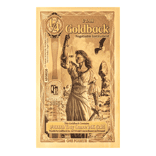
Many small gold bars arrive in protective assay cards displaying the manufacturer, weight, purity, and identifying information. Some products include serial numbers or additional authentication technology. These features support product identification and may help protect the bar from handling damage, but their costs are proportionally more significant when the package contains only one gram.
Consider two bars with similar protective packaging: one weighing 1 gram and another weighing 10 grams. Even if their packaging costs were identical, the expense per gram would be ten times greater for the smaller product. Packaging is only one component of the retail premium, but the comparison illustrates the broader problem of spreading fixed costs across limited metal content.
Branding can introduce a separate premium. A recognizable refinery hallmark, elaborate design, or licensed collectible theme may increase the selling price without increasing the amount of gold. Buyers seeking maximum metal content should distinguish standard bullion bars from products carrying decorative or collectible premiums.
The World Gold Council's overview of gold investment identifies premiums, storage, insurance, and delivery among the costs associated with purchasing physical bars and coins. The important distinction is that these expenses do not necessarily scale with the weight of gold purchased.
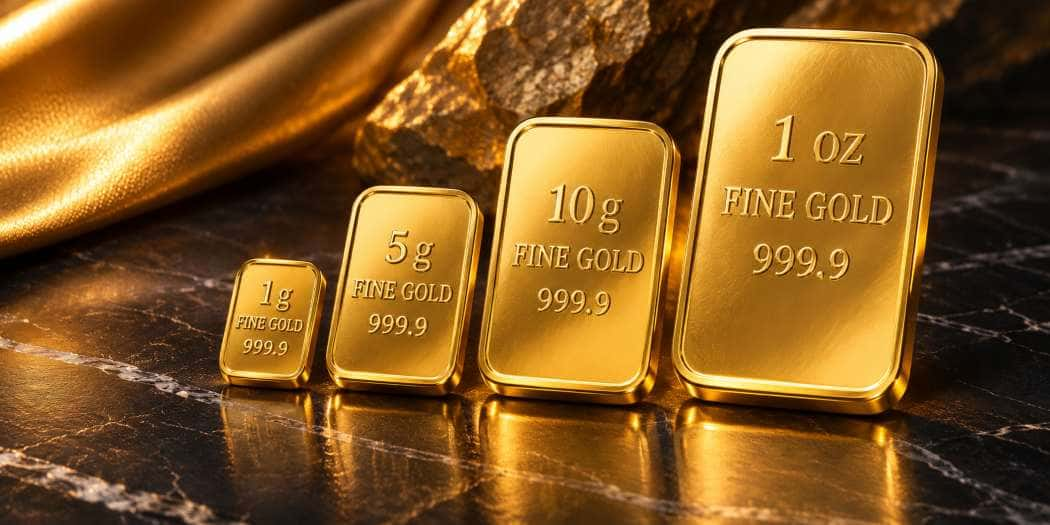
Comparing 1 Gram, 5 Gram, 10 Gram, and 1 Oz Bars
A useful comparison must account for both the amount of gold and the price paid above its underlying metal value. Looking only at the total purchase price makes the 1 gram bar appear inexpensive, but it conceals how much each gram actually costs.
The following illustration assumes a hypothetical spot price of $4,000 per troy ounce, equivalent to approximately $128.60 per gram. Retail prices are examples, not live dealer quotations.
|
Gold bar |
Illustrative price |
Price per gram |
Premium over spot |
|
1 gram |
$150 |
$150.00 |
16.6% |
|
5 grams |
$690 |
$138.00 |
7.3% |
|
10 grams |
$1,345 |
$134.50 |
4.6% |
|
1 troy oz |
$4,100 |
$131.82 |
2.5% |
The 1 gram bar requires the smallest initial outlay, yet its illustrative premium is substantially higher than that of the full-ounce bar. Purchasing 31 individual 1 gram bars at $150 each would cost $4,650 for 31 grams of gold. A single troy-ounce bar in this example costs $4,100 and contains slightly more gold.
That $550 difference illustrates the cumulative cost of buying many individually packaged units. It does not establish a universal price gap: dealer promotions, payment methods, branded designs, and secondary-market inventory can produce different results.
For a current comparison, buyers can examine the 1 gram gold bar price chart alongside the 5 gram gold bar chart. The same-time spot benchmark matters because comparing listings recorded during different market conditions can distort the apparent premium.
A Lower Premium Is Not Always a Better Purchase
The smallest bar has an advantage that disappears from percentage comparisons: it allows someone to acquire physical gold without paying for a larger denomination. A buyer with a limited budget may prefer purchasing one gram today instead of waiting until enough funds are available for a full ounce.
Smaller bars also offer greater flexibility when selling. Someone holding ten individually packaged 1 gram bars can potentially sell part of that position while retaining the remainder. An owner of one 10 gram bar cannot sell a fraction of that bar as an intact, authenticated retail product.
However, the flexibility has a financial tradeoff. A buyer who pays a high premium for small bars should not assume that a dealer will reimburse that entire premium during resale. Buyback offers reflect the metal's market value, product characteristics, dealer inventory needs, and prevailing spreads. Packaging condition and brand recognition may influence an offer, but neither guarantees recovery of the original retail markup.
The distinction is particularly important for buyers accumulating gold over many transactions. Repeated purchases of small bars can create a substantial cumulative premium, even when each purchase seems affordable. Comparing the total cost of several small bars with one larger bar helps make that tradeoff visible.
How to Compare Gold Bars Without Misreading the Premium
A meaningful comparison starts with the same-time spot price and the fine-gold weight of each product. Divide the retail price by the fine-gold content in grams to calculate the effective purchase price per gram. Then compare that figure with the spot value per gram.
For example, if spot gold is $128.60 per gram and a 5 gram bar costs $690, the retail price is $138 per gram. The difference is $9.40 per gram, or approximately 7.3% above spot.
The calculation should use fine-gold content, particularly when comparing products of different purities. It should also reflect the payment method and any applicable shipping or taxes. Two products with similar advertised premiums may have different final checkout costs.
Wholesale-market standards offer useful context but should not be confused with retail certification. The LBMA's Good Delivery specifications apply to institutional gold bars containing approximately 350–430 fine troy ounces. A small retail bar made by an accredited refiner is not itself a Good Delivery bar.
Choosing a Gold Bar Size That Fits the Purchase
The central decision is how much extra a buyer is willing to pay for smaller, independently saleable units. Someone primarily seeking the lowest acquisition cost per gram may favor larger bars, provided the purchase amount is manageable. Someone prioritizing gifts, incremental purchases, or partial resale may reasonably accept a higher premium.
There is also a middle ground. Five- and 10-gram bars can offer a compromise between initial cost and premium efficiency, although their relative value must be checked against current listings.
Gold bar size ultimately determines more than the quantity purchased. It shapes the cost of entering the market, the flexibility of future sales, and the amount paid for services surrounding the metal. Comparing those costs before buying is more informative than choosing the smallest sticker price or automatically assuming the largest bar is best.