View Charts
Trump Gold Coin Delay: What Collectors Should Know
 0
0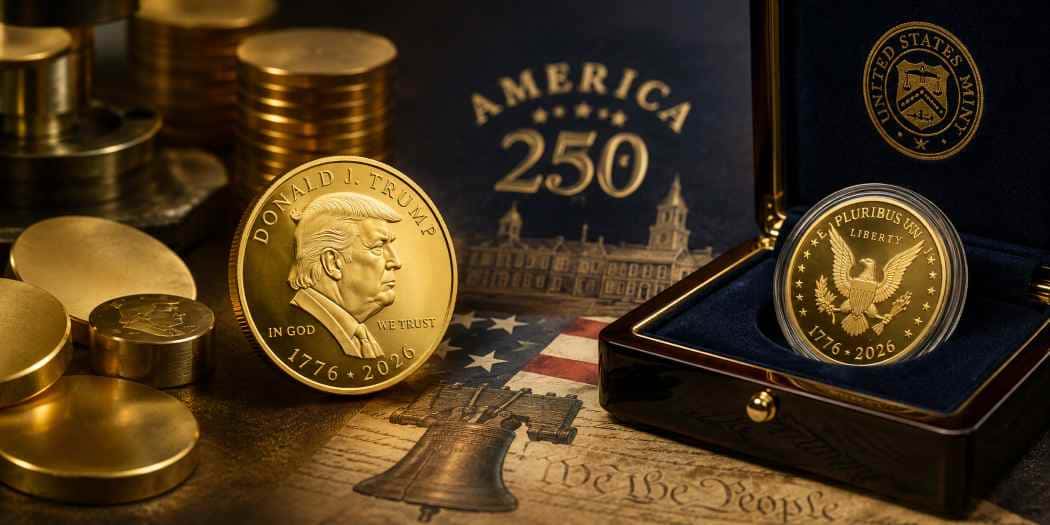
A 250th Anniversary Coin Story Turns Into a Scarcity Watch
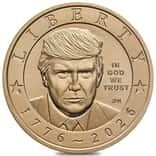
The proposed Trump gold coin has quickly become one of the most closely watched modern U.S. Mint stories of 2026. Originally tied to America’s 250th anniversary, the 24-karat commemorative issue is now drawing attention for reasons beyond its gold content: a reported production delay, an exceptionally small mintage claim, unresolved legal questions, and uncertainty over whether the piece will ever be offered to the public. For collectors, that mix of official U.S. Mint involvement, political controversy, and possible ultra-low availability creates a story that sits at the intersection of bullion, numismatics, and American institutional tradition.
Recent reporting indicates that the coin will not be ready in time for July 4, 2026, despite earlier design movement through the Commission of Fine Arts. The delay matters because the coin is connected to the Semiquincentennial, a milestone year already filled with one-year-only U.S. Mint designs, special privy marks, gold issues, and collector-focused releases. In a market where modern U.S. coins can see intense demand when scarcity is credible, timing and distribution details may matter almost as much as the design itself.
Reported Delay Shifts Attention From Anniversary Timing to Final Approval
The most important development is not that the coin concept exists, but that its schedule appears uncertain. The U.S. Mint’s broader Semiquincentennial program is already active, featuring special 2026 designs, dual-date elements, Liberty Bell “250” privy marks, and 24-karat gold products. However, the proposed presidential gold issue remains separate from the standard collector lineup because final specifications, sales plans, pricing, and availability have not been publicly clarified.
That distinction is critical for buyers. A regular Mint product typically has an official product page, published release date, mintage limit, household order limit, price grid reference, and clear ordering process. This coin does not yet appear to have that level of public-facing clarity. Reports that it may miss the July 4 anniversary date suggest the project remains in a more complicated stage, even after design review.
For collectors, delays can cut both ways. A postponed release may reduce short-term buying momentum if the product slips beyond the main anniversary celebration. At the same time, a delay can intensify interest when the item is already controversial or potentially scarce. Uncertainty often encourages speculation, especially when buyers believe a future product may be difficult or impossible to acquire through normal channels.
The 47-Coin Mintage Claim Would Put Rarity at the Center
One of the most striking details from recent reporting is that the proposed Trump gold coin may be limited to just 47 pieces, with each coin individually machined and expected to contain a variable gold weight of approximately 19.7 troy ounces. Based on current gold values, that would place the metal content near an estimated $90,000 per coin, before any collector premium, political premium, or institutional scarcity value is considered. That scale would make the issue dramatically different from a typical one-ounce U.S. Mint gold coin.
If accurate, the reported mintage appears symbolically tied to Donald Trump as the 47th president, while the nearly twenty-ounce gold content would move the product into a category closer to a presentation piece or ultra-premium numismatic object than a conventional retail commemorative. Individually machining each coin also suggests a specialized production process rather than a mass-struck bullion release, which could further support its positioning as a scarce, high-value collector item.
For buyers, this distinction is essential. A coin containing nearly twenty ounces of gold would already carry substantial intrinsic value, but its future market price would likely depend far more on official U.S. Mint status, final distribution, provenance, political significance, and actual availability. If any examples reach private hands, the premium above melt value could be driven by rarity and controversy rather than by gold spot price alone.
Collectors should still treat these details as reported rather than finalized until confirmed through official Mint or Treasury documentation. If the final weight, mintage, sales method, or legal status changes, the market interpretation may shift quickly. But if the 47-coin limit and approximately 19.7-ounce gold weight are confirmed, this would become one of the most unusual and closely watched modern U.S. Mint-related gold issues of the Semiquincentennial year.
Bullion Value and Numismatic Value Are Not the Same
This story is especially important because it highlights a common mistake among newer buyers: assuming a gold coin’s value is mostly about gold. In bullion investing, the metal content is usually the anchor. Products such as American Gold Eagles, Gold Buffalos, and gold bars trade in relation to spot gold, premiums, availability, and dealer buy-sell spreads. They are built for liquidity and metal exposure.
A politically significant, ultra-low-mintage commemorative coin operates differently. Its bullion value may be high, but its numismatic value could depend more on scarcity, condition, documentation, ownership history, controversy, and whether the piece is recognized as an official U.S. Mint product. The same ounce of gold can carry very different premiums depending on whether it appears in a widely available bullion coin, a proof collector release, a historic rarity, or a limited presentation piece.
That is why the proposed coin is unlikely to affect the gold market itself. Even if the reported gold content per coin is substantial, a tiny production run would not move physical gold demand in any meaningful way. The impact would be concentrated in the collector market, where scarcity and status can create price behavior disconnected from daily spot gold movement.
Legal Questions Add Risk and Visibility
The legal debate surrounding the coin may become one of the reasons it remains in the headlines. U.S. law has long reflected caution around placing living individuals on official currency and related instruments, and critics have argued that a coin featuring a sitting president raises legal and precedent concerns. The issue is not as simple as saying every appearance of a living person is automatically prohibited on every coin, because statutes treat currency, securities, coins, medals, commemoratives, and design authority differently.
That complexity creates uncertainty. Supporters may point to historical precedent, including the 1926 Sesquicentennial half dollar featuring Calvin Coolidge while he was president. Critics may argue that modern law, public expectations, and institutional norms make the proposed issue inappropriate or legally vulnerable. For collectors, this uncertainty can increase attention, but it can also increase risk.
If litigation or administrative review delays the coin further, market expectations may shift again. A canceled product would become a different kind of story than a delayed one. A revised design would alter collector interest. A limited nonpublic striking would fuel speculation but may reduce practical buyer access. Until final Mint documentation is released, buyers should avoid treating any report as a guaranteed sales opportunity.
Semiquincentennial Products Create a Competitive Collector Backdrop
The 2026 anniversary year is already unusually crowded for U.S. Mint collectors. The Semiquincentennial program includes one-year-only circulating coin changes, special collector issues, 24-karat gold pieces, and companion silver medals. That means the proposed presidential coin is not competing for attention in an ordinary release calendar. It is entering one of the most active modern numismatic years in recent memory.
This matters because collector budgets are not unlimited. Buyers interested in 2026 issues may already be deciding between American Eagles with anniversary features, American Buffalo products, Best of the Mint gold and silver sets, circulating coin rolls, proof sets, and other special releases. If the presidential issue eventually becomes available, its demand may depend partly on how much collector capital remains available and whether the market views it as a central Semiquincentennial release or a separate political collectible.
The strongest demand would likely come from overlapping buyer groups: U.S. Mint specialists, modern gold collectors, political memorabilia buyers, presidential history collectors, and investors attracted to extreme mintage limits. That mix could make pricing unpredictable if any examples reach the open market.
Authentication and Official Status Will Matter More Than Hype
Collectors should be especially careful because Trump-themed gold pieces, medals, rounds, tribute coins, and privately issued collectibles already exist in the marketplace. Many may be legitimate private products, but they are not the same as an official U.S. Mint coin. The difference matters for resale value, legal-tender status, institutional credibility, grading recognition, and long-term collector demand.
If the proposed coin is eventually issued, buyers should verify its official Mint origin, packaging, certificate of authenticity, denomination if any, fineness, weight, and distribution channel. Grading-service recognition may also influence aftermarket pricing, particularly if only a small number of examples exist. In an environment where headlines can move quickly, counterfeit risk and misleading marketing tend to rise.
A strong collector strategy starts with documentation. The more unusual the product, the more important its paper trail becomes. For a coin of this nature, provenance could eventually matter almost as much as grade.
How Collectors Should Watch the Next Phase
The next major signals will likely come from official Mint or Treasury communications. Buyers should watch for a product page, published specifications, final mintage, pricing details, design confirmation, legal updates, distribution rules, and whether the coin is offered publicly at all. Until then, the market is reacting to partial information.
For Bullion Exchanges customers, the practical takeaway is straightforward: this is not a gold spot-price story. It is a modern numismatic development with potential importance because of its official connection, reported scarcity, and unresolved legal status. The coin’s future value, if issued, would likely depend far more on rarity and collector demand than on the day-to-day movement of gold.
That does not make the story less relevant to bullion buyers. In fact, it offers a useful reminder that precious metals products sit on a spectrum. Some are purchased for metal exposure. Some are collected for design and history. A few become valuable because they capture a rare institutional moment. The proposed 2026 presidential gold issue may fall into that final category if it receives final approval and enters the market in extremely limited numbers.
For now, collectors should stay patient, verify official updates, and avoid confusing headlines with confirmed availability. The delay has made the coin more intriguing, but final Mint action will determine whether it becomes a purchasable product, a restricted presentation piece, or one of the most debated unissued coin stories of the Semiquincentennial year.