View Charts

Three Trump Dollar Mint Errors Reported: Check Your Coins!
 0
Two New Discoveries Change the Story of a Rare 2026 Dollar
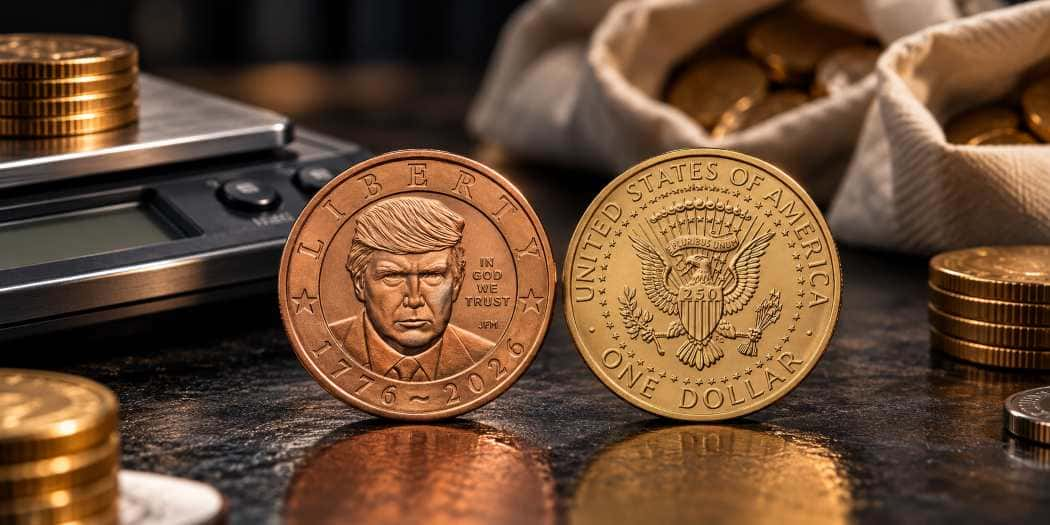
A remarkable 2026 Trump dollar mint error is no longer represented by a single reported specimen. Just over a week after collectors learned of a dollar with an exposed copper portrait and a missing outer metal layer, two additional examples have emerged. The discoveries raise a question that cannot yet be answered: how many more might be sitting unnoticed in U.S. Mint rolls and bags?
On October 15, CoinWeek reported three known examples of the 1776–2026 President Donald J. Trump dollar missing an obverse clad layer. The original coin received an MS 65 grade from Numismatic Guaranty Company (NGC), while the two newer specimens have been reviewed by mint error specialist Mike Byers but have not received independent third-party certification.
That distinction matters as interest grows. Three reported examples suggest the defect may extend beyond an isolated discovery, yet the available evidence does not establish a production-wide problem or a reliable estimate of surviving coins. For collectors examining their anniversary dollars, the opportunity is intriguing, but authentication remains essential.
Three Reported Trump Dollar Errors, Three Different Discovery Stories
The first example attracted attention on October 7 when CoinWeek and Mint Error News reported a striking contrast between its two faces. The obverse, bearing President Trump's portrait, displayed exposed copper instead of the normal golden-colored surface. Its reverse retained the expected appearance.
NGC authenticated the error and graded it MS 65 with the Advance Releases designation. We previously examined the coin's unusual construction and certification in our article on the first Trump dollar missing-clad-layer discovery. At that stage, no comparable example had been publicly documented in the reporting.
The second reported coin belongs to Florida collector Patrick Dolan, who discovered it in a bag purchased from the U.S. Mint. According to CoinWeek, Byers examined and authenticated the piece. Its reported weight falls between 6.0 and 6.1 grams, consistent with the substantial loss of metal seen in the original specimen. Dolan's coin remains uncertified by a major grading service and is reportedly not for sale.
The third example came to Byers through Tyrone Kemp, who submitted photographs and weight information for review. Byers accepted the evidence as supporting another missing-clad-layer discovery, according to CoinWeek. However, the coin remains raw, meaning it has not been encapsulated and certified by an independent grading service. The available reporting does not establish that it underwent the same hands-on examination as the first two specimens.
CoinWeek's roster therefore documents three reported discoveries, not three identically certified coins. Future submissions to grading services could strengthen the evidence and clarify whether the reported examples share the same manufacturing characteristics.
Why a Missing Clad Layer Changes the Coin's Appearance and Weight
The ordinary Trump dollar is not made of gold, despite its golden appearance. The U.S. Mint's official specifications identify a copper-based composition containing zinc, manganese, and nickel. Its normal weight is 8.10 grams, and its diameter measures 26.49 millimeters.
The coin's distinctive color comes from its outer manganese-brass layers, which are bonded around a copper core. When one exterior layer is absent, the underlying copper becomes visible. On the reported errors, that produces a copper-colored obverse and a golden reverse, an especially noticeable contrast on a coin featuring a large presidential portrait.
Weight provides another important clue. The original certified specimen weighs 6.1 grams, approximately 24.7% below the standard specification. Such a substantial difference supports the missing-layer attribution because an entire portion of the coin's metallic structure is absent.
A thinner planchet can also affect the quality of the strike. The dies are designed to impress a coin of the intended thickness, so missing material may produce weaker details even when the coin has never circulated. This helps explain why the certified example received an MS 65 grade rather than the exceptionally high numerical grades often associated with modern collector issues.
Still, an unusual color and low weight do not automatically establish authenticity. Chemical treatment, mechanical alteration, and other forms of post-Mint damage can change a coin's appearance. Specialists must examine the physical evidence before identifying a genuine manufacturing error.
Is the Missing-Clad-Layer Trump Dollar Worth $25,000?
The original NGC-certified example was offered by Mike Byers Inc. for $25,000, an attention-grabbing figure for a modern dollar coin with a face value of one dollar. However, that amount represents a dealer's asking price, not a documented auction result or confirmed transaction.
Major mint errors can command substantial premiums because of their visual impact, scarcity, collector demand, and the credibility of their authentication. This particular discovery also involves a prominent anniversary release, giving it an additional connection to the U.S. Mint's 250th-anniversary program.
The emergence of two more reported examples introduces an important complication. Additional discoveries may increase public interest, but they also change the information available about the error's possible rarity. If more specimens appear, collectors and dealers will have a better basis for assessing supply and comparing condition.
There is currently no established market price for an uncertified example comparable to the original discovery. Collectors should not assume that a suspicious-looking dollar is worth $25,000, or that every authenticated example would receive the same valuation. Completed sales and independent certification will provide more meaningful evidence than an initial listing.
How to Check 2026 Trump Dollar Rolls and Bags for Errors
Collectors examining their coins should begin with a visual comparison against a normal example. Look for a copper-colored obverse paired with a golden reverse, paying particular attention to whether the color difference covers the entire face rather than appearing as isolated spots or stains.
A digital scale capable of measuring to at least 0.01 gram can help identify an unusual weight. A normal example should weigh approximately 8.10 grams, while the reported missing-layer specimens are around 6.0–6.1 grams. Minor variations or discoloration alone are insufficient evidence of an error, and a low reading should be checked against the scale's calibration.
Examine both sides and the plain edge under good lighting, then photograph anything unusual before handling the coin further. Avoid cleaning, scraping, polishing, or attempting to remove surface material. Those actions could damage an authentic error and complicate professional evaluation.
If the evidence appears promising, retain the original Mint packaging and seek an opinion from a qualified mint error specialist or established grading service. Authentication is particularly important before making purchasing, selling, or insurance decisions based on an assumed rarity.
Could More Trump Dollar Errors Be Hiding in Mint Bags?
The timing of these discoveries adds an unexpected dimension to an existing collector search. The U.S. Mint released the circulating-finish Trump dollars in 25-coin rolls and 100-coin bags on September 2. It also randomly distributed 250,000 specially marked dollars struck on July 4, giving collectors an additional reason to examine their purchases.
Unlike the intentional July 4th privy mark, a missing clad layer is an unintended manufacturing defect. The Mint has not publicly identified a specific production problem responsible for the reported examples, and their discovery does not establish that entire batches contain similar errors.
Nevertheless, the second specimen's reported discovery inside a Mint bag makes unopened inventory especially interesting to collectors. The third report suggests the search may extend beyond coins already examined by specialists. Each newly authenticated example could help establish whether these errors share a common production origin or represent separate occurrences.
The next significant development may come from professional grading submissions rather than another dramatic asking price. Until a larger population is documented, the number of surviving examples remains unknown. Meanwhile, collector attention is turning toward the upcoming 2026-W President Donald J. Trump Semiquincentennial 1 oz Proof Gold Coin, adding another chapter to an already eventful year for Trump-themed numismatics. With more Mint bags still awaiting inspection and an exciting new gold coin release approaching, could there be even more surprises on the horizon for Trump coin collectors?