View Charts
The Shimmering Future: How Gold Will Benefit from De-Dollarization
 0
0
Source: Canva
In the ever-evolving world of finance, economies are currently wrestling with a sweeping trend known as de-dollarization. This powerful shift seeks to reduce the ubiquitous influence of the U.S. dollar in international trade and reserves, signaling a possible paradigm shift in the structure of the global economy. Amid this potential transformation, one asset class gleams with potential: gold.
Gold has long been revered as the ultimate form of wealth storage, having maintained its value throughout human history. It has acted as an insurance policy against economic uncertainty, a hedge against inflation, and a safe haven asset in times of turmoil. Now, as nations diversify away from U.S. dollar dependence, gold is poised to regain prominence, benefiting from the world's pursuit of reliable alternatives.
The resurgence of gold in the international financial architecture is a remarkable phenomenon. It's an unfolding narrative that's intricately tied to the momentum of de-dollarization. As countries around the globe continue to explore and implement ways to mitigate the U.S. dollar's dominance, gold's star seems set to rise. This article delves deep into the intricacies of the de-dollarization movement and illustrates how this dramatic shift could set the stage for gold's renewed role in the global economy.
Examining the De-dollarization Phenomenon
As we continue through 2023, a noteworthy trend is dramatically reshaping the contours of the global financial landscape - the de-dollarization movement. This significant shift involves several key players in the world economy, namely Russia, India, China, and Malaysia. Each of these nations is actively striving to decrease the U.S. dollar's influence by establishing innovative trade channels that circumvent the long-standing global reserve currency. These bold initiatives are leading to an intensified debate on the international stage: Could this be the prologue to the end of the U.S. dollar's global dominance?

Source: Canva
The U.S. dollar's ascension to the top of the global currency hierarchy can be traced back to the aftermath of World War I. Emerging as an undeniable economic powerhouse, the United States' substantial contributions during the war and the subsequent economic boom led to an amplified reliance on the U.S. dollar for international transactions. This strengthened its position as the world's primary reserve currency.
However, a landmark turning point arrived in 1971 when President Richard Nixon announced the abandonment of the gold standard. This decision effectively detached the value of the U.S. dollar from physical assets, basing it instead on the full faith and credit of the U.S. government. This momentous shift sparked a sustained debate over the sustainability and durability of the U.S. dollar's position as the global reserve currency. The emergence of the de-dollarization movement has only intensified this debate, throwing long-standing financial norms into question.
The de-dollarization movement has been led by nations such as Russia, seeking increased financial independence and a way to mitigate the impacts of U.S.-centric economic policies. As these nations explore alternatives to the U.S. dollar, the global financial ecosystem is being compelled to reassess established norms. Amidst this transformation, gold is emerging as a potential beneficiary. This universally trusted and time-tested asset could provide nations with a reliable, neutral means of trade and wealth preservation, offering a glimmer of stability amidst the flux of the evolving economic landscape.
Exploring Viable Alternatives: The Persistent Global Endeavor
Despite the firm grip the U.S. dollar has maintained on international finance, the quest for a suitable substitute persists. The reality of a shifting global economic landscape has led to the examination of potential alternatives, each with its unique strengths and drawbacks. However, it quickly becomes evident that replacing the U.S. dollar as the global reserve currency is no small task.
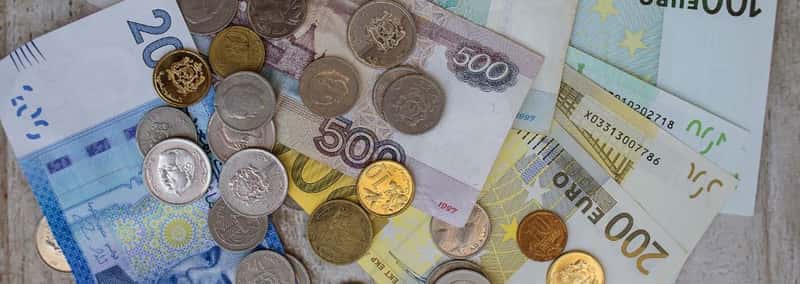
The euro, for instance, initially presented itself as a robust contender at the dawn of the 21st century. However, the Eurozone has been plagued by various economic challenges and political issues that have hindered its potential to serve as a viable global reserve currency. Sovereign debt crises in several European countries, economic disparities among Eurozone members, and concerns about the European Central Bank's (ECB) management of the euro have all contributed to the reluctance of the global community to adopt it as a substitute for the U.S. dollar.
Source: Canva
The yen and the yuan, currencies of the world's second and third-largest economies—Japan and China—have also been considered in the quest for alternatives. The Japanese yen, however, is constrained by a sluggish domestic economy and a shrinking population, which impacts its growth potential. China's yuan, despite the nation's booming economic influence, is curtailed by the government's stringent capital controls, limiting its free use on a global scale.
Additionally, smaller economies such as Switzerland offer stable currencies like the Swiss franc, known for their reliability during economic downturns. However, such nations lack the economic scale necessary to support the colossal capital flows required of a global reserve currency. The Swiss economy is simply too small to manage the demands placed on a currency that dominates global finance.
This continuous search for alternatives underscores the complexity of the issue at hand. Replacing a global reserve currency is not merely about choosing another currency—it's about finding a currency supported by a stable, reliable, and large enough economy to handle the enormous responsibility. Amidst this exploratory chaos, one particular asset has started to catch the eye of the world again: gold. With its long-standing reputation as a safe haven and store of value, gold is emerging as a potential benefactor in the era of de-dollarization.
The Golden Opportunity: How De-dollarization Elevates Gold's Relevance
Over the past couple of years, the call for alternatives to the dollar has intensified, sparked in part by the sweeping sanctions the U.S. imposed on Russia. There's growing concern about the U.S.'s ability to exercise financial control over other countries via the dollar system, leading to escalating discontent with the currency's global dominance. This discontent is reflected in the dollar's share of foreign exchange reserves held by overseas central banks, which has hit a record low of 58%.
Simultaneously, we see an asset known for its stability and resilience in uncertain times increasingly gaining ground: gold. The percentage of global reserves held in gold has seen a significant increase, rising from 11% to 15% over the past five years.
Source: Canva
Gold's appeal lies in several intrinsic qualities that make it a compelling candidate in the post-dollar era. Firstly, gold is universally accepted and possesses an inherent stability that isn't dependent on any specific country's economic health or monetary policy. Unlike fiat currencies, gold cannot be printed at will, which protects it from the pitfalls of inflation. This makes gold a preferred store of wealth during periods of economic uncertainty or instability.
Secondly, gold is immune to political maneuvers. It is not tied to any particular nation or government, and its value isn't subject to the whims of political changes or sanctions. This aspect makes gold a more neutral and reliable asset in the geopolitical arena, a significant advantage in a time of escalating international tensions and economic sanctions.
Moreover, the rising interest in gold is fueled by the fact that it has been a trusted store of value and a medium of exchange for thousands of years. Gold's historical reliability and its ability to retain value over time enhance its appeal as an alternative reserve asset.
However, it's important to note that using gold as a reserve currency would bring its own challenges. The limited supply of gold, its price volatility, and the practical difficulties of using it for everyday transactions are some of the issues that would need to be addressed.
Despite these potential hurdles, the resurgence of gold in the global economy amidst the de-dollarization movement is a trend to watch. If countries continue to diversify their reserves and reduce their dependence on the U.S. dollar, we could witness a notable shift towards the increased use of gold, and possibly other assets, in the global financial system.
The Ascendancy of Gold in a Multipolar Financial World
As the winds of change blow over the financial landscape, several emerging economies are proposing a significant shift in global trade. Nations such as China, India, Russia, and Malaysia are advocating for trading directly with each other using their own currencies. This shift is aimed at diminishing the U.S. dollar's current role as a universal medium of exchange, thus paving the way for a more multipolar financial world.
In such a diversified financial system, gold stands to play a more central role due to its unique attributes. Unlike national currencies, gold is universally acceptable. It doesn't rely on a specific country's economic strength or creditworthiness and is thus unaffected by national fiscal policies or geopolitical tensions.
Throughout history, gold has retained its value over time and has been a trusted safe haven in times of financial crisis or instability. Even when paper currencies have faltered or economies have collapsed, gold has endured, underlining its importance as a hedge against economic uncertainty.

Source: Canva
Importantly, gold also serves as a valuable diversification tool within a nation's foreign exchange reserves. While holding a single foreign currency as a reserve can expose a country to the economic and political risks associated with that specific currency, diversifying reserve assets can help manage and spread these risks. In this respect, gold presents a strong case for inclusion given its lack of default risk and its low correlation with other assets.
However, embracing a more central role for gold in the global financial system does not come without challenges. While gold's limited supply adds to its value, it also poses constraints on its ability to facilitate large-scale transactions. Additionally, price volatility could potentially add a degree of uncertainty to economies heavily invested in gold.
In spite of these challenges, the de-dollarization trend could well pave the way for a resurgence in gold's role in global finance. As nations navigate towards a multipolar financial world, the allure of gold's universality, stability, and historical resilience may make it an increasingly attractive component of their financial strategies.
Investor Considerations Amid a Shift in Global Economic Power
As the de-dollarization movement gains momentum, the ensuing changes could have profound implications for investors. The potential decrease in the U.S. dollar's dominance as a reserve currency could lead to increased currency volatility and geopolitical tensions. Furthermore, shifts in power dynamics may influence international trade policies, potentially impacting the profitability of businesses reliant on global supply chains.
In such an environment, the stability and reliability of gold as an investment become particularly valuable. With its inherent value and historical performance during economic downturns, gold can act as a hedge against inflation and currency fluctuations, thereby offering a degree of protection to investors. Its universal acceptability and its tendency to move inversely to stocks and bonds make it a vital component in diversifying investment portfolios.
Additionally, as more nations potentially turn to gold to bolster their reserves in a post-dollar world, demand for the precious metal could rise. This increased demand could subsequently result in appreciation, providing another avenue for investment growth.
A Gilded Path Forward
While it is too early to predict the U.S. dollar's definite descent from its pedestal, the ongoing global shift presents a potential opportunity for gold to reclaim a more prominent role in the global financial stage. For investors, this underscores the need for adaptability and a vigilant eye on the evolving landscape.
Regardless of whether the future world order will be dollar-dominated, multipolar, or something else entirely, the value of gold remains steadfast. It's historical resilience and universal acceptability make it a reliable asset in the face of changing economic tides.
Ultimately, the de-dollarization movement and the potential ascendance of gold highlight the cyclical nature of economic power and the unending evolution of the global financial landscape. As we navigate through these changes, one thing remains certain: gold will continue to be a significant part of the conversation, its luster undiminished. In a world fraught with uncertainty, perhaps the only sure bet is on the enduring value of this precious metal.
A Potential Surge in Gold Prices
If the de-dollarization trend continues to gather steam and gold assumes a more central role in the global financial system, this could have a significant impact on the price of the precious metal.

Source: Canva
Historically, gold prices have moved inversely to the U.S. dollar. When the dollar weakens, gold becomes cheaper for investors holding other currencies, thereby increasing demand and pushing up the price. If the de-dollarization process leads to a weaker dollar, this could act as a catalyst for higher gold prices.
Moreover, as central banks around the world diversify their reserves away from the dollar and increase their gold holdings, this would also create additional demand for the metal. With gold's supply relatively fixed, this increase in demand could put upward pressure on prices.
Additionally, during periods of economic uncertainty or geopolitical turmoil, gold is often seen as a safe haven asset. Investors flock to it to protect their wealth, driving up its price. If de-dollarization leads to more volatility and uncertainty, this could also contribute to a surge in gold prices.
However, while these factors suggest that de-dollarization could be bullish for gold, it's important to note that the price of gold is influenced by a range of other factors as well. These include inflation rates, interest rates, and changes in jewelry demand, among others. Therefore, while the broader trends point to potential price increases, the exact trajectory of gold prices will be influenced by a complex interplay of global economic factors.
In conclusion, while there is a strong case to be made for gold's role in a de-dollarized world and the potential for price appreciation, investors should carefully consider the variety of factors that can influence gold prices when incorporating it into their investment strategy.