View Charts
The Future of the US Nickel: Will It Be Next to Go?
 0
0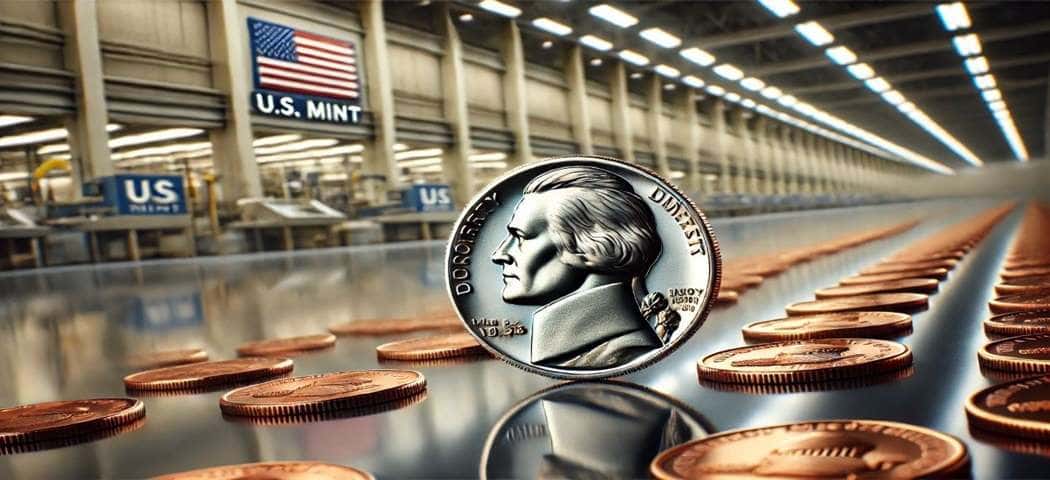
The Nickel’s Questionable Future
As discussions about eliminating the penny gain traction, attention is beginning to shift toward another costly coin—the nickel. While the U.S. Mint loses money on both denominations, the nickel is even more expensive to produce than the penny. With the potential elimination of the one-cent coin, the nickel could become even more essential in cash transactions, serving as the smallest denomination in circulation. However, rising production costs and changing consumer behavior may put its future at risk.
How Much Does It Cost to Produce a Nickel?
The cost to mint a single nickel has been significantly higher than its face value for years. According to the U.S. Mint, it cost 13.78 cents to produce one nickel in 2024, meaning the government loses nearly nine cents per coin. This loss is even greater than that of the penny, which costs 3.69 cents to produce.
Why Is the Nickel So Expensive to Make?
Several factors contribute to the nickel’s high production cost:
-
Metal Composition: Nickels are made of 75% copper and 25% nickel, both of which have seen price increases due to global demand.
-
Manufacturing Costs: The process of minting coins, including refining, striking, and distribution, adds to the overall expense.
-
Inflation and Supply Chain Issues: Rising raw material costs and supply chain disruptions have further inflated minting expenses.
With these losses accumulating every year, government officials may soon reconsider whether minting nickels is economically sustainable.
What Happens If the Penny Is Eliminated?
If the penny is phased out, cash transactions will need to round to the nearest five cents, making the nickel the lowest denomination in circulation. This could increase demand for the five-cent coin, making it more essential than ever.
Would the U.S. Need More Nickels?
Yes—without pennies, consumers and businesses would rely on nickels for rounding adjustments in cash sales. This could lead to:
-
Higher demand for nickels, requiring the U.S. Mint to produce more, further increasing costs.
-
Changes in pricing strategies, as businesses adapt to rounding rules.
-
An adjustment period where retailers, banks, and consumers get used to the new system.
While digital transactions would remain unchanged, cash transactions would necessitate careful rounding adjustments, just as seen in countries like Canada, Australia, and New Zealand.
Could the U.S. Also Phase Out the Nickel?
Given the high cost of production and shifting consumer spending habits, some experts speculate that the nickel could eventually be eliminated as well. Many countries that removed their smallest denomination coins later phased out the next-lowest coin.
Countries That Eliminated Both Smallest Denominations
Several nations removed their one-cent coins first, followed by their five-cent equivalents:
-
New Zealand (1990, 2006) – First removed the one- and two-cent coins, then eliminated the five-cent coin 16 years later.
-
Australia (1992, 2016) – Phased out one- and two-cent coins, then later reduced the use of five-cent coins.
-
Finland (2002, 2015) – Stopped issuing one- and two-cent coins, followed by a reduced reliance on the five-cent euro coin.
If the U.S. follows this trend, the nickel may eventually face the same fate as the penny, particularly if inflation continues to erode its purchasing power.
What Are the Alternatives to the Nickel?
If the U.S. government decides to keep the nickel in circulation but reduce costs, there are a few potential solutions:
-
Change the Metal Composition – Using cheaper metals, such as steel or aluminum, could lower production costs while maintaining the coin’s utility.
-
Reduce the Coin’s Size – A smaller, lighter nickel would require less metal, lowering expenses.
-
Eliminate Physical Nickels Entirely – A fully cashless economy, though unlikely in the near future, would eventually make all physical coins obsolete.
While changes like these have worked in other countries, the sentimental and historical significance of the nickel could make eliminating or modifying it controversial.
Would Rounding to the Nearest Dime Be Next?
If both the penny and the nickel were eliminated, the smallest denomination in circulation would become the dime (10 cents). This could lead to cash transactions rounding to the nearest ten-cent interval, as seen in countries that have fully removed small-value coins.
Potential Impacts of Rounding to the Nearest Dime
-
Faster transactions, as handling small coins would no longer slow down cash exchanges.
-
Potential pricing adjustments, as businesses adapt to new rounding policies.
-
Increased reliance on digital payments, especially for smaller purchases.
Although such a change would likely take years to implement, the discussion around currency efficiency and production costs is only growing stronger.
The Nickel’s Future Remains Uncertain
As discussions surrounding the penny’s elimination continue, the nickel is now coming under greater scrutiny. If the penny is removed, the nickel’s importance in cash transactions would increase, but its high production costs may ultimately make it unsustainable.
While the U.S. government has not officially announced any plans to phase out the nickel, history suggests that small-value coins tend to be removed one step at a time. Whether the nickel remains or follows the penny into retirement, its role in American currency is evolving.
For now, collectors and investors may want to hold onto nickels, as any major changes could increase their historical significance and value in the years to come.
Another article that may interest you:
Is the US Penny Really Gone? Valuable Coins to Look for Now