View Charts
The 7 Most Beautiful U.S. Coins Ever Designed
 0
0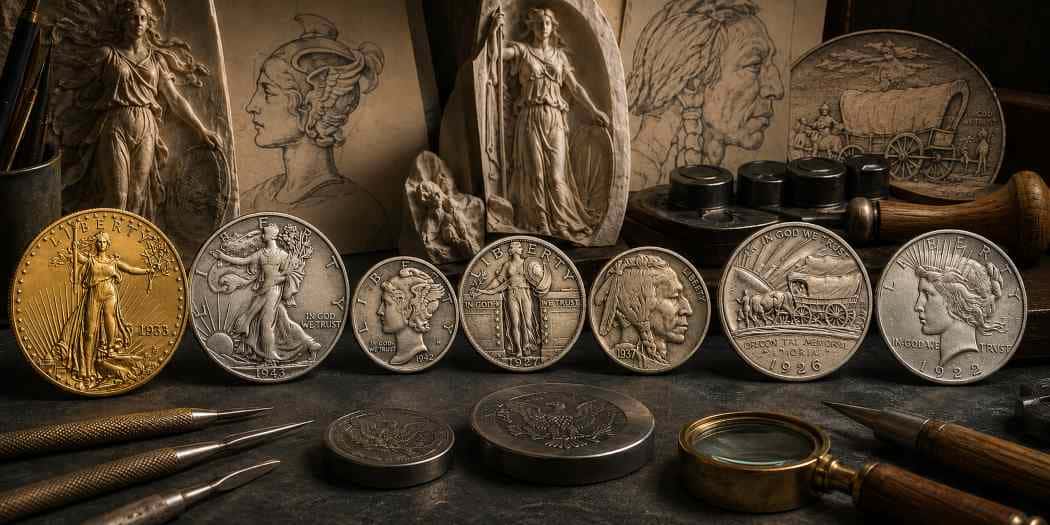
America's Finest Sculptures May Be Hiding in Your Pocket
The most celebrated works of American sculpture are not found exclusively in museums or monuments. Some have spent decades circulating from hand to hand, carried in pockets, tucked into collections, and admired by generations of collectors. The finest U.S. coin designs combine technical excellence with symbolism, historical significance, and artistic vision, transforming everyday currency into miniature works of art.
This pursuit of beauty reached its peak during the early twentieth century, when President Theodore Roosevelt challenged the United States Mint to elevate American coinage to the level of Europe's finest medals and classical sculpture. His vision attracted some of the nation's most accomplished sculptors, whose work continues to define what many collectors consider the Golden Age of American coin design.
While opinions inevitably differ, a handful of coins appear repeatedly whenever numismatists, historians, and artists discuss America's greatest designs. Their enduring popularity reflects far more than rarity or value—it is a testament to timeless artistry that still resonates more than a century later.
Great Coin Design Is About More Than Beautiful Artwork
The most admired U.S. coins succeed because they balance artistry with purpose. Every element, from the figure of Liberty to the placement of lettering and the treatment of relief, must function within the technical demands of coin production while remaining visually harmonious.
The finest designs also tell a story. They reflect the ideals, aspirations, and challenges of the era in which they were created, using symbolism that remains meaningful long after the coins leave circulation. Whether celebrating freedom, peace, westward expansion, or the American frontier, these designs communicate national identity through sculpture rather than words.
Perhaps most importantly, truly great coin designs withstand familiarity. Millions of people handled many of these coins during everyday commerce, yet collectors continue to admire them decades later. That ability to remain visually compelling through constant exposure separates exceptional designs from merely attractive ones.
1. Saint-Gaudens Double Eagle (1907–1933)
No American coin appears more frequently at the top of "most beautiful" lists than the Saint-Gaudens Double Eagle. Commissioned during Theodore Roosevelt's campaign to transform U.S. coinage, sculptor Augustus Saint-Gaudens created what many historians consider the greatest coin ever produced by the United States Mint.
Liberty strides confidently forward carrying a torch and olive branch, framed by radiant sunbeams and the U.S. Capitol. The reverse features a soaring eagle that perfectly complements the sense of movement established on the obverse. Inspired by classical sculpture yet unmistakably American, the design remains the benchmark against which nearly every subsequent U.S. coin is measured.
2. Walking Liberty Half Dollar (1916–1947)
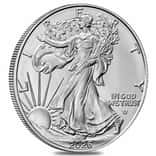
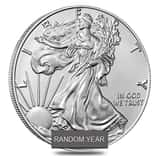
Few images have become as enduring as Adolph A. Weinman's Walking Liberty. Draped in the American flag while carrying branches of oak and laurel, Liberty walks toward the rising sun with quiet confidence and optimism.
The design became so admired that it was revived decades later for the American Silver Eagle bullion program, introducing one of America's greatest coin designs to an entirely new generation of collectors and investors. Its graceful composition and remarkable sense of movement continue to make it one of the most recognizable images in modern numismatics.
3. Mercury Dime (1916–1945)
Despite its popular nickname, the Mercury Dime does not depict the Roman messenger god. Weinman's design actually portrays Liberty wearing a winged cap, symbolizing freedom of thought rather than mythology.
The coin's elegance lies in its simplicity. Balanced proportions, refined detail, and restrained symbolism create a design that remains visually sophisticated even on the dime's small canvas. The reverse fasces and olive branch further reinforce the themes of national strength and peace, making the Mercury Dime one of the most complete artistic compositions in American coinage.
4. Standing Liberty Quarter (1916–1930)
Introduced during the same artistic renaissance that produced the Walking Liberty Half Dollar and Mercury Dime, the Standing Liberty Quarter remains one of the most striking representations of Liberty ever placed on American coinage. Sculptor Hermon A. MacNeil portrayed her standing confidently between a shield and an olive branch, symbolizing the nation's willingness to defend peace while remaining prepared for conflict.
The design's classical proportions, flowing drapery, and architectural balance give it a distinctly sculptural quality. Although practical concerns led to modifications during its production run, the original artistic vision remains one of the defining achievements of twentieth-century American coin design.
5. Buffalo Nickel (1913–1938)
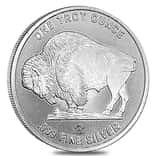
Where many classic U.S. coins looked toward allegorical figures, James Earle Fraser turned to America's own landscape and heritage. The Buffalo Nickel broke sharply from European artistic traditions by placing a Native American portrait on the obverse and a powerful American bison on the reverse.
Fraser drew inspiration from several Native American leaders and from Black Diamond, a famous bison living at the Bronx Zoo, creating two images that have become enduring symbols of the American West. The coin's rugged realism, bold relief, and unmistakable identity make it unlike any other circulating U.S. design. More than a century later, it remains one of the nation's most beloved coins and a favorite among collectors.
6. Oregon Trail Memorial Half Dollar (1926–1939)
Many numismatists consider the Oregon Trail Memorial Half Dollar the finest commemorative coin ever issued by the United States Mint. Its designer, Laura Gardin Fraser, ranks among the most influential sculptors in American numismatic history. Decades after creating the Oregon Trail design, her portrait of George Washington was selected for the American Women Quarters Program, introducing her work to a new generation of collectors.
The obverse features a dignified Native American figure standing before a map of the United States, while the reverse depicts a covered wagon traveling west beneath a dramatic setting sun. Rather than celebrating a single individual, the design captures the broader themes of exploration, migration, sacrifice, and national expansion. Its bold composition and exceptional sculptural depth have earned it lasting admiration from collectors and art historians alike.
7. Peace Dollar (1921–1935)
The Silver Peace Dollar brought the Golden Age of American coinage to a fitting close. Created by Anthony de Francisci following the First World War, the coin commemorated both victory and the hope for lasting international peace.
Liberty's youthful portrait feels distinctly modern compared with earlier classical depictions, while the reverse features a bald eagle resting calmly upon a rock rather than preparing for flight. The absence of dramatic movement is intentional. Instead, the design conveys confidence, stability, and optimism for a new era. Few American coins communicate their historical purpose with such quiet elegance.
The Legacy of America's Greatest Coin Designs Lives On
Although these masterpieces were created decades ago, their influence continues to shape modern American coinage. The Walking Liberty design appears on today's American Silver Eagle, while the Saint-Gaudens Double Eagle inspired the American Gold Eagle series. Contemporary commemoratives and medal programs likewise draw upon the artistic standards established during the early twentieth century.
What unites these seven coins is not simply technical excellence but their ability to capture enduring American ideals through sculpture. They transformed circulating money into works of art, demonstrating that coins could preserve history, express national identity, and inspire admiration long after their original economic purpose had passed. For collectors, they remain more than iconic numismatic treasures—they are enduring examples of American artistic achievement in its most accessible form.
Related reading you may find interesting:
Should You Ever Clean Old Coins? What Collectors Need to Know