View Charts
Spanish Doubloons: Shipwreck Gold With Collector Appeal
 0
0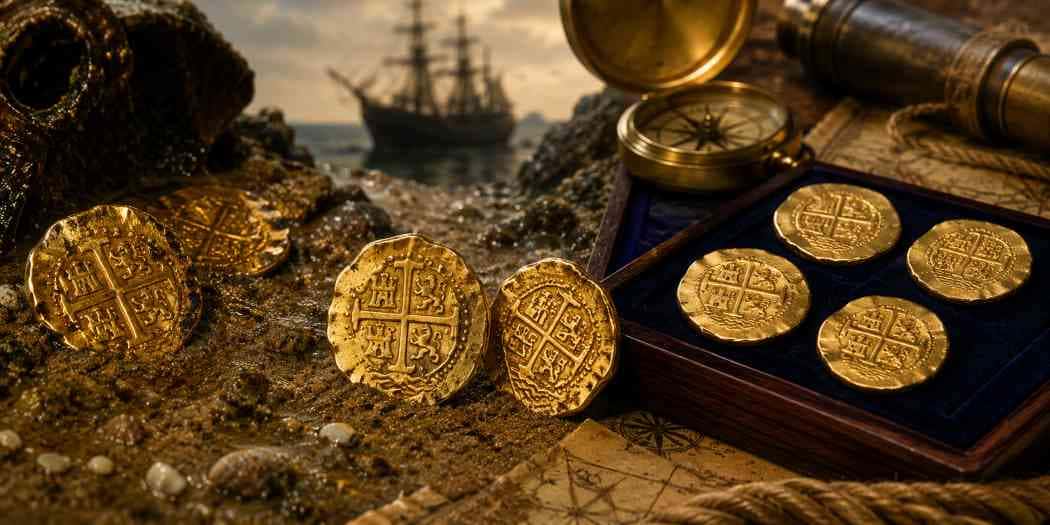
Pirate Gold Still Commands a Modern Premium
Spanish doubloons carry a rare kind of market power because they sit at the crossroads of gold, maritime history, colonial trade, and treasure-lore demand. For modern collectors, shipwreck coins are not valued by precious metal content alone. Their appeal comes from the story: Spanish colonial mints, Atlantic trade routes, hurricane losses, treasure fleets, royal taxation, and centuries under the sea. That combination gives these coins a premium structure that differs sharply from modern bullion, even when both are ultimately tied to gold.
The shipwreck angle matters because provenance can turn an old gold coin into a documented artifact. A loose colonial gold coin may already be collectible, but one traced to a famous wreck such as the 1715 Fleet can attract an entirely different level of interest. Buyers are not simply purchasing gold exposure. They are buying a physical connection to Spanish imperial finance, New World mining, and the dangerous sea lanes that helped shape the global economy.
Shipwreck Provenance Turns Gold Into Historical Evidence
The word “doubloon” is often used broadly today, especially in popular culture, but historically it referred most directly to a two-escudo Spanish gold coin. Collectors and dealers sometimes use the term more loosely for Spanish colonial gold, especially larger escudo denominations associated with treasure fleets and pirate-era commerce. The most famous pieces in this category include gold escudos and eight-escudo coins struck in Spain’s American colonies.
Shipwreck recovery adds a separate layer of value. Coins recovered from the ocean can carry documentation tying them to a specific wreck, salvage operation, or collection. That provenance matters because it gives the coin a narrative, a paper trail, and a stronger identity in the marketplace. A certified shipwreck coin from a known fleet may attract both traditional numismatists and buyers drawn to treasure history.
This is especially important with Spanish colonial gold because many pieces were struck quickly, irregularly, and under the demands of imperial shipping schedules. Crude edges, off-center designs, uneven flans, and partial legends are not necessarily defects in the modern sense. They can be part of the coin’s original character. In shipwreck material, surfaces may also show saltwater effects, conservation marks, or environmental changes. Those details make authentication, attribution, and grading especially important.
The 1715 Fleet Keeps the Treasure Market in Focus
Few shipwreck stories have done more to shape demand for Spanish colonial gold than the 1715 Fleet. The fleet was carrying wealth from the Americas to Spain when a hurricane destroyed much of it off Florida’s coast. More than three centuries later, coins from the wrecks continue to appear in museums, private collections, auctions, and regulated salvage reports.
The story remains relevant because new recoveries still make headlines. Recent reporting on recoveries from Florida’s Treasure Coast has shown that Spanish shipwreck coins continue to generate public interest when gold and silver pieces emerge from documented wreck sites. At the same time, legal and preservation issues have become more visible, especially when recovered material is mishandled, underreported, stolen, or improperly sold.
For collectors, this means a shipwreck label alone is not enough. A coin’s value depends on which wreck it is linked to, whether that connection is documented, whether the coin was legally recovered, and whether it has been conserved responsibly. The strongest examples combine historical importance, attractive appearance, certified authenticity, and clean ownership records.
Gold Content Sets a Floor, Not the Full Value
Spanish colonial gold coins appeal to bullion-minded buyers because they contain real gold, but they should not be evaluated like modern gold bars or American Gold Eagles. Bullion products are usually priced around spot gold plus a transparent premium. Shipwreck coins can trade at multiples of melt value because their scarcity, age, condition, provenance, and collector base play a much larger role.
An eight-escudo gold coin, sometimes casually grouped under the doubloon umbrella, contains significantly more gold than smaller escudo denominations. However, the exact value of any coin depends on its weight, mint, date, ruler, condition, and certification. A common, sea-salvaged example with surface issues may trade very differently from a sharply detailed, high-grade piece with a famous fleet pedigree.
This distinction protects buyers from a common misunderstanding. A Spanish gold coin is not automatically a better investment because it is old, and it is not automatically overpriced because its premium exceeds melt value. The key is whether the premium is supported by rarity, provenance, eye appeal, authentication, and demand. In strong examples, the historical premium is the primary asset.
Colonial Mints Created the Coins Pirates Made Famous
Spanish treasure coins were produced across a vast imperial network. Colonial mints in Mexico City, Lima, Potosí, Bogotá, Cartagena, and other centers turned New World gold and silver into money that moved across oceans. These coins financed empire, trade, warfare, and royal obligations. They also became targets for privateers, pirates, storms, and wartime seizures.
The phrase “pirate gold” survives because Spanish colonial coins circulated during an era when Caribbean conflict and maritime raiding were part of imperial competition. Not every shipwreck coin was pirate loot, and most were part of formal trade or royal shipment. Still, the association persists because the same coins moved through the world of treasure fleets, colonial ports, naval conflict, and Atlantic risk.
That background adds depth to collector demand. Buyers are often drawn to the coin as an object, but the mint location and historical setting can make one piece more desirable than another. A gold coin from Lima or Mexico recovered from a famous wreck may offer a stronger narrative than a similar coin without a documented source.
Scarcity Depends on More Than Age
Age alone does not determine value. Some ancient or early modern coins survive in meaningful numbers, while other later pieces are extremely rare. For shipwreck gold, scarcity depends on how many coins were originally struck, how many survived, how many were recovered, how many were lost again, and how many remain in collector hands.
Condition scarcity is equally important. Saltwater recovery can damage surfaces, soften details, or leave conservation challenges. A shipwreck coin with strong design elements, readable mint marks, visible assayer initials, or a clear date may be far more desirable than a heavily affected example. Because many Spanish colonial gold pieces were irregularly struck, collectors often accept certain production flaws, but they still reward clarity and eye appeal.
Mintage records can also be incomplete or difficult to interpret, especially for hammered colonial coinage. That makes market experience, auction history, and third-party certification valuable. A buyer should evaluate the coin itself, not just the romance of the wreck.
Authentication Is the Center of the Buying Decision
Authentication is essential with Spanish shipwreck gold because demand has encouraged replicas, fantasy pieces, altered coins, and misleading marketing. A genuine colonial gold coin should be properly attributed by denomination, ruler, mint, assayer, approximate date or date range, weight, and style. When shipwreck provenance is claimed, the documentation should identify the wreck or recovery source clearly.
Professional grading and certification can help, but buyers should still understand what the holder says. “Shipwreck effect” designations, conservation notes, or details grades may affect market value. A coin can be genuine and historically important while still carrying surface problems from centuries underwater. That does not make it undesirable, but it should be priced accordingly.
Documentation matters even more for expensive pieces. Auction records, certificates from recognized recoveries, reputable dealer invoices, and old collection pedigrees can strengthen confidence. With shipwreck material, legal recovery and chain of ownership are part of the value proposition. A coin with weak provenance may be harder to resell, even if it appears visually attractive.
Investment Potential Comes From Selectivity
Spanish doubloons can be compelling collectibles, but they are not simple bullion investments. Their strongest investment case comes from selectivity: scarce types, documented wreck provenance, attractive surfaces, strong attribution, and durable collector demand. Buyers who choose carefully may gain exposure to both gold and numismatic appreciation, but the market is less liquid and less standardized than modern bullion.
That means expectations should be realistic. A modern gold coin can usually be valued quickly using spot price and premium. A shipwreck coin requires a more nuanced comparison against auction results, certified populations, historical importance, and condition. The spread between wholesale and retail can also be wider because expertise, scarcity, and buyer confidence matter.
For collectors willing to research, the category offers something modern bullion cannot: a finite historical object with a story that cannot be remade. Gold bars can be refined again. Modern bullion coins can be struck in new annual issues. A documented Spanish shipwreck coin exists because it survived a specific chain of events across centuries.
A Smarter Path Into Pirate-Era Gold
The best approach is to buy the coin, not the legend. A strong example should have clear authenticity, honest description, reasonable provenance, and a price that reflects both gold content and numismatic value. Buyers should be cautious with vague phrases like “pirate treasure” or “shipwreck style” if the seller cannot provide documentation.
For many collectors, a certified gold escudo or eight-escudo coin with a known mint and credible history may be more attractive than an uncertified piece with dramatic marketing. Others may prefer a more affordable shipwreck silver coin before moving into gold. The right choice depends on budget, risk tolerance, and whether the buyer prioritizes gold weight, historical connection, or display appeal.
Spanish shipwreck gold remains powerful because it offers more than metal. It represents empire, ocean risk, colonial minting, and the enduring fascination with treasure. For buyers who understand the difference between bullion value and numismatic value, these coins can occupy a distinctive place in a precious metals collection: tangible gold with a story deep enough to outlast market cycles.