Banner slider
logo
Miscellaneous

Rare Lincoln Cent Errors by Year: A Collector’s Guide

Lincoln cent errors are gaining renewed attention after U.S. Mint production ended in 2025. Discover rare varieties and what makes them valuable.
May 06, 2026comment16

Rare Lincoln Cent Errors by Year: A Collector’s Guide

Why Lincoln Cent Errors Are Surging in Popularity Today

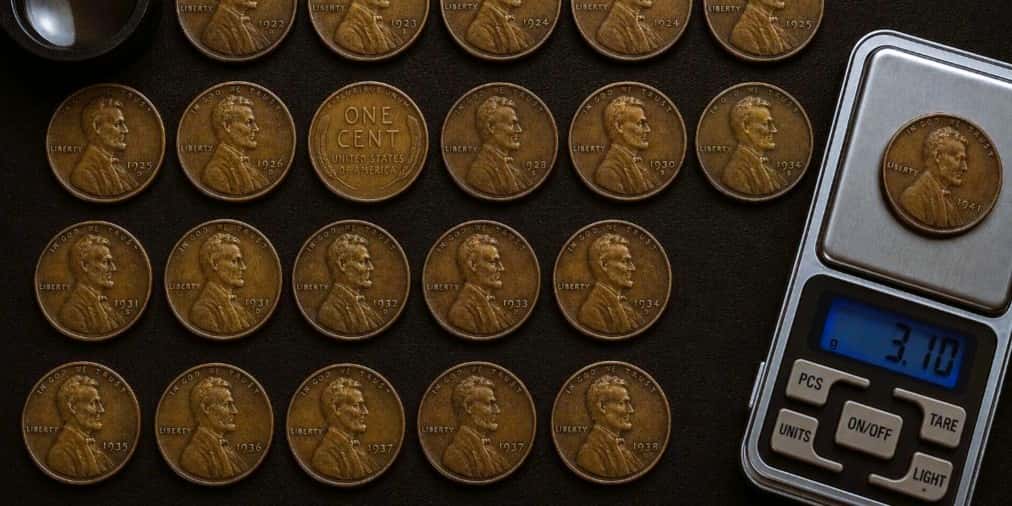
Since its introduction in 1909, the Lincoln Cent has become one of the most widely collected coins in American numismatic history. Known for its long production run and abundance of fascinating mint errors, the series has attracted generations of collectors searching for rare and valuable varieties.

Now that the U.S. Mint has officially discontinued production of the circulating Lincoln cent in November 2025, interest in these coins is experiencing a renewed surge. Collectors and investors alike are revisiting the series, recognizing that the end of circulation marks a pivotal moment in U.S. coinage history.

From subtle doubled dies to dramatic transitional errors like the 1943 Bronze Cent, Lincoln cents continue to offer opportunities for discovery. Understanding key errors by year can help identify valuable coins that may still be hiding in circulation or old collections.

Lincoln Cent Errors by Year: Complete Checklist

1909

  • 1909-S VDB – Not an error, but a highly sought-after key date with low mintage.

  • 1909 Doubled Die Obverse – Strong doubling on “LIBERTY” and parts of Lincoln’s profile.

1917

  • 1917 Doubled Die Obverse – Noticeable doubling on the date and motto.

1922

  • 1922 No D – The only year cents were minted exclusively in Denver; some lack the mintmark entirely due to die wear.

1943

  • 1943 Bronze Cent – Struck on leftover copper planchets from 1942 instead of steel. Extremely rare and valuable.

  • 1943-D Bronze Cent – Scarcer still, with very few known examples.

  • 1943 Steel Cent Doubled Die – Doubling seen on “IN GOD WE TRUST” and “LIBERTY.”

1944

  • 1944 Steel Cent – Transitional error; struck on leftover steel blanks instead of copper.

1955

  • 1955 Doubled Die Obverse – One of the most dramatic and popular doubled die coins. Doubling is bold on all obverse lettering.

1960

  • 1960 Small Date Over Large Date – Notable overdate variety that’s especially prized in proof condition.

1969

  • 1969-S Doubled Die Obverse – Extremely rare. Strong doubling on “LIBERTY” and “IN GOD WE TRUST.”

1970

  • 1970-S Small Date – Scarce in high grades and found in proof and mint sets.

  • 1970-S Doubled Die Obverse – Significant doubling on the date and legend.

1972

  • 1972 Doubled Die Obverse – Strong doubling visible on the date and motto; one of the most well-known DDOs after 1955.

1982 (Transitional Year – Not Traditional Errors)

  • In 1982, both copper and zinc planchets were used during production.

  • Cents exist in Small Date and Large Date varieties for each composition.

  • Collectors search for the elusive 1982-D Small Date Copper, though no confirmed examples exist.

  • Transitional and off-metal errors may occur, making this a hotbed for careful variety hunting.

1983

  • 1983 Copper Planchet Error – Struck on leftover bronze planchets; weighs ~3.11g and is extremely rare.

  • 1983 Doubled Die Reverse – Doubling found on the Lincoln Memorial, motto, and denomination.

1984

  • 1984 Doubled Ear – Distinct extra earlobe below Lincoln’s portrait; widely collected.

1992

  • 1992 Close AM (P & D Mints) – Reverse design meant for proof coins mistakenly used on circulation strikes. Rare and desirable.

1995

1998, 1999, 2000

  • Wide AM Reverse – Reverse spacing intended for proof coins appears on circulation issues, creating collectible varieties.

2004–2006

  • Die Adjustment Strikes / Missing Details – Coins may have weak strikes or missing elements due to debris or die fatigue.

2009

  • Lincoln Bicentennial Series – Multiple reverse designs released to celebrate Lincoln’s 200th birthday. Look for clashed dies and die cracks on early strikes.

2017-P

  • First Cent with a “P” Mintmark – Introduced for the 225th anniversary of the U.S. Mint. Not an error, but a one-year-only issue.

What Drives the Value of Lincoln Cent Errors?

Lincoln Cent errors remain highly sought after due to their combination of rarity, visibility, and historical significance. Many of these varieties are easily identifiable, even for beginner collectors, while others require closer inspection and specialized knowledge.

The discontinuation of the Lincoln cent has added a new layer of urgency and collectibility to the series. As production ends, surviving examples—especially rare error coins—are likely to see increased demand as collectors look to preserve a completed chapter of U.S. coinage.

Key value drivers include:

  • Scarcity: Some errors exist in extremely limited quantities

  • Demand: Strong collector interest, especially after production ended

  • Condition: Higher-grade examples command significant premiums

  • Recognition: Well-known varieties like doubled dies tend to attract consistent attention

This combination makes Lincoln Cent errors one of the most dynamic and accessible areas in numismatics today.

Why Lincoln Cent Errors Matter More Than Ever

With the end of circulating Lincoln cent production in 2025, these coins have officially transitioned from everyday currency to historical artifacts. This shift is already driving renewed interest in both common and rare varieties, as collectors recognize the importance of preserving pieces from the final era of penny production.

Lincoln Cent errors, in particular, stand out as some of the most exciting and rewarding discoveries in U.S. coin collecting. From dramatic doubled dies to rare transitional planchet mistakes, these coins offer both historical insight and real potential value.

Whether you're searching through old rolls, evaluating inherited collections, or actively building a set, now is an especially compelling time to pay attention to Lincoln Cents. With production behind us, every coin tells part of the story—and the next valuable find could still be waiting to be discovered.


Other Penny articles that may interest you:
The Top 100 Most Valuable Wheat Pennies: Unlocking History, Rarity, and Value
1943 Steel Lincoln Wheat Cent: History, Errors, and How to Spot Fakes
Hidden in Plain Sight: The 1944 Lincoln Wheat Cent and Its Wartime Secrets

16 Comments

Avatar
Monica DuarteSeptember 26, 2025
Hello, I'm more interested in getting to know WHAT coins are all about. And especially WHY did these coins have some many ERRORS. So, as I start to empty my PIGGY BANK, and I sorted the coins, then I came across one of my oldest coins ever which is a 1926 and 1928 LINCOLN CENT, I'm not sure if they have any errors yet, and I also have about 33 NO MINT COINS. Can you share with me what I should do with these coins.
Avatar
Bullion ExchangesOctober 09, 2025
It’s always exciting to hear from someone beginning their numismatic journey. Coin collecting can be incredibly rewarding — especially when you start uncovering older pieces like your 1926 and 1928 Lincoln Cents. Many coins feature small variations or “errors” that occurred during the minting process, such as doubled dies, off-center strikes, or missing mint marks. These details can sometimes add collector value, depending on rarity and condition. We recommend carefully examining your coins under good lighting with a magnifying glass, and comparing them to verified examples from trusted references such as the Red Book (Guide Book of United States Coins) or online databases like PCGS or NGC. If any appear unusual or valuable, consider having them professionally graded or authenticated. Sorting and researching your coins is a great first step — and who knows, you might have some hidden treasures in that piggy bank!
Avatar
Olliette JoynerOctober 06, 2025
Hello I have a 1957 wheat penny .. Does it have any value??
Avatar
JazzyBNovember 29, 2025
Of course! The condition matters, if your coins are in perfect mint condition, you've got a coin that can fetch up to 500 dollars! Any errors are perfect for collecting, if you're interested. I'm not sure what specific errors would be, but look closely.
Avatar
NoorOctober 30, 2025
I have a lot of error coins if any interest please contact with me
Avatar
Beatrice Satmary December 26, 2025
I found a penny where the year does not appear to be raised. It looks like 1940. Does not look worn off. Looks like only 19 is raised. What would next steps be? Thx B
Avatar
Bullion ExchangesDecember 26, 2025
Thank you for your question! Coins with unusual or missing details can be interesting, but in many cases they’re the result of wear, damage, or post-mint alterations rather than a true mint error. The best next step is to examine the coin closely under good lighting and magnification, and compare it to a normal 1940 Lincoln cent to see if the surface around the date appears disturbed. If it still seems unusual, we recommend having it evaluated in person by a reputable coin dealer or experienced numismatist, who can determine whether it’s a legitimate error or the result of damage.
Avatar
Davette FloydJanuary 14, 2026
Good day, My challenge is locating a reputable coin dealer or an experienced numismatist to examine coins with errors AND world coins.
Avatar
Bullion ExchangesJanuary 15, 2026
Thank you for reaching out! You are correct, locating a knowledgeable and reputable dealer for error coins and world coins can take some research, as not all dealers specialize in these areas. If you are located near New York City, we invite you to visit Bullion Exchanges, where our experienced team can examine your coins in person and offer guidance on their numismatic potential and whether professional grading may be appropriate. If you are not local, we recommend starting with established local coin shops, especially those that are members of professional organizations such as the American Numismatic Association (ANA). Attending regional coin shows is also an excellent way to meet multiple reputable dealers and error-coin specialists in one place and get informed opinions. For higher-value or unusual pieces, consulting a recognized third-party grading service’s authorized dealers can also be a reliable path. We hope this helps point you in the right direction, and thank you for your question!
Avatar
TyFebruary 08, 2026
Where is the best place to sell error coins? I have some very rare, very high grade ms65 and up pennies I'm looking to get rid of and do not trust ebay as I've been burned there before.
Avatar
Bullion ExchangesFebruary 09, 2026
Thanks for reaching out! For selling error coins and high-grade pennies, many collectors find success working with established numismatic dealers or attending regional coin shows, where you can speak directly with knowledgeable professionals and multiple buyers in one place. Well-known dealers who specialize in U.S. coins and error varieties can also provide fair market evaluations and greater security than online marketplaces. At Bullion Exchanges, we do purchase pennies if they have been certified by a recognized third-party grading service (such as PCGS or NGC). If you’d like to discuss your coins, we invite you to contact our customer service team directly, or—if you’re local to New York City—visit our showroom in the Diamond District, where our numismatic experts would be happy to assist you. https://bullionexchanges.com/contacts
Avatar
Kevin Broderick March 09, 2026
Just wondering if anybody found any 2018-D mint double die pennies
Avatar
Dustin BosticApril 11, 2026
Hi so I have several older wheat pennies that I have kept over the years from 1918 to 1957, and black 65 dime and black 61 nickel among others like the sacagewea dollar. I have been reading but still not sure where to start any advice would be greatly appreciated.
Avatar
Bullion ExchangesApril 13, 2026
Thank you for reaching out! It sounds like you have a great mix of collectible U.S. coins, including Wheat pennies, older nickels, and dimes, which can carry added value depending on their condition, mint mark, and rarity. A good place to start is by organizing your coins by date and mint mark, then identifying any key dates or higher-grade pieces, as those tend to be the most valuable. You can also check recent online auction results to get a better sense of current market values. We strongly recommend not cleaning your coins, as this can significantly reduce their value. You may also consider having them evaluated by a reputable dealer like Bullion Exchanges if you are local to NYC, or visiting a regional coin show for expert numismatic guidance.
Avatar
Small CollectorMay 16, 2026
Hi, I have about 500 pennies with the bulk of the dates ranging from the 1950s to the 2000s. Are there any specific dates and errors I should look out for? Also, how can I tell if a penny is a red penny?
Avatar
Bullion ExchangesMay 18, 2026
Thank you for reaching out! With pennies from the 1950s through the 2000s, some dates and varieties worth checking include 1955 Doubled Die, 1960 Small Date, 1969-S Doubled Die, 1970-S Small Date, 1972 Doubled Die, 1983 Doubled Die Reverse, 1984 Doubled Ear, 1992 Close AM, 1995 Doubled Die, 1998/1999/2000 Wide AM, and 2009 Lincoln Bicentennial varieties. You may also want to separate pre-1982 copper cents, which weigh about 3.11 grams, from most post-1982 copper-plated zinc cents, which weigh about 2.5 grams; because 1982 was a transition year and 1983 cents should normally be zinc, it’s worth weighing any 1982 or unusual-looking 1983 pennies to check for possible transitional errors. A “red” penny generally means it still has most of its original bright copper-orange mint color. Remember to never clean, polish, or rub any coins, as cleaning can permanently damage the surface and reduce collector value. Happy hunting, and we hope you discover something special in your collection!

Leave a comment

FAQs
Lincoln cent errors are gaining value due to their rarity and the 2025 discontinuation of penny production, increasing collector demand.

The 1943 Bronze Cent is considered one of the rarest and most valuable Lincoln cent errors, with only a few known examples.

Look for key features such as doubling, unusual metal composition, missing mintmarks, or rare date varieties.

A doubled die penny shows noticeable doubling on letters or numbers caused by a misalignment during the die creation process.

Some wheat pennies are valuable, especially those with errors or low mintages, while others are worth only their metal value.

The U.S. Mint discontinued production of the circulating Lincoln cent in November 2025, ending over a century of production.

Yes, some rare pennies can still be found in circulation, coin rolls, or old collections.

It is a famous error coin with strong doubling on the obverse lettering, making it highly sought after by collectors.

Have the coin evaluated by a reputable grading service such as PCGS or NGC for authentication and grading.

No, cleaning a coin can reduce its value significantly and should always be avoided.