View Charts
Platinum vs Palladium: Why These Overlooked Metals Matter
 0
0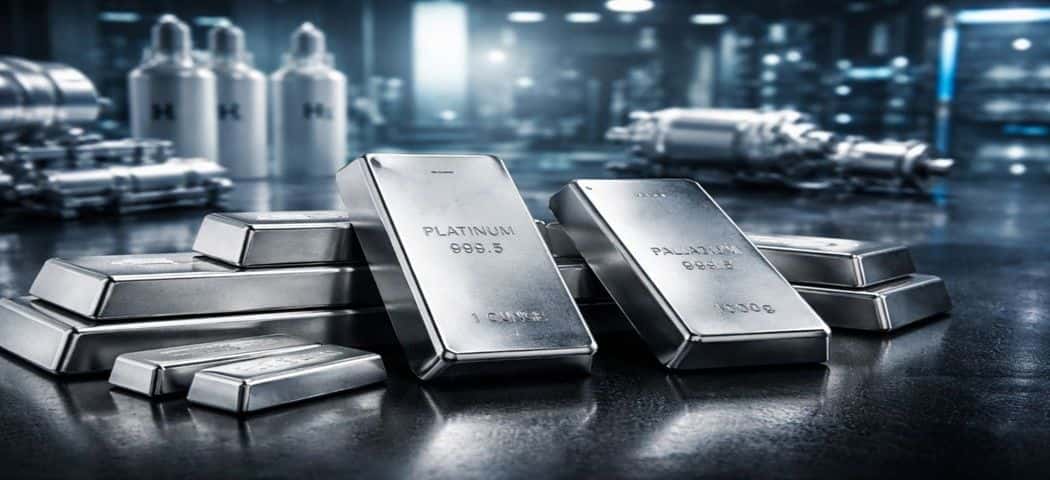
Why Investors Are Rediscovering Platinum and Palladium
Precious metals investors often concentrate on the gold spot price and silver spot price, using these traditional safe-haven assets to gauge inflation, currency strength, and economic uncertainty. However, two other precious metals—platinum and palladium—play an equally important role in the global economy while frequently receiving far less attention.
Both metals belong to the platinum group metals (PGMs) family and are essential to modern industry, particularly in automotive emissions control and emerging clean energy technologies. In 2026, tightening global supply, strong industrial demand, and new energy technologies are bringing these metals back into focus.
As a result, investors who typically track gold and silver markets are increasingly watching the platinum spot price and evaluating the palladium price forecast for signals about future opportunities. Understanding the forces shaping these markets can help investors determine whether platinum and palladium deserve a place in a diversified precious metals portfolio.
What Are Platinum Group Metals?
Platinum and palladium are part of a group of six rare elements known as platinum group metals. These metals share similar chemical properties and are prized for their durability, resistance to corrosion, and catalytic abilities.
The platinum group metals include:
-
Platinum
-
Palladium
-
Rhodium
-
Iridium
-
Osmium
-
Ruthenium
Among these, platinum and palladium dominate global industrial demand and investment interest. Their catalytic properties allow them to accelerate chemical reactions without being consumed in the process, making them critical components in automotive, chemical, and energy technologies.
Unlike gold and silver—whose prices often reflect monetary and investment demand—the platinum spot price and palladium spot price are strongly influenced by industrial production and technological innovation.
Why Platinum and Palladium Are Often Overlooked
Despite their rarity and industrial importance, platinum and palladium are often overlooked by many retail investors.
One reason is that the precious metals market is largely dominated by gold and silver. Investors routinely track movements in the spot prices of gold and silver as indicators of inflation and economic uncertainty.
Another factor is market size. Gold and silver markets are significantly larger and more liquid than platinum or palladium markets, which results in greater media coverage and broader institutional participation.
Finally, platinum and palladium prices tend to move in response to industrial demand rather than purely financial factors. This industrial connection can make the metals appear more complex for investors who primarily focus on monetary metals.
However, the same characteristics that make platinum and palladium less visible can also create compelling investment opportunities when supply shortages or new technologies shift demand.
Why Platinum and Palladium Should Not Be Ignored
Platinum and palladium are among the rarest metals used in modern industry, and their supply chains are highly concentrated geographically. This means that disruptions to mining output can have significant effects on prices.
These metals are also essential for technologies that support environmental regulation and clean energy. Catalytic converters, hydrogen fuel cells, and certain chemical processes rely heavily on platinum group metals.
For investors monitoring the platinum spot price or evaluating a palladium price forecast, these industrial dependencies create a market that can experience strong upward moves when supply tightens or demand expands.
Because platinum and palladium markets are smaller than those for gold and silver, price movements can sometimes be more dramatic when market conditions shift.
Why Platinum and Palladium Are So Rare
Global production of platinum and palladium is highly concentrated in a few regions.
South Africa accounts for the majority of platinum mining, while Russia is a leading supplier of palladium. Smaller quantities come from North America and other regions, but overall supply remains limited.
Another factor limiting supply is that platinum group metals are often produced as by-products of nickel or platinum mining operations. This means mining companies cannot easily increase output even when prices rise.
These structural constraints contribute to price volatility. When disruptions occur in major mining regions, both the platinum spot price and palladium spot price can respond quickly to changing supply conditions.
Platinum and Palladium as U.S. Critical Minerals
Platinum and palladium are not only rare industrial metals—they are also officially classified as critical minerals by the United States government. The U.S. Geological Survey (USGS), which maintains the federal Critical Minerals List, identifies materials that are essential to the economy and national security while also facing potential supply risks.
Both platinum and palladium appear on this list because they play vital roles in technologies that support modern infrastructure, environmental regulation, and emerging clean energy systems. These metals are widely used in automotive catalytic converters, chemical processing, electronics, and hydrogen fuel cell technologies.
Another reason for their classification as critical minerals is the concentration of global supply. Platinum production is heavily dominated by South Africa, while palladium output is concentrated in a small number of mining regions including Russia and South Africa. This geographic concentration creates potential supply vulnerabilities for countries that rely on these metals for industrial manufacturing.
Because of their importance to advanced technologies and their limited global production, platinum group metals have become increasingly significant in discussions about energy security, supply chains, and strategic resource planning. For investors watching platinum and palladium spot prices, their designation as critical minerals highlights the growing strategic importance of these metals in the global economy.
Automotive Demand: The Largest Driver of Platinum and Palladium Prices
The automotive industry remains the largest consumer of platinum and palladium.
Both metals are essential components in catalytic converters, which reduce harmful emissions from gasoline and diesel engines. Environmental regulations around the world have steadily increased the amount of platinum group metals required in vehicle emissions systems.
Traditionally:
-
Palladium is widely used in gasoline engine catalytic converters
-
Platinum has historically been used in diesel engine emissions systems
Automakers can sometimes substitute platinum for palladium depending on market conditions, creating an interesting price relationship between the two metals.
Because vehicle production remains enormous globally, automotive demand continues to play a major role in determining both the prices of both metals.
The Hydrogen Economy and Platinum Demand
Beyond automotive applications, platinum is expected to play a major role in the development of the hydrogen economy.
Hydrogen fuel cells use platinum as a catalyst to generate electricity from hydrogen and oxygen. This process produces only water as a byproduct, making it an attractive technology for clean energy applications.
Governments and energy companies around the world are investing heavily in hydrogen infrastructure, including:
-
Fuel cell vehicles
-
Industrial power systems
-
Large-scale energy storage
If hydrogen technology expands as many analysts expect, demand for platinum could rise significantly.
This growing sector is one of the reasons analysts are closely watching the platinum spot price when evaluating long-term platinum investment potential.
Platinum Price Forecast for 2026–2028
Market analysts expect platinum prices to remain supported by strong industrial demand and constrained supply.
As of early 2026, platinum has been trading around $2,150–$2,200 per ounce, reflecting renewed industrial demand and tightening global supply conditions.
Several market forecasts suggest:
-
Short-term range (2026): $2,100 – $2,400 per ounce
-
Medium-term outlook (2027–2028): $2,300 – $2,700 per ounce
These projections are based on increasing demand from hydrogen fuel cell technologies and continued automotive use.
If hydrogen adoption accelerates faster than expected, some analysts believe the platinum spot price could test $3,000 per ounce within the next decade, particularly if supply disruptions occur in major mining regions.
Palladium Price Forecast: Key Factors to Watch
The palladium price forecast is shaped by both industrial demand and supply constraints.
Palladium prices have historically been volatile due to the metal’s limited supply and heavy reliance on automotive manufacturing.
In early 2026, palladium has been trading near $1,650–$1,700 per ounce, after significant price fluctuations in recent years.
Current market forecasts suggest:
-
Short-term range (2026): $1,600 – $1,900 per ounce
-
Medium-term outlook (2027–2028): $1,800 – $2,200 per ounce
The primary factors influencing these projections include automotive production levels, substitution between platinum and palladium in catalytic converters, and potential supply disruptions in key mining regions.
Because the palladium market is smaller than gold or silver markets, shifts in supply or demand can produce rapid price movements.
Platinum vs Palladium vs Gold and Silver
A useful way to understand platinum and palladium markets is to compare them with the more familiar precious metals gold and silver.
Gold and silver are widely viewed as monetary metals. Investors frequently track the spot prices of silver and gold as indicators of inflation, currency stability, and macroeconomic uncertainty.
Platinum and palladium, by contrast, are more closely tied to industrial demand. Their prices often move in response to technological developments, manufacturing activity, and environmental regulations.
Another important difference is market size. Gold and silver markets are enormous, with deep liquidity and widespread investor participation. Platinum and palladium markets are much smaller, which can result in greater price volatility.
However, this smaller market size can also create opportunities. Because supply is limited and demand can shift quickly, platinum and palladium sometimes experience dramatic price movements that attract investor interest.
How to Invest in Platinum and Palladium
Investors interested in platinum and palladium have several options.
Physical bullion remains one of the most straightforward methods. Platinum and palladium coins and bars allow investors to directly own the metal and benefit from movements in the platinum and palladium spot prices.
Other investment vehicles include:
-
Exchange-traded funds (ETFs)
-
Commodity futures contracts
-
Mining stocks focused on platinum group metals
Many precious metals investors prefer physical ownership because it eliminates counterparty risk and provides direct exposure to a scarce tangible asset.
Are Platinum and Palladium Good Long-Term Investments?
Like all commodities, platinum and palladium carry both opportunities and risks. However, several long-term factors support continued investor interest.
These include:
-
Growing demand from emissions control technology
-
Expansion of hydrogen fuel cell infrastructure
-
Extremely limited global mining supply
For investors who already track the spot prices of gold and silver, adding platinum group metals can provide additional diversification within a precious metals portfolio.
Key Takeaways: Platinum and Palladium Investment Insights
-
Platinum and palladium are among the rarest precious metals in the world. Their limited global supply and concentrated mining regions can lead to significant price movements when production disruptions occur.
-
Industrial demand is the primary driver of both metals. Unlike gold and silver—which are heavily influenced by investment demand and macroeconomic factors—the platinum spot price and palladium spot price are closely tied to automotive production, emissions regulations, and advanced technologies.
-
The automotive industry remains the largest consumer of platinum group metals. Catalytic converters used in gasoline and diesel vehicles rely on platinum and palladium to reduce harmful emissions, supporting long-term demand for these metals.
-
The emerging hydrogen economy may significantly increase platinum demand. Hydrogen fuel cell technologies use platinum as a catalyst, making the metal an important component in the global transition toward cleaner energy systems.
-
Supply constraints can create price volatility. With platinum production dominated by South Africa and palladium largely sourced from Russia and a few other regions, geopolitical and mining disruptions can quickly impact prices.
-
Market forecasts suggest potential upside for both metals. Analysts expect the platinum price outlook to remain supported in the $2,100–$2,700 per ounce range over the coming years, while the palladium price forecast suggests possible trading ranges between $1,600 and $2,200 depending on industrial demand and supply conditions.
-
Platinum and palladium offer diversification beyond gold and silver. Investors who already monitor the gold spot price and silver spot price may find that adding platinum group metals provides additional exposure to industrial growth and emerging technologies.
-
Physical bullion remains a popular investment option. Palladium and platinum coins and bars allow investors to gain direct exposure to movements in the platinum spot price and palladium spot price while owning a scarce tangible asset.
Platinum and Palladium Investment Outlook and Market Potential
Although gold and silver dominate the precious metals conversation, platinum and palladium play a critical role in modern industry and emerging energy technologies.
Their rarity, industrial demand, and growing importance in clean energy systems make them two of the most fascinating metals in the commodities market today.
Investors who monitor the spot prices of platinum and palladium may discover opportunities in markets that have historically been overlooked.
As global demand for emissions control technologies and hydrogen energy continues to grow, platinum and palladium could become increasingly important components of a diversified precious metals investment strategy.
Related reading you may find interesting:
Is Platinum Undervalued? Breakout Potential in 2026