View Charts
Indian Head Pennies: History, Key Dates, and What Drives Their Value
 2
2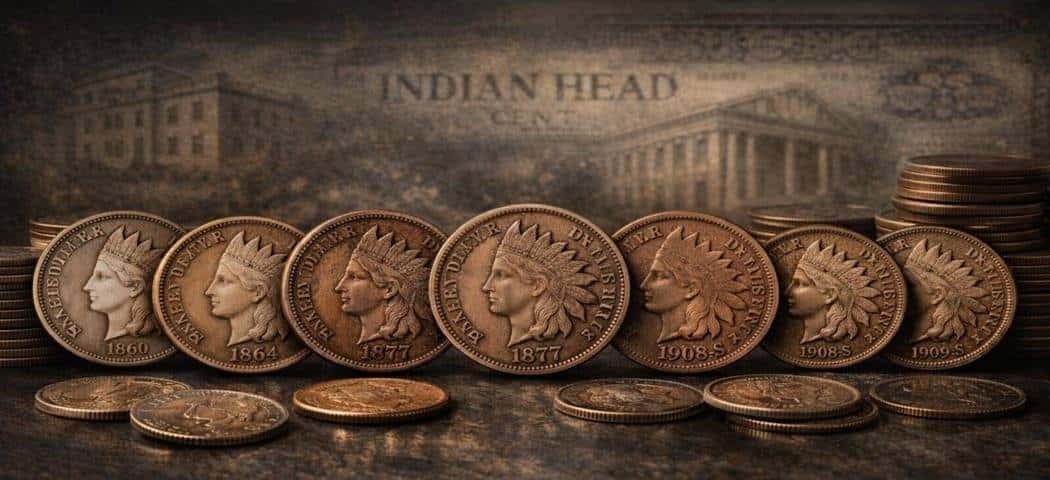
Found an Indian Head Penny? Here’s How to Tell If It’s Valuable
Indian Head pennies hold a special place in American numismatics, combining 19th-century history with enduring collector demand. Struck from 1859 through 1909, these one-cent coins are frequently searched by people uncovering old collections, family heirlooms, or individual coins found in drawers and albums. While not every Indian Head penny is rare, many are worth more than face value due to age, composition, scarcity, and condition. Understanding how Indian Head penny value is determined is essential for separating genuinely collectible coins from common examples.
A Brief History of the Indian Head Cent
The Indian Head penny was introduced in 1859 as a replacement for the large cent. Designed by James B. Longacre, the obverse depicts Lady Liberty wearing a Native American–style headdress, while the reverse evolved from a simple laurel wreath to an oak wreath with shield beginning in 1860.
The series spanned a transformative period in U.S. history, including the Civil War, Reconstruction, and the rise of industrial America. Production ended in 1909, when the Lincoln Wheat penny was introduced to commemorate Abraham Lincoln’s 100th birthday.
Composition Changes and Why They Matter
One of the most important factors affecting Indian Head penny value is composition. The series was struck in two distinct metal types:
-
1859–1864: Copper-nickel alloy (88% copper, 12% nickel)
-
1864–1909: Bronze composition (95% copper, 5% tin and zinc)
Copper-nickel Indian Head pennies tend to be scarcer in higher grades because the harder alloy did not strike as cleanly and often circulated heavily. Bronze issues are more common overall, but condition still plays a major role in determining value.
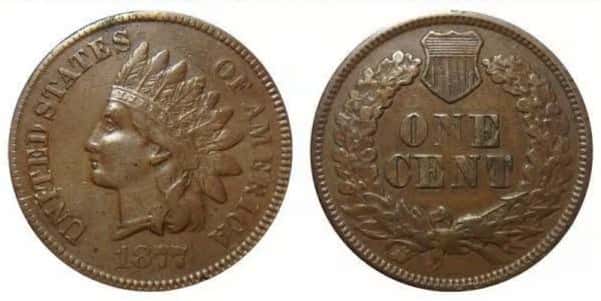
1877 Indian Head Penny
Key Dates That Drive Indian Head Penny Value
While many Indian Head pennies are collectible due to age alone, a small group of dates accounts for a significant portion of the series’ total value. These are commonly referred to as key dates.
Notable key dates include:
-
1877 Indian Head penny: Widely regarded as the key date of the series, with an extremely low mintage of approximately 852,500 coins, making it scarce in all grades.
-
1908-S and 1909-S: San Francisco Mint issues with limited production
-
1869, 1872, and 1873: Scarcer dates that command premiums in all grades
These coins are rarely encountered outside of established collections, and even worn examples can be worth hundreds or thousands of dollars depending on authenticity and condition.
How Condition Impacts Indian Head Penny Value
Condition is one of the most misunderstood aspects of Indian Head penny collecting. Two coins with the same date can have vastly different values based solely on wear, surface quality, and eye appeal.
Collectors closely examine:
-
Strength of LIBERTY in the headdress
-
Sharpness of feathers and wreath details
-
Original surfaces versus cleaning or damage
-
Presence of corrosion, especially on copper coins
Because Indian Head pennies are copper-based, improper storage or cleaning can significantly reduce value. Coins with natural color and minimal surface issues consistently command stronger prices.
Error Coins and Unusual Varieties
Although less common than with modern coinage, genuine mint errors do exist within the Indian Head penny series and can add meaningful value when properly authenticated.
Examples include:
-
Off-center strikes
-
Clipped planchets
-
Die cracks or major cuds
-
Wrong planchet errors (extremely rare for this series)
It is important to distinguish true mint errors from post-mint damage. Many coins with corrosion, dents, or scratches are mistakenly assumed to be errors but carry no added value.
Are Indian Head Pennies Made of Silver?
A common misconception among new collectors is that Indian Head pennies contain silver. They do not. All Indian Head cents were struck in copper-based alloys. Any claim of a silver Indian Head penny should be treated with skepticism unless backed by professional authentication confirming a rare wrong-planchet error.
How Much Are Indian Head Pennies Worth Today?
Indian Head penny value varies widely depending on date, condition, and demand. As a general reference:
-
Common-date Indian Head pennies (worn): Often trade in the $1–$5 range
-
Better dates or higher-grade examples: $20–$100+
-
Key dates like 1877: Hundreds to several thousand dollars
Market prices fluctuate based on collector demand and overall numismatic conditions, making current auction results an important reference point.
What to Do If You Think You Have a Valuable One
If you believe you have an Indian Head penny of potential value, avoid cleaning or altering it in any way. Cleaning can permanently damage the coin’s surface and reduce its desirability.
Start by identifying the date and assessing overall condition. Comparing recent auction sales can provide context, but professional evaluation is recommended for better dates or unusual examples. A reputable coin dealer or numismatic professional can determine whether professional grading through PCGS or NGC is appropriate.
Why Indian Head Pennies Continue to Attract Collectors
The enduring appeal of Indian Head pennies lies in their blend of history, scarcity, and accessibility. They offer collectors a tangible connection to 19th-century America while still providing meaningful opportunities to discover coins with genuine numismatic value.
Whether found in an old collection or purchased intentionally, Indian Head pennies remain one of the most studied and searched U.S. coin series—proof that even a small copper cent can carry lasting historical and financial significance.
Image source: usacoinbook.com
2 Comments