View Charts
How to Test If Gold Is Real: At-Home & Professional Methods
 0
0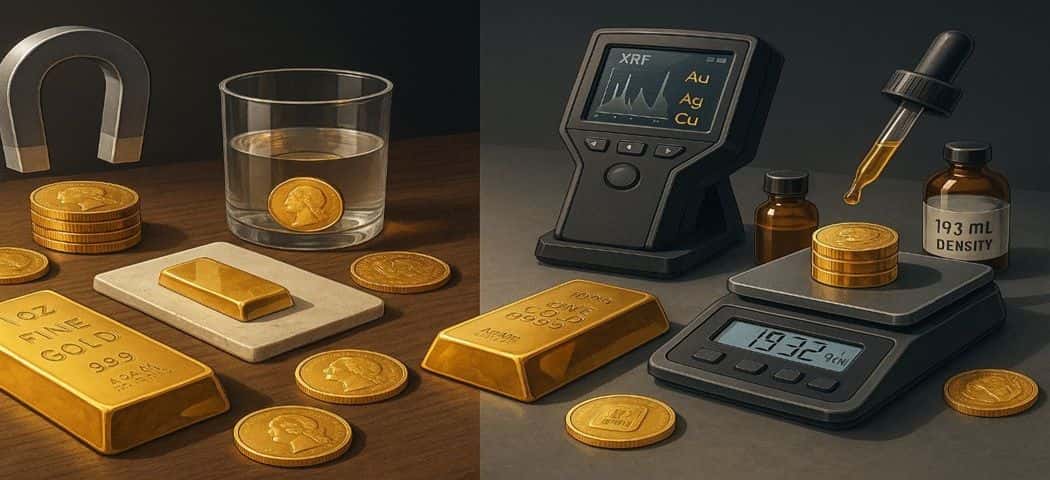
Why Testing Gold Matters
Gold’s allure has endured for centuries, serving as both money and a reliable store of wealth. Today, with gold prices hitting record highs, counterfeit risks are rising too. Sophisticated fakes — from gold-plated tungsten bars to convincing replica coins — are increasingly entering the market, targeting both investors and collectors. The surge in demand for bullion and jewelry during times of economic uncertainty creates more opportunities for counterfeiters to profit, making vigilance more important than ever. Whether you’re a first-time buyer or a seasoned numismatist, learning how to verify authenticity is crucial for protecting your investment.
This guide breaks down the most effective methods for testing gold, separating the techniques you can perform at home from those best left to professional experts. By understanding these tools and approaches, you’ll be better equipped to safeguard your portfolio and ensure every piece of gold you own is the real thing.
At-Home Methods: Quick Tests for Gold Authenticity
While no single at-home test guarantees 100% certainty, combining several methods can help you spot red flags before you make a purchase or decide to sell.
-
Visual Inspection
Examine your gold carefully under good lighting. Authentic bullion should have crisp edges, fine detail, and accurate inscriptions of weight, purity (such as “.9999 Fine Gold”), and mint marks. Counterfeits often display blurred designs, misspelled words, or inconsistent finishes.
-
Magnet Test
Real gold is non-magnetic. A simple neodymium magnet test can help rule out many fakes made from steel or iron. Be cautious, though — sophisticated counterfeits may use non-magnetic alloys, so passing this test alone isn’t conclusive.
-
Density Test
Gold has a density of 19.32 g/cm³. Using a scale and water displacement, you can calculate density at home. If the result deviates significantly, your item may be plated or filled with another metal like tungsten.
-
Ceramic Scratch Test
Dragging gold across an unglazed ceramic tile should leave a gold streak (not black or gray). This method can scratch softer gold, so it’s best reserved for scrap or small items, not collectible coins.
-
Acid Test Kits
Acid solutions for different karats can help determine purity. When a drop of acid is applied, genuine gold resists reaction, while base metals discolor or dissolve. These kits are affordable but carry risks of damaging the item or giving false results if misapplied.
Professional Gold Testing: When Accuracy Matters
For investors, serious collectors, and those trading high-value bullion, professional testing ensures absolute peace of mind.
-
X-Ray Fluorescence (XRF) Analysis
XRF spectrometers scan a coin or bar without damaging it, providing an instant readout of purity. This is one of the most trusted and widely used methods by dealers, refineries, and grading services.
-
Ultrasonic Testing
Ultrasonic machines measure sound waves passing through gold. Variations in speed reveal whether the piece has a uniform gold structure or if it’s been filled with another material. This is especially useful for thicker bars.
-
Fire Assay
Considered the gold standard, fire assay melts down the sample to determine exact content. While nearly 100% accurate, it is destructive and generally reserved for refining, not collectibles.
-
Professional Coin Grading and Authentication
Services such as PCGS and NGC authenticate and grade gold coins, sealing them in tamper-proof slabs. This adds not only security but also liquidity in the resale market.
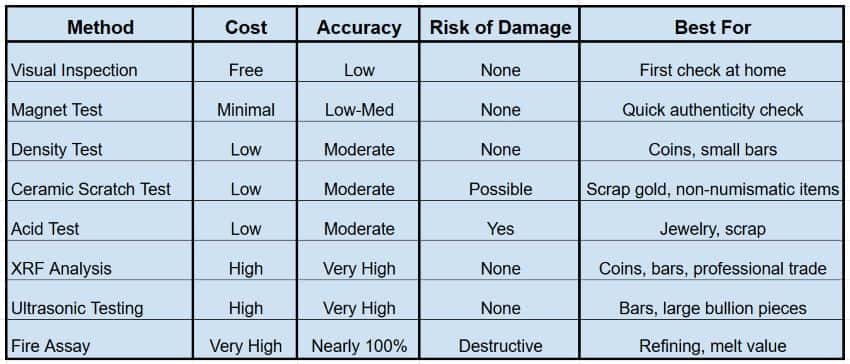
At-Home vs. Professional Testing: A Quick Comparison
Buy From Trusted Dealers Like Bullion Exchanges
The most effective way to avoid counterfeit gold is to purchase exclusively from reputable dealers. Bullion Exchanges guarantees authenticity on every product, sourcing directly from globally respected mints such as the U.S. Mint, Royal Canadian Mint, PAMP Suisse, Perth Mint, and Valcambi.
Buying from established dealers eliminates most of the risks associated with private sellers, flea markets, or online auctions where counterfeits circulate. Bullion Exchanges also offers buyback services, ensuring liquidity when you’re ready to sell.
Protecting Your Gold Investments
As gold spot prices reach unprecedented valuations, opportunities for counterfeiters to exploit the market continue to grow. At-home methods provide a useful first defense, but only professional verification can guarantee authenticity with certainty.
For investors and collectors, the smartest safeguard is twofold: perform basic checks yourself, and source exclusively from trusted dealers like Bullion Exchanges, where every coin and bar comes with assurance of authenticity.
Gold is more than a commodity — it’s a legacy asset. Confirming its authenticity ensures your wealth and your confidence remain unshakable.
Another article that may interest you:
How Modern Bullion Fights Counterfeiting: Mint Security Innovations