View Charts
How Much Gold and Silver Does the Average Investor Own?
 0
0
Most Americans Own Less Precious Metal Than They Think They Should
The question sounds simple: how much gold and silver does the average American own? The honest answer is less precise than many investors expect. There is no official national registry of privately held bullion, no reliable household census of coin and bar ownership, and no single government dataset showing how much physical gold or silver sits in American safes, vaults, and home storage.
Still, available surveys and market research point to a consistent pattern. Most Americans do not appear to own meaningful physical precious metals, even though gold is increasingly viewed as one of the best long-term investments. Gallup’s latest long-term investment polling showed gold rising in public favor, while World Gold Council research has found strong gold adoption among North American professional investors. That creates a striking divide: institutions and advisors are increasingly comfortable with gold exposure, while many households remain underallocated or own none at all.
For investors asking “how much gold should I own,” the more useful benchmark is not the average American. It is the allocation that fits a portfolio’s purpose. Precious metals ownership is less about matching the crowd and more about building resilience, liquidity, and long-term purchasing power protection.
The Average American Ownership Number Is Hard to Pin Down
Public estimates suggest only a minority of Americans own physical gold or silver coins and bars. One frequently cited private survey from Gold IRA Guide reported that roughly 10.8% of Americans owned physical gold and 11.6% owned silver. Those figures should be treated as directional rather than definitive, since survey methods, sample size, and definitions of ownership can vary.
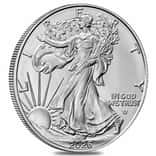
The numbers also blur important distinctions. Someone who owns one Silver Eagle is counted differently from someone with a full monster box, yet both may fall into the same “ownership” category. A person with jewelry may not be a bullion investor. A retiree holding gold ETFs may have precious metals exposure without owning physical coins or bars.
That is why average ownership statistics can mislead. They tell us that most Americans likely have little or no direct bullion exposure, but they do not tell us what a serious investor should own. The more meaningful question is whether a household’s precious metals allocation matches its financial goals, risk tolerance, and confidence in traditional assets.
Professional Investors Are Treating Gold More Seriously
The gap between households and professionals is widening. World Gold Council research has shown that a large majority of surveyed North American professional investors reported some form of gold allocation. That does not mean they all hold physical bars in a vault; exposure may include ETFs, funds, mining equities, futures, or other investment vehicles. Still, the trend shows that gold is no longer dismissed as a fringe asset among institutional allocators.
This matters because professional investors tend to think in terms of correlation, liquidity, drawdown protection, and macro risk. Gold’s appeal is not simply that it can rise during crises. Its value often comes from behaving differently than equities, bonds, cash, or real estate during certain market environments.
The individual investor may approach gold more emotionally, often viewing coins and bars as financial insurance. Yet the underlying logic overlaps with institutional practice: precious metals can help diversify risk when inflation, currency pressure, debt concerns, or geopolitical uncertainty challenge conventional portfolios.
Common Allocation Ranges Matter More Than Averages
Most practical precious metals allocation discussions fall within a broad range rather than a single number. A commonly cited starting point is 5% to 10% of a portfolio in precious metals, with more defensive investors sometimes considering higher allocations depending on age, risk tolerance, income needs, and economic outlook.
That range is not a rule. It is a framework.
A younger investor with a long time horizon, high equity exposure, and stable income may prefer a smaller allocation. A retiree focused on wealth preservation may want more. A business owner already exposed to economic cycles may use metals differently than a salaried investor with a diversified retirement account.
The purpose of the allocation matters as much as the percentage. A 5% position can serve as a modest hedge. A 10% allocation can become a more meaningful portfolio stabilizer. Larger allocations may reflect stronger concerns about inflation, currency debasement, financial-system stress, or market concentration.
Gold and Silver Play Different Portfolio Roles
Gold and silver are often discussed together, but they behave differently inside a portfolio. Gold is generally the more stable monetary metal, supported by central bank demand, investment flows, jewelry demand, and its long-standing role as a reserve asset. It is often chosen for wealth preservation, liquidity, and lower volatility relative to silver.
Silver offers a different mix. It has monetary appeal, but its price is more heavily influenced by industrial demand from solar energy, electronics, automotive technology, medical applications, and emerging infrastructure trends. That industrial connection can make silver more volatile, but it can also create stronger upside during periods of economic growth or supply tightness.
For allocation purposes, investors often treat gold as the anchor and silver as the higher-beta complement. A portfolio might hold more gold for stability and smaller silver exposure for growth potential. Others may favor silver because of its lower per-ounce price and accessibility for gradual accumulation.
Ounces Matter, but Percentages Matter More
New investors often ask how many ounces of gold or silver they should own. The answer depends heavily on portfolio size and purpose. A single ounce of gold can represent a meaningful store of value for one household and a small allocation for another. The same is true for silver, where weight accumulates quickly because of the lower per-ounce price.
This is why percentage-based thinking is usually more useful than ounce-based comparisons. If an investor has a $100,000 portfolio and wants a 10% precious metals allocation, the target is $10,000 in metals. The mix between gold and silver can then be adjusted based on liquidity preferences, storage comfort, volatility tolerance, and long-term expectations.
Ounces become useful once the allocation target is clear. Before that, they can create false comparisons. Owning 100 ounces of silver may sound substantial, but its portfolio role depends entirely on the investor’s overall financial picture.
Physical Bullion Is Different From ETF Exposure
The average investor may gain precious metals exposure through physical bullion, ETFs, mining stocks, retirement accounts, or a combination of these vehicles. Each structure solves a different problem.
Physical coins and bars provide direct ownership, no management fee, and no reliance on fund structures. They also require secure storage, insurance planning, and careful attention to premiums and resale spreads. ETFs provide convenience and liquidity, but they do not offer the same sense of direct physical control. Mining stocks can amplify precious metal spot price movements, but they introduce company-specific risks such as management decisions, production costs, political exposure, and operational problems.
This distinction is especially important when discussing “how much” precious metal someone owns. A gold ETF position may provide price exposure, but it is not the same as holding Gold Eagles, Gold Buffalos, bars, or silver rounds. The best approach often depends on whether the investor prioritizes convenience, control, liquidity, or crisis preparedness.
The Household Benchmark Is Probably Underallocation
If survey estimates are directionally accurate, the average American likely owns little or no physical bullion. That does not automatically mean every household should rush into metals, but it does suggest that public interest and actual ownership remain far apart.
The gap is especially interesting because gold has gained favor in public investment polling. Many Americans say they view gold positively, yet relatively few appear to own it in physical form. This divide may reflect lack of education, uncertainty about premiums, confusion over storage, or the assumption that precious metals are only for wealthy investors.
In reality, bullion ownership can scale. Some investors begin with fractional gold, silver rounds, or one-ounce silver coins. Others build larger positions over time. The important point is not matching an average that may be too low to matter. It is creating an allocation that serves a clear purpose.
Building a Practical Precious Metals Allocation
A practical allocation begins with intent. Investors should decide whether they are buying metals for emergency liquidity, long-term preservation, inflation protection, portfolio diversification, inheritance planning, or tactical upside. Each goal leads to a different mix of products.
A preservation-focused investor may prefer widely recognized gold coins and bars. A cost-conscious accumulator may favor lower-premium silver bars and rounds. A collector-investor may include numismatic coins, but should understand that collectible premiums behave differently than bullion premiums. Someone using precious metals as a liquidity reserve may prioritize products that are easy to sell in small increments.
The strongest strategies are rarely built in one purchase. Many investors accumulate gradually, using pullbacks or periodic purchases to build positions over time. This reduces timing pressure and allows the allocation to evolve with market conditions, income, and personal goals.
The Better Question Is How Much Protection You Want
The average American’s precious metals ownership is not the benchmark most investors should use. If anything, it highlights how underrepresented physical gold and silver remain in many household portfolios.
The better question is how much protection, diversification, and direct ownership an investor wants. For some, a modest allocation provides enough confidence. For others, gold and silver become a more meaningful part of long-term wealth planning.
Precious metals are not a substitute for every other asset. They do not produce income, and their prices can be volatile. But they offer something many financial assets cannot: physical scarcity, broad recognition, and a history of preserving value across changing economic regimes. In a world where investors are reassessing inflation, debt, currency risk, and market concentration, the relevant benchmark may not be what the average American owns. It may be what the prepared investor chooses to own.
Related reading you may find interesting:
5 Events That Could Send Gold to New Record Highs