View Charts
How Many Grams Are In An Ounce of Gold?
 2
2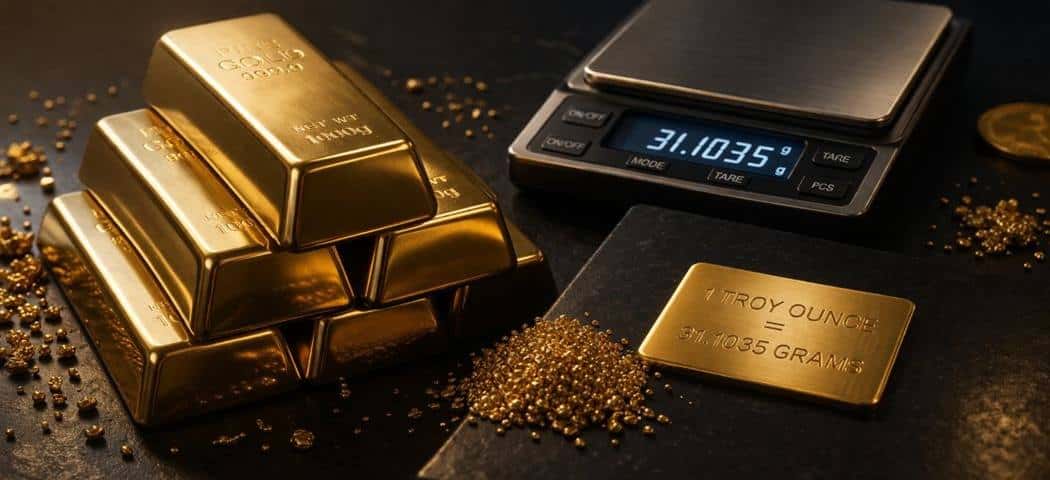
Understanding Gold Weight and Value in Today’s Market
Gold remains one of the most sought-after assets in the world, valued for its stability, liquidity, and long-term purchasing power. As of March 2026, with the gold spot price hovering around $4,500 per ounce, understanding how gold is measured has never been more important. Whether you are evaluating gold bars, comparing bullion coins, or tracking the live gold price, weight plays a direct role in determining value.
For both new and experienced investors, knowing how grams convert to ounces—and specifically to troy ounces—is essential for accurate pricing. Even small misunderstandings can lead to meaningful differences in value at today’s elevated gold spot price levels.
What Is a Troy Ounce and Why It Matters
Gold is not measured using the standard ounce found in everyday items. Instead, it is priced using the troy ounce (ozt), which equals 31.1035 grams. By comparison, a standard ounce weighs only 28.3495 grams—a difference that can significantly impact valuation.
Historical Origins of the Troy Ounce
The troy ounce dates back to medieval Europe, where it was used in the French trading city of Troyes. As commerce in precious metals expanded, this system became the accepted standard for weighing gold and silver The United States later adopted the troy ounce as the official unit for bullion transactions, and it remains the global benchmark today.
From gold bars to coins and ETFs, nearly all gold pricing is based on the troy ounce, making it a critical concept for anyone involved in the precious metals market.
Why Accurate Gold Weight Conversion Is Critical
At today’s gold price near $4,500 per troy ounce, even minor conversion errors can result in substantial financial discrepancies. Confusing a standard ounce with a troy ounce means underestimating gold weight by nearly 10%.
For example, if someone mistakenly calculates value using 28.35 grams instead of 31.1035 grams, the difference could exceed $400 per ounce in today’s market. That margin is significant whether you’re buying a single coin or building a diversified bullion portfolio.
Accurate measurement is especially important when:
-
Comparing gold spot price to product premiums
-
Evaluating scrap or recycled gold
-
Buying or selling gold bars and coins internationally
Precision ensures transparency—and ultimately protects your investment.
Gold Weight Conversion: Grams to Troy Ounces
Understanding the basic conversion is simple but essential:
-
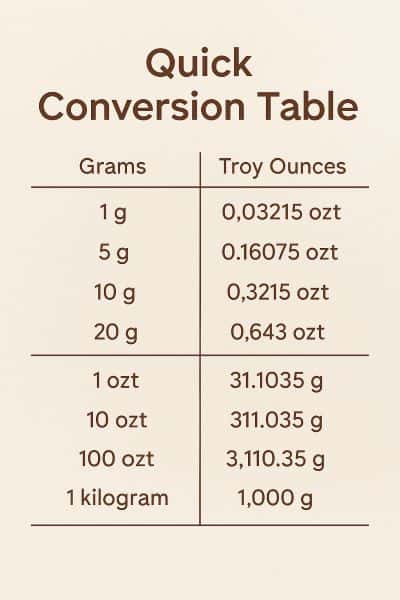
1 troy ounce = 31.1035 grams
-
1 gram = 0.03215 troy ounces
These figures allow investors to quickly calculate the value of gold across different weights and formats. Whether you’re reviewing gram-based gold bars or ounce-denominated bullion coins, these conversions provide a consistent framework for evaluating price.
Gold Price Per Gram in 2026
With the gold spot price currently around $4,500 per troy ounce, the approximate value per gram is:
$4,500 ÷ 31.1035 = ~$144.70 per gram
This conversion is especially useful for buyers exploring smaller denominations, such as 1 gram or 5 gram gold bars. As gold prices continue to respond to inflation, central bank demand, and global economic conditions, tracking both the price per ounce and per gram offers a more complete view of market value.
For real-time updates, investors should monitor the live gold spot price chart, which reflects ongoing market movements and helps identify optimal entry points.
Gold Bar Size Comparison (Grams vs. Ounces)
Gold bars come in a wide range of sizes, and understanding how they compare to everyday objects can help new buyers visualize their investment.

Bullion Exchanges offers a wide selection of gold bars in all weights, suitable for every level of investor.
Coin Weight Comparison (Ounces vs. Grams)
While gold bars are typically measured in grams and ounces, gold coins vary widely in both measurement and denomination.
Popular modern bullion coins like the American Gold Eagle, Canadian Gold Maple Leaf, and South African Krugerrand are generally issued in troy ounces or fractional sizes:
Not All Coins Use Troy Ounces
Some coins - especially older or foreign ones - are measured directly in grams. Examples include:
-
Mexican 50 Pesos Gold Coin: ~37.5 grams (~1.205 ozt)
-
Pre-1933 $20 Saint-Gaudens Double Eagle: ~33.44 grams (~0.9675 ozt)
-
Chinese Gold Panda: Issued in gram denominations (e.g., 30g ≈ 0.9645 ozt since 2016)
Knowing these weight differences is crucial for properly calculating value and premiums when purchasing older or international coins.
Why Grams vs. Ounces Confuse Buyers (and How to Avoid Mistakes)
The primary source of confusion comes from the dual system of measurements. Everyday objects are weighed in standard ounces and grams, while gold is strictly priced in troy ounces.
Tips to Avoid Confusion:
-
Always confirm whether pricing is listed in grams or troy ounces
-
Use 31.1035 grams per troy ounce when calculating spot value
-
Stick with trusted dealers like Bullion Exchanges who clearly label weight units
-
Check live gold prices daily to calculate fair value
Grams vs. Troy Ounces: A Key to Smarter Gold Investing
Understanding how gold is measured is more than just a technical detail—it’s a fundamental part of making informed investment decisions. With gold trading at historically elevated levels in 2026, even small miscalculations can translate into meaningful financial differences.
By mastering the relationship between grams and troy ounces, investors can confidently compare products, evaluate pricing, and avoid costly mistakes. Whether you’re purchasing gold bars, collecting bullion coins, or diversifying your portfolio, accurate weight conversion is essential.
At Bullion Exchanges, we provide transparent pricing, precise product specifications, and real-time market data to help you navigate today’s gold market with confidence. As gold continues to play a critical role in wealth preservation, having the right knowledge ensures you can invest with clarity and precision.
2 Comments