View Charts
How Central Banks Influence Gold and Silver Prices
 0
0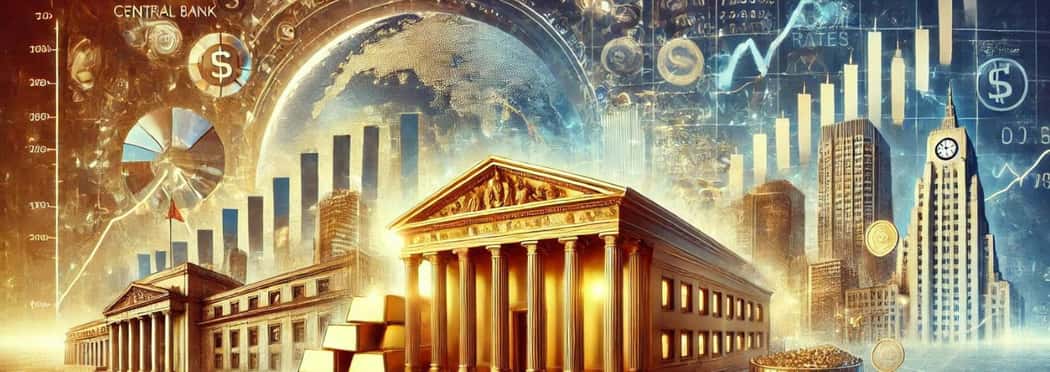
Gold and silver have long been considered safe-haven assets, particularly in times of economic uncertainty. Investors flock to these precious metals as a store of value, protection against inflation, and hedge against currency devaluation. But what many people may not realize is how central banks play a crucial role in influencing the prices of gold and silver. Central banks, which are responsible for managing a country’s currency, money supply, and interest rates, have a significant impact on the global precious metals market. This article will explore the various ways central banks influence gold and silver prices, and why these factors are essential for investors to understand.
Central Bank Gold Reserves
One of the most direct ways central banks influence gold prices is through their gold reserves. Central banks hold substantial quantities of gold as part of their foreign exchange reserves. These reserves serve as a financial buffer and are used to stabilize the country's currency and economy. The amount of gold that central banks choose to hold or sell can have a significant impact on gold prices.
For example, when central banks decide to increase their gold reserves, it signals strong demand for gold, which can drive prices up. Conversely, if central banks start selling off large quantities of gold, it can flood the market and lead to a decline in prices. The decisions made by central banks regarding their gold reserves are often closely monitored by investors and can result in significant price fluctuations.
Interest Rates and Gold Prices
Interest rates are another critical tool used by central banks that can influence gold and silver prices. When central banks raise interest rates, the opportunity cost of holding non-yielding assets like gold and silver increases. In other words, higher interest rates make it more attractive for investors to hold interest-bearing assets like bonds or savings accounts instead of gold or silver, which do not generate interest. This shift in investor behavior can lead to a decrease in demand for precious metals and, consequently, lower prices.
On the other hand, when central banks lower interest rates, the opposite effect occurs. Lower interest rates reduce the opportunity cost of holding gold and silver, making these metals more attractive as investments. As demand for gold and silver increases, prices typically rise. This dynamic is particularly evident during periods of economic uncertainty when central banks often lower interest rates to stimulate economic activity. During such times, gold and silver prices tend to surge as investors seek safe-haven assets.
Monetary Policy and Inflation

Central banks use monetary policy to control the money supply and influence economic conditions. One of the primary goals of monetary policy is to manage inflation. Inflation occurs when the general price level of goods and services rises, eroding the purchasing power of money. Gold and silver are often seen as hedges against inflation because their value tends to increase as the purchasing power of fiat currencies declines.
When central banks implement expansionary monetary policies, such as lowering interest rates or engaging in quantitative easing (printing more money), they increase the money supply. This can lead to higher inflation expectations, prompting investors to buy gold and silver as a hedge against the anticipated loss of currency value. As a result, gold and silver prices may rise in response to expansionary monetary policies.
Conversely, when central banks adopt contractionary monetary policies to combat inflation, such as raising interest rates or reducing the money supply, it can reduce inflationary pressures. In this scenario, the demand for gold and silver as inflation hedges may decrease, leading to lower prices.
Currency Values and Precious Metals
The value of a country’s currency is closely tied to the actions of its central bank. When a central bank takes measures to strengthen its currency, such as raising interest rates or tightening monetary policy, it can make gold and silver more expensive for foreign investors. This is because gold and silver are typically priced in U.S. dollars on the global market. A stronger U.S. dollar, for example, makes gold and silver more expensive for buyers using other currencies, which can reduce demand and push prices down.
Conversely, when central banks devalue their currency or implement policies that weaken it, gold and silver become cheaper for foreign investors, increasing demand and driving prices up. This relationship between currency values and precious metals prices is particularly evident in times of economic instability or geopolitical uncertainty, when investors flock to gold and silver as safe-haven assets.
Central Bank Gold Agreements

Central banks also influence gold prices through agreements such as the Central Bank Gold Agreement (CBGA). The CBGA, first signed in 1999 by major European central banks, was an agreement to limit the amount of gold that signatories could sell in a given year. The agreement was designed to prevent large-scale gold sales from destabilizing the market and causing price volatility.
By agreeing to limit gold sales, central banks helped stabilize the gold market and prevent sharp declines in prices. While the CBGA expired in 2019, the legacy of such agreements underscores the significant influence that central banks have over the gold market. The actions of central banks, whether through formal agreements or individual decisions, can have a profound impact on gold prices.
Conclusion
Understanding how central banks influence gold and silver prices is essential for anyone interested in investing in precious metals. From managing gold reserves and setting interest rates to controlling monetary policy and currency values, central banks play a pivotal role in shaping the market for these precious metals. Investors who keep a close eye on central bank actions and policies can better anticipate price movements in gold and silver, making more informed investment decisions. As the global economy continues to evolve, the relationship between central banks and precious metals will remain a critical factor in determining the value of gold and silver.
Another article that may interest you:
Understanding Silver Spot Price: Key Factors and Market Influences