View Charts
GOLD, SILVER, AND BITCOIN PRICES, DAILY MARKET NEWS. SEPTEMBER 2023.
 0
0Oil Prices Reach New Heights
Sept. 28, 2023
Source: Canva
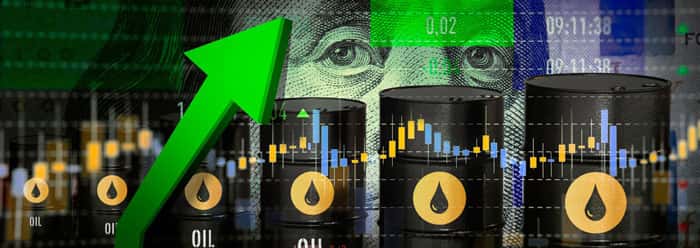
Global oil prices have seen a remarkable surge recently, moving perilously close to the $100 per barrel mark, a figure not seen since last year. The primary driver behind this escalation appears to be dwindling inventories at a pivotal storage facility in the US, igniting concerns about strained global supplies.
On Thursday, Brent futures rose by 1%, positioning themselves at $97.25 a barrel at 11:00 GMT. In tandem, the US West Texas Intermediate crude (WTI) futures touched $95 per barrel, marking their loftiest level since the previous August.
Analysts attribute this uptick in oil prices to events unfolding at Cushing, Oklahoma - a key storage hub in the US. Recent data indicates that the stockpile in this facility witnessed a sharp decrease of 943,000 barrels during September's fourth week, propelled by intense refining and export demand.
Current numbers from the US Energy Information Administration (EIA) reveal that the Cushing inventories are teetering just below 22 million barrels, nearly reaching their operational floor.
However, Cushing isn't the sole facility seeing a reduction. Across the US, the total crude stockpile has receded by an impressive 2.2 million barrels in the past week, totaling 416.3 million barrels. This slide has exceeded industry projections, which had anticipated a drop of around 320,000 barrels.
Bart Melek, the managing director at TD Securities, provided insights on the matter. He believes that the situation largely influences the day's price dynamics in Cushing, which currently stands at a 22 million barrel low, its lowest since July of the prior year.
Melek went on to suggest that the global oil market is verging on a significant deficit. With the US storage facilities continuing to deplete and OPEC+ maintaining its tight control on supplies, oil prices are set to stay elevated in the upcoming months.
Adding to the narrative, Saudi Arabia, a major player in the oil sector and the unofficial leader of OPEC, has decided to extend its voluntary oil production cut of 1 million barrels per day (bpd) by the end of the year.
In a parallel move, Russia, the world's second-largest crude producer and an OPEC+ ally, has chosen to prolong its voluntary reduction in oil exports by 300,000 bpd for the remainder of the year.
This decision was made shortly after Russia's recent action to temporarily suspend foreign sales of diesel and gasoline, a move aimed at stabilizing its internal fuel market.
In sum, the dynamics of the global oil market are in flux, largely influenced by the decreasing inventories in the US. With the industry navigating these shifts, it is crucial for investors and stakeholders to stay informed and prepared for the changing landscape.
As global oil prices surge, the interplay between oil and gold becomes even more nuanced. Historically, rising oil prices have often indicated an uptick in inflation.
Oil price hikes typically translate to increased costs for goods and services that rely on energy for production and transportation. In such inflationary environments, gold is traditionally seen as a hedge, with investors turning to the precious metal to protect their wealth. Consequently, as oil prices approach the $100 mark, we could anticipate a consequent rise in the demand for gold, pushing its spot price higher.
Furthermore, geopolitical tensions or supply disruptions in the oil sector often lead investors to seek safe-haven assets, with gold being a primary beneficiary of such shifts in sentiment. Thus, the tightening of global oil supplies might not only strain global economies but could also position gold as a preferred investment, reinforcing its status as a store of value during uncertain times.
India Announces a Two-Month Pause on Diamond Imports
Sept. 27, 2023

Source: Canva
In a major decision that could impact global diamond trade dynamics, India’s leading gem trade bodies have jointly proposed a temporary halt on the import of rough diamonds. The move aims to manage the balance between demand and supply and protect the value of assets.
Why the Pause?
Recent reports reveal a sharp drop in the exports of precious stones from India, leading to an oversupply of polished diamonds. This oversupply has subsequently triggered a slump in diamond prices.
Vipul Shah, chairman of the Gem and Jewellery Export Promotion Council (GJEPC), indicated that the exports of polished diamonds had plunged by over 25% from January to August. The weakened demand from major markets like the US and China has impacted prices, which are currently lower by 15-20%.
Given the current scenario, five significant trade bodies – the GJEPC, Bharat Diamond Bourse, Surat Diamond Bourse, The Mumbai Diamond Merchants Association (MDMA), and the Surat Diamond Association – met and decided on a proposed import pause from 15 October to 15 December 2023.
Their joint statement elucidated that the move intends to help the industry better manage the balance between demand and supply, thereby protecting the value of assets and increasing consumer confidence.
A Voluntary Move, Not a Ban
While the message to the trade community is clear, the bodies emphasized that this is a voluntary decision and not a mandatory import ban. India holds a dominant position in the global diamond industry, with its processors responsible for cutting and polishing over 90% of the world’s gems.
Adding to the dynamic, Alrosa, a Russian mining giant and one of India’s primary suppliers of rough stones, had already suspended its exports for September and October. This decision was made at the behest of India’s GJEPC, marking an attempt to alleviate the oversupply concerns.
Déjà Vu for the Diamond Industry
This isn't the first instance where India has opted to stabilize the diamond market by pausing imports. A similar situation arose in 2020 when the onslaught of the COVID-19 pandemic and subsequent lockdowns nearly brought trading to a standstill.
While the industry awaits the effects of this latest decision, the trade bodies plan to revisit the situation in December. The review will determine if there's a need to extend the halt on diamond imports, ensuring the best interests of both the traders and the consumers.
Impact on Gold and Silver Prices
The ripples from the decision to halt diamond imports could potentially extend to other precious commodities like gold and silver. Historically, when one precious commodity undergoes price volatility, investors often pivot their attention and resources to alternative safe-haven assets. In this context, as diamond prices fluctuate, gold and silver could experience increased demand.
Furthermore, India, being one of the largest consumers of gold, often sees its jewelry market intertwined with diamonds. If the diamond industry faces a slowdown, jewelry manufacturers might shift their focus more toward gold and silver-centric products, driving up demand. This heightened demand, combined with potential speculative buying from investors, could exert upward pressure on gold and silver prices in the short to medium term.
Dimon's Alert: Is the World Ready for Potential Stagflation?
Sept. 26, 2023

Source: Canva
In a recent interview with the Times of India, JPMorgan CEO, Jamie Dimon, shared his concerns about the lurking threat of stagflation. Dimon stressed the world's apparent lack of preparedness for the possible stagflationary actions that central banks might take.
The unpredictable dynamics, such as developments in Ukraine, fluctuations in oil prices, potential geopolitical tensions, and the state of European affairs, can have a wide range of outcomes on the global economy.
While the current economic scenario might seem optimistic due to fiscal and monetary stimuli, Dimon cautioned that this might just be a temporary boost. With ongoing deficits, there's a looming possibility of rates climbing even higher.
His emphasis was clear when discussing the potential surge in interest rates. A shift from zero to 5% already caught many off guard. The idea of a 7% interest rate, especially when combined with stagflation, presents a potentially challenging landscape for businesses. Dimon stressed the importance for businesses to be ready for such turbulent times.
Highlighting the market's current state, he pointed out the complacency surrounding a perfect, uninterrupted economic scenario. Dimon's insights beg the question: Are these signals that inflation might not be as short-lived as initially anticipated? Is the Fed gearing up for a more stringent stance?
Charlie Jamieson, Chief Investment Officer at Jamieson Coote Bonds, shared similar concerns. A 7% Federal Reserve funds rate, he believes, wouldn't be sustainable and would have significant repercussions on the global economy.
Additionally, Dimon touched upon the banking sector. He debunked the widely held belief that recent financial crises were instigated by social media-driven movements. He acknowledged the challenges of interest rate exposure in the banking world and underscored the importance of having a robust system that can weather occasional bank failures.
Dimon's message is clear and straightforward: The global economy needs to brace itself. Potential changes could be on the horizon, and preparedness will be the key to navigating them.
In light of such economic uncertainties, many financial experts suggest turning to time-tested assets like gold and silver as a means of protection.
Historically, these precious metals have served as a hedge against inflation and economic downturns. Allocating a portion of one's portfolio to gold and silver can offer a tangible asset that doesn't rely on any particular financial institution or government.
As currencies fluctuate and economies face challenges, the intrinsic value of gold and silver remains. Those concerned about potential stagflation might consider diversifying their assets, ensuring a portion is invested in these precious metals to safeguard their financial future.
Today in precious metals, gold prices fell 0.74% to $1,901.35 per ounce. Silver dipped 0.97% to $22.90 per ounce. Platinum decreased by 1.20% to $902.00 per ounce, while Palladium dropped by 0.49% to $1,223.08 per ounce. Bitcoin dipped 0.48% to $26,167.00.
Gold and Silver Prices Take a Hit Amid Stronger Dollar
Sept. 25, 2023
Source: Canva
Gold and silver prices experienced a decline in U.S. midday trading on Monday, with silver seeing a significant drop. This downward trend comes in light of rising U.S. Treasury yields, which are now at their highest levels in several years.
Additionally, the U.S. dollar index surged, reaching a 6.5-month peak. Concurrently, crude oil prices are also in a downturn, all of which negatively impact the precious metals market.
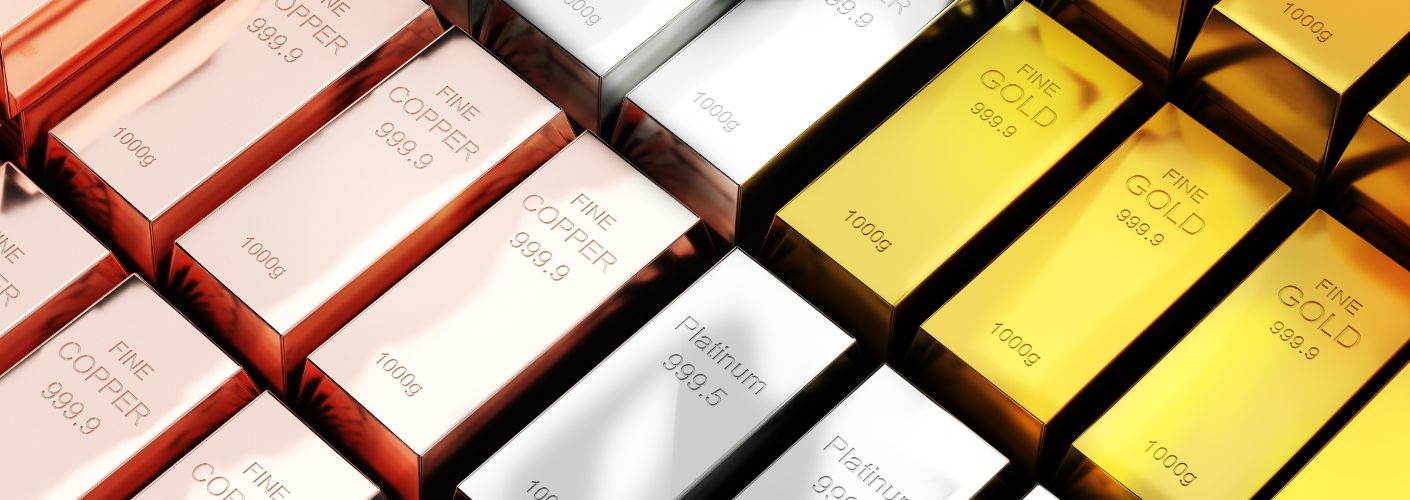
At the last count, December gold had diminished by $9.30, settling at $1,936.50, while December silver had decreased by $0.504, standing at $23.34.
Factors such as a hawkish stance from the Federal Reserve do not favor the metals market bulls. Stocks from Asia and Europe exhibited a mixed to weakened performance during the night, while U.S. stocks are teetering near midday.
Barron's recent headline warns of a tumultuous fourth quarter, pointing to potential government shutdowns, inflationary issues, and labor strikes.
The beginning of the trading week sees traders and investors adopting a risk-averse mindset, given the looming threat of a U.S. government shutdown.
The U.S. House and Senate are reconvening after Yom Kippur, with the Senate scheduled to discuss a temporary funding solution, termed a continuing resolution, on Tuesday.
Furthering the economic uncertainty, shares of the China-based property developer, Evergrande, dropped by a staggering 25% on Monday.
This decline was a result of the company's announcement that it could not adhere to regulatory conditions necessary for the issuance of new bonds, vital for its proposed restructuring of approximately $30 billion of offshore debt, as per Bloomberg.
Metal market bulls find themselves disheartened due to the lack of significant safe-haven demand for gold and silver, even amidst several perturbing factors in the market. Yet, if these concerns escalate, it could trigger increased safe-haven purchases in these metals.
In key external markets, the U.S. dollar index is on an upward trajectory, with the Nymex crude oil prices settling around $89.50 a barrel. Remarkably, the benchmark U.S. Treasury 10-year note yield is at its peak since 2007, currently at 4.519%.
On the technical front, December gold futures are currently dominated by the bears. December silver futures present a similar narrative, though substantial technical support levels are close to the market, hinting at the possibility of the market bottoming out.
In contrast, December N.Y. copper concluded at a decrease of 310 points, with a value of 366.50 cents, marking its lowest in four months.
With fluctuations in the metals market and a blend of external economic variables, investors remain on their toes, anticipating the market's next moves.
Today in precious metals, gold prices dipped 0.40% to $1,916.80 per ounce. Silver dropped 1.87% to $23.08 per ounce. Platinum decreased by 1.42% to $914.16 per ounce, while Palladium fell by 1.90% to $1,226.08 per ounce. Bitcoin sunk 0.30% to $27,130.00.
Russia Emerges as UAE's Premier Gold Supplier Amid Western Sanctions
Sept. 21, 2023
Source: Canva
Russia's prowess in the global gold market has found a new prominent customer: the United Arab Emirates (UAE). Recent data indicates that the Gulf nation has been purchasing Russian gold at unparalleled rates, especially following the sanctions imposed by Western countries, as reported by Bloomberg.
A Surge in Gold Trade
Data extracted from the UN's Comtrade database reveal that in 2022, the UAE procured an impressive 96.4 tons of gold from Russia. This figure establishes the UAE as Russia's predominant gold buyer and accounts for approximately one-third of Russia's total annual gold yield.
The remarkable uptick in the UAE's gold imports from Russia marked a more than fifteenfold year-on-year surge.
Previously, the UK held the prime spot as the principal destination for Russian gold. But the dynamics changed dramatically following the onset of Russia's military intervention in Ukraine. The repercussions of this geopolitical move were felt deeply in the gold trade.
A collective decision by the G7, EU, and Switzerland to impose Ukraine-related sanctions against Moscow saw the London market shut its doors to Russian bullion.
The UAE's Stance Amid Global Sanctions
While many nations responded to Russia's actions in Ukraine with sanctions, the UAE adopted a different approach. Choosing to preserve and even strengthen its relationship with Russia, the UAE didn't participate in the sanctions. This decision underscores the UAE's historically robust ties with Western countries and reflects a strategic choice to maintain economic equilibrium.
Moreover, the figures from last year indicate that trade between Moscow and Abu Dhabi is not just surviving, but thriving, as it reportedly reached record highs.
Beyond the UAE: Russia's Expanding Gold Market
The UAE isn't alone in its pursuit of Russian gold. China and Türkiye too have amplified their purchases from Russia in the recent 18 months. A Reuters report, backed by customs records, indicates that these three nations together accounted for 99.8% of all Russian bullion exports between February 24, 2022, and March 3, 2023.
Future Prospects
The blossoming economic collaboration between Russia and the UAE indicates promising prospects for both nations.
Mikhail Bogdanov, Russian Deputy Foreign Minister, recently commented on this growing alliance. He projected that due to the burgeoning trade and collaboration, the UAE is poised to ascend as one of Russia's top 20 economic allies.
In conclusion, while the geopolitical landscape continues to shift and global economies adapt, trade ties like those between Russia and the UAE underscore the nuanced dynamics of international commerce, where opportunity often arises amidst adversity.
Today in precious metals, gold prices dropped 0.61% to $1,919.30 per ounce. Silver grew 0.75% to $23.39 per ounce. Platinum decreased by 0.45% to $923.61 per ounce, while Palladium rose by 0.20% to $1,262.50 per ounce. Bitcoin dipped 0.25% to $26,661.00.
Fed Maintains Interest Rates, Signals Persistence of High Rates
Sept. 20, 2023

Source: Canva
In the latest release from their two-day meeting, the Federal Reserve chose not to raise interest rates, maintaining the fed funds rate between 5.25%-5.5%, its peak in over two decades.
While this decision was anticipated, the Federal Open Market Committee's (FOMC) subsequent projections suggest a more prolonged period of elevated interest rates than previously forecasted.
What's Next for the Fed?
The released documents highlight a possible inclination toward a more constrictive monetary policy. One more rate increase is expected before this year concludes, completing a series of twelve hikes since March 2022.
Following this, the central bank predicts two rate cuts in 2024, a reduction from its earlier June prediction.
This conservative approach has seen a mixed reception. The S&P 500 experienced a downturn post-announcement, reflecting market apprehension. However, Jerome Powell, the Chairman of the Federal Reserve, emphasized the need for careful evaluation before introducing additional policy alterations.
Breaking Down the Dot-Plot
The dot plot, a mechanism allowing FOMC members to anonymously indicate their rate expectations, unveiled potential future actions. Twelve members were in favor of another rate hike, while seven were against it.
Furthermore, expectations for the fed funds rate in 2025 showed an increase, with the median rate prediction at 3.9%, up from 3.4%.
Regarding the long-term view, the projected funds rate is pegged at 2.9% in 2026, higher than the "neutral" rate considered optimal for growth.
Revisions in Economic Growth and Other Projections
Along with these rate projections, the FOMC significantly adjusted its economic growth expectations for the current year. They now forecast a 2.1% increase in the gross domestic product, a figure that doubles the June estimate.
Inflation projections, as per the core personal consumption expenditures price index, were adjusted downwards to 3.7%. Unemployment expectations also saw a decline, now set at 3.8%.
Insights from the Statement
The post-meeting statement brought changes to the committee's economic outlook. Economic activity is described as "expanding at a solid pace," marking a positive shift from previous "moderate" descriptors.
The statement also touched on employment, noting slowed yet robust job gains.
Monetary Policy and the U.S. Economy
The Federal Reserve's decision comes at a critical juncture for the U.S. economy. Fed officials, in recent appearances, have indicated an evolved approach toward tackling inflation.
The central bank now appears to be successfully navigating towards reducing inflation without thrusting the economy into a significant recession.
Nevertheless, inflation rates remain a concern. While the annual rate remains above the Federal Reserve's 2% target, core inflation was recorded at a 4.2% rate in July.
American consumers, contributing to two-thirds of all economic activity, have remained consistent in their spending patterns. Yet, public surveys highlight an increased unease regarding the economy's state.
Today in precious metals, gold prices grew 0.50% to $1,940.91 per ounce. Silver jumped 0.98% to $23.40 per ounce. Platinum decreased by 1.00% to $933.61 per ounce, while Palladium rose by 0.92% to $1,269.21 per ounce. Bitcoin dipped 0.25% to $27,145.00.
Anticipations from the Federal Reserve's Announcement on Wednesday
Sept. 20, 2023
Source: Canva
This week's Federal Reserve meeting is poised to shed light not just on the current stance of the U.S. central bank but also on its forward-looking projections.
While immediate significant shifts are not on the horizon, the emphasis will be on how the Fed articulates its future directions.
Steady Interest Rates Expected
The market is largely in agreement that the Federal Reserve will maintain its benchmark borrowing rate. With the current target rate range at 5.25%-5.5%, any immediate change is deemed unlikely.
However, there's a broad consensus that the Federal Reserve aims to preserve its adaptability and might not be entirely done with rate adjustments in the near future. Their historical trend of aligning with market sentiments supports this.
Interpreting the Dot Plot
The dot plot, which represents the rate projections of individual Federal Reserve members, will be scrutinized for any subtle shifts. Changes in this plot can be significant indicators.
A key point of focus will be the projection beyond 2026. If this moves upwards, it could suggest the Federal Reserve's openness to a higher-than-usual inflation rate.
Revised Projections in the SEP
The Summary of Economic Projections (SEP) will present its quarterly updates. Past deviations from its forecasts have led to significant policy changes, making it a document of considerable interest.
Current sentiments lean towards the anticipation of upgraded GDP growth projections and potential reductions in the forecasts for inflation and unemployment rates.
Possible Statement Adjustments
The official post-meeting statement is another area where minor tweaks could provide significant insights.
Potential revisions could suggest an end to future rate hikes or a reduced concern about inflation risks. These modifications, albeit subtle, are of paramount importance to understand the Federal Reserve's evolving stance.
The Importance of Powell's Press Conference
Following the release of the primary documents, the subsequent press conference by Chair Jerome Powell will be crucial. These sessions often serve as an opportunity for clarification and sometimes introduce perspectives not explicitly mentioned in official statements.
Any divergence from the market's current beliefs can lead to marked shifts in market dynamics.
In conclusion, the Federal Reserve's upcoming meeting, while not expected to bring immediate policy alterations, will be watched keenly for hints and nuances. The way the Fed chooses to communicate its views and projections will offer valuable insights into its evolving strategies and outlooks.
Today in precious metals, gold prices grew 0.63% to $1,943.47 per ounce. Silver spiked 1.27% to $23.48 per ounce. Platinum increased by 1.01% to $934.00 per ounce, while Palladium rose by 1.67% to $1,280.08 per ounce. Bitcoin dipped 0.30% to $27,130.00.
US National Debt Breaches $33 Trillion Milestone
Sept. 19, 2023

Source: Canva
The US national debt has reached a staggering $33 trillion, as highlighted by the latest report from the Treasury Department.
Additionally, the real-time US debt clock website indicates a debt value of $33.04 trillion, bringing the country's debt-to-GDP ratio to a concerning 122.4%.
In response to this situation, Treasury Secretary Janet Yellen emphasized that the interest costs associated with the current debt are manageable. However, she signaled the need for swift and decisive action.
She mentioned President Joe Biden's initiative of introducing measures designed to reduce deficits over the long term while bolstering the economy. Specifics of these proposed measures are yet to be disclosed.
The surge in national debt can be attributed to a bill sanctioned by President Biden in June. This bill temporarily eliminated the $31.4 trillion debt ceiling for two years, granting the government the freedom to borrow without any constraints until 2024.
This action was deemed necessary by the Treasury Department to avert potential defaults on the country's financial obligations.
Following the bill's implementation, there was an almost immediate rise in the national debt, which skyrocketed to $32 trillion within two weeks and has continued its upward trajectory. For context, the national debt was roughly $907 billion four decades ago.
If current trends hold, projections from the Congressional Budget Office suggest that the debt may come close to doubling in the next three decades.
The escalating debt figures have raised eyebrows in the economic community.
Maya MacGuineas, the president of the Committee for a Responsible Federal Budget (CRFB), voiced her concerns over the nation becoming desensitized to such immense numbers, despite the clear and present risks they pose.
Similarly, Sean Snaith, an economist at the University of Central Florida, underlined the situation's gravity. He cautioned against the government consistently spending more than its revenue, emphasizing the inevitable adverse outcomes of such a fiscal approach.
The soaring national debt is a stark reminder of the challenges ahead, prompting calls for a reevaluation and adjustment of the country's financial policies.
What are the potential economic and fiscal implications for the US if the national debt continues to rise at its current pace?
Today in precious metals, gold prices grew 0.01% to $1,933.99 per ounce. Silver fell 0.36% to $23.14 per ounce. Platinum increased by 1.34% to $928.33 per ounce, while Palladium rose by 1.32% to $1,260.94 per ounce. Bitcoin dipped 2.53% to $27,446.00.
Canada's Confrontation with Grocery Giants Over Escalating Prices
Sept. 9, 2023

Source: Canva
The Canadian government, in a bold move, has mandated grocery stores to stabilize food prices by October 9 or risk facing severe repercussions.
This directive emerges amidst the surge in inflation and a waning popularity for Prime Minister Justin Trudeau and his governing Liberal Party.
In a recent assembly in London, Ontario, Trudeau highlighted the expectation for major grocery chains to submit strategies to stabilize prices by Thanksgiving.
Should these strategies fall short of providing substantial relief to the middle class and its aspirants, the government is contemplating further interventions, potentially involving tax reforms.
Francois-Philippe Champagne, the minister of innovation, science, and industry, initiated discussions with top executives of Canada's premier grocery chains: Loblaw, Sobeys, Metro, Costco, and Walmart.
The goal is to convene a pivotal meeting in Ottawa to deliberate on tangible steps to mitigate price inflation in the grocery domain. While Champagne refrained from detailing potential "tax measures," he emphasized the looming repercussions should the chains not propose a fruitful solution.
One of the driving forces behind this stringent stance is not just the inflation but also the perception that these grocery behemoths might be reaping record profits in these trying times.
The possible scenario where leading grocery outlets accumulate massive profits while Canadians face challenges in affording basic necessities is a cause for concern for Trudeau.
In contrast, the grocery chains remain defensive. Their top representatives insist that their operations function on very tight profit margins, and they possess limited influence on the inflationary dynamics.
The Retail Council of Canada offers a nuanced perspective, suggesting that the focus on grocery stores might need to include the larger picture. They opine that government policies, such as the amplified carbon tax impacting farmers and food distribution, along with the regulations curtailing the use of plastics that aid in preserving food, are pivotal in the escalation of costs.
The public sentiment reflects these complexities. Recent polls showcase a declining endorsement of Trudeau's economic direction. Only 26% of Canadians are inclined to support the Liberals, with the Conservatives gaining an edge.
The unfolding dynamics between the Canadian government and the grocery sector promise to be a significant chapter in the country's economic narrative, with the primary focus being the welfare and financial security of its citizens.
Today in precious metals, gold prices grew 0.77% to $1,928.56 per ounce. Silver rose 0.57% to $23.15 per ounce. Platinum increased by 0.36% to $931.00 per ounce, while Palladium dropped by 1.08% to $1,232.00 per ounce. Bitcoin jumped 2.82% to $27,283.00.
Oil Approaches $100: Analyzing Current Trends and Future Impacts
Sept. 15, 2023
Source: Canva
Oil prices have recently soared to their highest point this year, sparking speculations about its potential return to the $100 mark, possibly before 2024 concludes. Brent crude futures, an international benchmark, experienced a slight drop, standing at $93.46 a barrel in London last Friday. Meanwhile, the U.S. West Texas Intermediate futures hovered around the $90.09 mark.
The noteworthy ascent in these oil prices is especially significant given that both Brent and WTI concluded their highest settlements of the year just a day earlier. Their impressive performance this month is poised to mark their third successive week of gains.
These developments gain further importance when contextualized with the backdrop of global events. Saudi Arabia and Russia, two major oil-producing nations, have made strategic moves to reduce global oil inventories. Their decision to maintain these oil output cuts throughout the year plays a significant role in the supply-demand equation.
In an effort to stabilize the oil market, Saudi Arabia confirmed its plan to continue the daily production cut of 1 million barrels till the end of the year. Russia, another non-OPEC leader, has committed to curbing its oil exports by 300,000 barrels daily until 2024. These nations have further clarified that these voluntary reductions will undergo monthly reviews.
Financial experts and analysts are keeping a keen eye on these developments. Bank of America's team, led by Francisco Blanch, recently suggested that Brent prices could cross the $100/bbl mark before 2024 if the current supply restrictions remain in place.
Tamas Varga, associated with oil broker PVM, echoed similar sentiments. He pointed to several factors contributing to this plausible price surge.
From production limits set by Saudi Arabia and Russia to upcoming refinery maintenance and the prevalent diesel scarcity in Europe, several elements could drive prices upward. However, Varga also highlighted the potential negative implications of such a price surge on economic and oil demand growth.
Highlighting the complex nature of the global oil industry, the International Energy Agency emphasized the substantial market deficit expected in the upcoming quarter. They cited the combined output constraints of OPEC and non-OPEC nations, which have surpassed 2.5 million barrels daily since the beginning of this year. While countries outside the OPEC+ alliance, including the U.S. and Brazil, have tried to compensate, their efforts might fall short in the coming months.
Christyan Malek from JPMorgan offers a more detailed perspective on the price trajectory. He believes that oil prices are poised to fluctuate between $80 and $100 in the immediate future. Several factors, including China's economic progress and the U.S.'s strategies, will determine the exact path.
However, optimism isn't universal. Ole Hansen of Saxo Bank expressed reservations about the $100 benchmark. He believes that the oil sector seems overly stretched currently and might benefit from a short-term recalibration.
While the trajectory of oil prices remains a topic of global debate, one thing is clear: the decisions of major oil-producing nations, coupled with global economic indicators, will shape the future of the oil industry in the coming months and years.
Today in precious metals, gold prices grew 0.77% to $1,925.58 per ounce. Silver rose 2.28% to $23.13 per ounce. Platinum increased by 2.47% to $928.33 per ounce, while Palladium dropped by 0.88% to $1,240.00 per ounce. Bitcoin dipped 0.85% to $26,313.00.
August Wholesale Inflation Surges, But Core Prices Remain Stable
Sept. 14, 2023
Source: Canva
Inflation at the wholesale level in August witnessed an unexpected rise, contradicting recent indicators that suggested a cooling trend in price hikes.
The U.S. Department of Labor disclosed that the producer price index (PPI), which gauges the price received by producers for their goods and services, marked a seasonally adjusted upswing of 0.7% in August.
Annually, this figure stood at a 1.6% rise. This monthly hike surpassed the Dow Jones projection of a 0.4% increment, marking the largest one-month increase since June of the previous year.
Yet, a silver lining appeared when discounting food and energy prices. The core PPI showed a 0.2% increase, aligning perfectly with estimates. When scrutinized over a 12-month period, the core PPI exhibited a growth of 2.1%, the lowest annual surge since January 2021.
Removing trade services alongside food and energy, the PPI saw an uptick of 0.3%.
This revelation emerged just a day after the release of the more scrutinized consumer price index (CPI). The CPI indicated a monthly rise of 0.6% and an annual increase of 3.7%. Taking out food and energy, the core CPI showcased hikes of 0.3% and 4.3%, respectively.
Much like the CPI, the dominant force propelling the PPI was a significant boost in energy costs. The PPI energy sector experienced a dramatic 10.5% increase in August, catalyzed by a 20% escalation in gasoline prices.
August also saw final demand goods prices surging by 2%, which is the steepest one-month hike since June 2022. Meanwhile, services prices posted a 0.2% increase.
On Thursday, the Commerce Department provided further insight into the economy, estimating a 0.6% boost in retail sales for August. This surpassed the Dow Jones prediction of a 0.1% rise. Even after excluding automobile sales, the figure still remained at 0.6%, outpacing the 0.4% estimate.
These figures do not factor in inflation, suggesting that the consumer spirit remains unbroken in the face of rising costs and accumulating credit card debt. The influence of soaring energy costs was evident in the retail report too, as gas station sales rocketed by 5.2%.
The market seemed unfazed by these revelations. Futures associated with the Dow Jones Industrial Average climbed about 80 points at the onset. Concurrently, Treasury yields also exhibited a slight uptick.
While the PPI evaluates domestic prices, representing the expense of generating goods and services, the CPI mirrors the expenditure by consumers in the market, inclusive of imported goods' prices.
Both these metrics hint that even though inflation continues to burden U.S. families, the inflation rate's acceleration seemed to be decelerating in the past months.
This slowing trend is crucial for the Federal Reserve as they map out their subsequent moves following a sequence of 11 rate hikes that amounted to 5.25 percentage points.
Current market dynamics suggest a high probability that the Fed will refrain from escalating benchmark rates in the coming week.
Although central bank officials had hinted at one more rate surge by 2023's end, market futures on Thursday morning projected a 42% likelihood of this occurring in November, based on CME Group's data.
Lastly, another economic update on Thursday revealed a slight increase in initial jobless claims, hitting 220,000 for the week concluding on Sept. 9. This figure was marginally lower than the Dow Jones' forecast of 225,000.
Today in precious metals, gold prices dipped 0.35% to $1,901.78 per ounce. Silver fell 2.16% to $22.33 per ounce. Platinum decreased by 0.06% to $970.50 per ounce, while Palladium sank by 0.04% to $1,253.50 per ounce. Bitcoin spiked 1.33% to $26,574.00.
India's Transition to Hard Currency for Russian Oil Payments
Sept. 12, 2023

Source: Canva
In recent times, there has been a marked shift in how India compensates Russia for its oil imports. Pavan Kapoor, India's ambassador to Russia, shared at the Eastern Economic Forum in Vladivostok that India has been conducting its transactions for Russian oil in hard currency for the past 18 months.
This clarity comes at a time when there were escalating concerns regarding a trade imbalance between India and Russia. This imbalance led to a notable accumulation of Indian rupees from Russian exports to India.
This trading nuance became even more pronounced when Sergey Lavrov, the Russian Foreign Minister, discussed potential plans by the Indian government.
India aims to suggest various investment avenues to manage the sizable rupee accumulations in special vostro accounts. These accounts, maintained by Indian banks for their Russian peers, have witnessed growth, but the repatriation of these rupees to Russia has been a challenge due to local currency restrictions.
Addressing another facet of this relationship, Mikhail Zadornov, the former CEO of Otkritie Bank, penned his observations for the RBK media outlet in August. He proposed that the ruble's weakening might be linked to the hurdles faced in converting rupees that Russian oil companies earn from their Indian exports.
However, the Ministry of Energy countered this by emphasizing that oil companies primarily repatriate a significant portion of their foreign earnings, irrespective of the currency of the transaction.
Any delays, they suggest, are sporadic and not a reflection of a deeper systemic issue. This sentiment is further echoed by the central bank, which considers the rupee reserves in exporters' accounts to be a minor fraction of the overall foreign currency earnings.
India's oil import patterns have also seen a transformation. The country, which traditionally relied on Middle Eastern suppliers like Saudi Arabia and Iraq, has increased its consumption of Russian crude.
Favorable terms and discounts from Moscow have not only supported this shift but have also bolstered India's stature as a prominent exporter of oil and petroleum products.
Data from June underscored this trend, with India's imports of Russian oil surpassing combined shipments from Saudi Arabia and Iraq.
While there has been a subsequent decrease in these imports due to seasonal demands and maintenance interruptions, industry pundits anticipate a resurgence in the near future.
In conclusion, India's method of compensating Russia for oil imports sheds light on the intricate dynamics of global trade and monetary mechanisms. The unfolding events in this arena will be pivotal in shaping the economic rapport between these two nations.
Considering India's shift to hard currency payments for Russian oil and the evolving trade dynamics between the two nations, how might this influence the broader economic relationships and energy trade strategies in the region?
Today in precious metals, gold prices fell 0.49% to $1,911.90 per ounce. Silver rose 0.28% to $23.00 per ounce. Platinum increased by 1.28% to $909.50 per ounce, while Palladium spiked by 1.15% to $1,229.50 per ounce. Bitcoin jumped 3.76% to $26,102.00.
Gold & Silver Prices Strengthen Amid Weaker U.S. Dollar
Sept. 11, 2023

Source: Canva
In early U.S. trading on Monday, gold and silver prices made promising advances, primarily due to the weakened U.S. dollar index and proactive short covering in the futures market. This uptick comes in anticipation of the important U.S. inflation report scheduled for Wednesday.
The rise in December gold was recorded at $5.70, settling the precious metal at $1,948.40. December silver also showcased an uptick, increasing by $0.196 to land at $23.37.
Market stakeholders are closely watching out for the release of the consumer price index (CPI) report for August. Early projections estimate the CPI to record an increase of 4.3% on a year-on-year basis. Interestingly, this seems to be a slight dip when juxtaposed with the 4.7% increase seen in July's report.
Parallelly, the European Central Bank's regular monetary policy meeting this week is creating a buzz. There's intense speculation suggesting a potential hike in the bank's main interest rate by 0.25 percent.
Mixed reactions were observed in the Asian and European stock markets during the overnight trade. However, early indicators suggest U.S. stock indexes leaning towards a more positive start as the New York day session gears up.
Recent updates hint at a significant change in the stance of Fed officials. These updates point towards a more balanced approach to monetary policy, marking a departure from their previously more aggressive stand focused on addressing inflation.
On the oil front, Nymex crude oil prices have seen a dip, with trades hovering around the $87.00 per barrel mark. Meanwhile, the benchmark U.S. Treasury 10-year note yield is currently pegged at 4.294%. Interestingly, Monday isn't expected to witness the release of any significant U.S. economic data.
On the technical side, gold futures appear to be favoring the bears in the short-term frame. For a bullish resurgence, it's crucial for December futures to break past the resistance, marked by the September high of $1,980.20.
Silver futures also seem to lean bearish for the near future. A bullish turnaround would require the December futures to surpass the resistance level, currently set at this week's high of $24.655.
With the market landscape continuously evolving, influenced by critical data releases and global economic shifts, traders and investors need to remain well-informed and agile. The current dynamics of precious metals and the weakening state of the U.S. dollar set the stage for intriguing developments in the days to come.
Given the recent dynamics in the gold and silver markets, combined with the weakened state of the U.S. dollar and forthcoming economic data releases, what potential outcomes can investors anticipate for precious metal prices in the near future?
Platinum increased by 0.15% to $896.50 per ounce, while Palladium jumped by 0.69% to $1,203.00 per ounce. Bitcoin dipped 1.86% to $25,339.00.
Germany's Prosperity Era Wanes: Insights from El Pais
Sept. 7, 2023
Germany's remarkable era of prosperity, which positioned it as a global economic powerhouse, appears to be waning, according to a recent report from Spanish newspaper El Pais.
While Germany has been known for its robust economy, driven by its technological prowess and manufacturing sector, recent findings suggest an impending downturn.
Data from the International Monetary Fund (IMF) released in July forecasts that Germany will be the sole major economy witnessing no growth this year. Instead, a predicted GDP decline of 0.3% is on the horizon.
Journalist Wolfgang Munchau, as cited by El Pais, identified the pillars of Germany's economic model: cost competitiveness, industry's technological leadership, and geopolitical stability.
The shifting landscape presents an energy price crisis, new geopolitical rifts, and technological disruptions that challenge the very essence of Germany's economic framework.
Germany's economy had been on a steady upward trajectory since the early 2000s, with high employment rates and substantial foreign demand, especially from rapidly expanding economies like China.
This demand boosted Germany's manufacturing sector, which has thrived since 2003. A crucial factor behind this success was the availability of cheap energy from Russia combined with affordable labor from Eastern Europe.
However, changes are imminent. While Germany is projected to maintain a substantial volume of exports and imports, the industries that played a pivotal role over the past two decades, particularly the chemical and automotive sectors, may not yield the same results in the coming years, opined Clemens Fuest, the director of the Leibniz Institute for Economic Research (IFO).
Further complicating the scenario is China's evolving role. While China remains an importer of German products, it has emerged as a formidable competitor, as pointed out by Carsten Brzeski, the ING chief for Germany and the Eurozone.