Bank of Japan's Unexpected Rate Hike: What It Means for Precious Metals Investors
By: Michael Figueroa
July 31, 2024

In a surprising move, the Bank of Japan (BoJ) has raised its benchmark interest rate to 0.25%, a notable departure from its longstanding ultra-loose monetary policy. This decision, marking the first rate hike since the global financial crisis in 2008, comes amidst a backdrop of economic uncertainty and a struggling yen.
As central banks worldwide pivot towards tightening policies, the BoJ's actions reflect a unique response to Japan's economic challenges and the global financial landscape.
The Impact on Global Currency Markets
The BoJ's decision to increase the interest rate has already had significant repercussions on the global currency markets. The Japanese yen strengthened by over 1%, pushing the USDJPY below the 150 mark.
This reaction underscores the sensitivity of currency markets to changes in monetary policy, particularly in Japan, where years of deflation and economic stagnation have necessitated an aggressive monetary stance.
Implications for Precious Metals Investors
For investors in precious metals, the BoJ's policy shift is noteworthy. Typically, higher interest rates can dampen the appeal of non-yielding assets like gold and silver. However, in times of global economic uncertainty, precious metals often retain their status as safe-haven investments. The tightening of Japan's monetary policy, coupled with continued economic volatility, may influence demand for gold and silver as investors seek stability.
A Cautious Approach to Quantitative Tightening
Despite the rate hike, the BoJ's approach to reducing its bond-buying program, known as quantitative tightening (QT), is gradual. The bank plans to halve its monthly bond purchases to ¥3tn by 2026, a slower pace than many anticipated. This measured approach reflects the BoJ's cautious stance, balancing the need to address inflationary pressures with the risk of disrupting Japan's fragile economic recovery.
Economic Context and Future Outlook
The BoJ's decision comes at a time when Japan's economy faces mixed signals. Core inflation has consistently surpassed the BoJ's 2% target, yet economic growth remains sluggish, with a contraction in the first quarter of the year. This dichotomy highlights the challenges faced by the BoJ in navigating monetary policy amidst a complex economic landscape.
Looking ahead, the BoJ's future policy actions will likely be influenced by the trajectory of global monetary policies, particularly those of the US Federal Reserve. As the Fed contemplates its next moves, the pressure on the yen and Japan's economic conditions will play a critical role in shaping the BoJ's path.
Massive Protests Erupt in Venezuela Amid Allegations of Election Fraud
By: Michael Figueroa
July 30, 2024

Tensions in Venezuela have reached a boiling point as massive protests erupted following allegations of election fraud. President Nicolas Maduro, speaking from the presidential palace, addressed the nation amidst the turmoil, acknowledging the widespread unrest and accusing the opposition of instigating violence. "We've seen this movie before," Maduro remarked, referencing previous episodes of civil unrest.
He further accused the "extreme right" of orchestrating the violence, claiming the actions are reminiscent of "Color Revolutions," a term used to describe movements allegedly influenced by foreign governments, particularly the United States.
Overnight, several offices of the United Socialist Party of Venezuela (PSUV) were set ablaze by opposition groups who allege that the recent election was rigged in favor of Maduro. The president specifically mentioned the burning of the PSUV headquarters in Calabozo, framing it as part of a broader strategy designed to destabilize the country.
The unrest has intensified with reports of clashes between protesters and police, including incidents of demonstrators using petrol bombs against security forces near the Miraflores presidential palace in Caracas. The protests, which include participants marching from rural districts, have seen statues of former President Hugo Chavez, a central figure in the PSUV and Maduro's mentor, being torn down.
Amid the chaos, there are unverified reports of gunfire in the capital, with some videos suggesting that anti-Maduro protesters may be armed. In response, gangs of armed government enforcers have been seen patrolling the streets on motorcycles, echoing tactics used during similar protests in 2019. Disturbingly, some footage shows a hospital engulfed in flames, further heightening the sense of crisis.
Despite the violent clashes, there have also been numerous peaceful protests throughout the country. Many demonstrators support opposition candidate Edmundo Gonzalez, backed by popular leader Maria Corina Machado, who claims the election was stolen. Gonzalez, in a recent press conference, asserted that he has concrete evidence of electoral fraud.
According to Gonzalez, documents show that he received roughly 6.2 million votes compared to Maduro's 2.7 million. However, the National Electoral Council, closely tied to the ruling party, has officially declared Maduro the winner, granting him a third six-year term.
The situation has drawn comparisons to the 2019 unrest when Venezuelan opposition leader Juan Guaido attempted to lead a coup with support from the United States. Current events have rekindled memories of that period, particularly as Western pundits recall the Trump administration's press briefings, where officials openly discussed efforts to undermine Maduro's regime.
While Guaido was once recognized as the 'Interim President' by the US and several Western allies, this title has since been quietly abandoned as his influence waned.
As the protests continue, the international community watches closely, concerned about the potential for further violence and the implications for Venezuela's future. The government's response and the opposition's next moves will be crucial in determining the country's trajectory in the coming days.
US Macro Data and Inflation Indicators Stir Market Expectations
By: Michael Figueroa
July 26, 2024
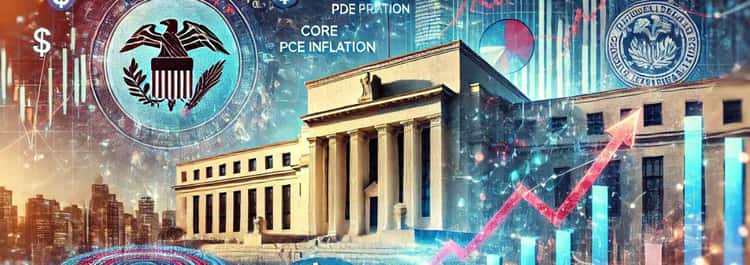
The recent streak of weak US macroeconomic data took an unexpected turn yesterday with a GDP print that surpassed expectations, leading to a more hawkish outlook on future rate cuts. Today, the doves are hopeful for a piece of 'bad news' to bolster their narrative for cutting rates, but the latest data may not provide the support they seek.
The Federal Reserve's preferred inflation measure, Core PCE, came in slightly hotter than anticipated, rising 2.6% year-over-year, compared to the expected 2.5%. The headline PCE, however, dipped to 2.5%. Despite this slight decrease, the underlying data reveals a more complex picture.
Breakdown of Core PCE
Durable goods continue to experience deflation, dragging the overall Core PCE lower, while the cost of services remains on an upward trajectory. Particularly noteworthy is the so-called SuperCore PCE, which increased by 0.2% month-over-month, pushing the year-over-year rate to 3.43%. This marks the 50th consecutive monthly rise in SuperCore prices, with healthcare costs contributing significantly to this persistent inflation.
Income and Spending Trends
On a monthly basis, income growth fell short of expectations, rising only 0.2% compared to the forecasted 0.4%. Meanwhile, spending increased by 0.3%, aligning with predictions. However, on an annual basis, consumer spending continues to outpace income growth, which has led to a further decline in the savings rate.
Government Assistance and Savings Rate
The backdrop to these figures includes a notable rise in government handouts for the seventh consecutive month, which is particularly significant in an election year. Without these handouts, the savings rate would have experienced an even more pronounced drop.
Implications for Monetary Policy
Despite the hopes of dovish policymakers, the current data does not provide strong enough evidence to justify an imminent rate cut. The persistent rise in SuperCore prices, coupled with the ongoing imbalance between spending and income growth, suggests that inflationary pressures remain a concern.
In conclusion, the latest economic indicators present a mixed picture. While there are signs of easing in certain areas, the overall trend suggests that the Federal Reserve may need to maintain its cautious stance. The market will continue to watch closely for further data that could tip the balance in favor of either dovish or hawkish monetary policy adjustments.
Bank of Canada Cuts Rates Again, Signals More Easing Ahead
By: Michael Figueroa
July 24, 2024

The Bank of Canada (BoC) has once again reduced its interest rates by a quarter percentage point, marking the second consecutive cut in its easing cycle. This decision comes as the central bank seeks to address waning inflation concerns and support the economy amid broader global economic challenges.
Details of the Rate Cut
The rate cut, widely anticipated by economists, was influenced by recent data showing a reduction in inflationary pressures. The BoC noted that the Consumer Price Index (CPI) inflation had moderated to 2.7% in June, following a rise in May. Additionally, core inflation measures have remained below 3% for several months, indicating a stabilization of prices.
BoC Governor Tiff Macklem, in his prepared remarks, highlighted the rationale behind the decision: “With the target in sight and more excess supply in the economy, the downside risks are taking on increased weight in our monetary policy deliberations.” He further emphasized that it is “reasonable” to expect further interest rate cuts, although decisions will be made cautiously and incrementally.
Economic Outlook and Future Projections
The BoC’s latest forecasts suggest that core inflation will slow to around 2.5% in the second half of 2024 and continue to ease gradually through 2025. The bank expects CPI inflation to dip below core inflation later this year, primarily due to base year effects on gasoline prices. However, as these effects diminish, CPI inflation may rise slightly before stabilizing around the 2% target next year.
Officials at the BoC expressed confidence in their progress towards achieving the 2% inflation target, citing the June CPI data as evidence of slowing price pressures. This confidence is reflected in the bank’s focus on preserving economic stability and avoiding a significant undershoot of the inflation target.
Labor Market and Wage Growth
The BoC observed that wage growth, while still elevated, is showing signs of moderation as the labor market begins to loosen. Corporate pricing behaviors have also largely normalized, contributing to a more stable inflation outlook. In their statement, the bank noted a shift from concerns about rising inflation to a focus on the risks associated with economic slack and the labor market.
Market Reactions and Economic Implications
Following the BoC's announcement, the USDCAD rose by 0.1%, reaching its highest level in three months at 1.38, while Canada's two-year yield fell by approximately 2 basis points. These market movements reflect the BoC’s dovish stance and the anticipated continuation of its easing cycle.
The decision by the BoC to cut rates again, following its initial move last month, positions it as a leader among G7 central banks in the current easing trend. This proactive approach is aimed at maintaining economic momentum and mitigating potential downturns. The European Central Bank (ECB) has also started easing, and there is speculation that the Federal Reserve (Fed) may follow suit soon.
Conclusion
The Bank of Canada's consecutive rate cuts underscore its commitment to managing inflation and supporting economic growth. As global economic uncertainties persist, the BoC’s cautious yet proactive approach aims to balance inflation control with the need to sustain economic activity. The central bank’s future actions will be closely watched, particularly in light of potential easing moves by other major central banks.
Gold Price Steady at $2,400 as U.S. Home Sales Dip in June
By: Michael Figueroa
July 23, 2024

The gold market is maintaining its position above $2,400 an ounce despite a notable decline in U.S. housing market activity. Home sales dropped by 5.4% in June, down to a seasonally adjusted annual rate of 3.89 million units from May’s 4.11 million units, according to the National Association of Realtors (NAR). This figure fell short of economists' expectations, who had predicted a rate of 3.99 million units.
August gold futures recently traded at $2,405.30 an ounce, showing a slight increase of 0.44% for the day. Despite the disappointing economic data, gold prices have held firm.
Housing Market Impact on Gold Prices
The NAR report highlights ongoing challenges in the housing market, with the median existing-home sales price hitting an all-time high of $426,900 for the second consecutive month. These elevated prices are affecting consumer behavior, contributing to the overall decline in home sales.
A shift in market dynamics is evident, with signs pointing to a transition from a seller’s market to a buyer’s market. Homes are now spending more time on the market, sellers are receiving fewer offers, and there is a noticeable increase in buyer demands for home inspections and appraisals. Additionally, national inventory levels are rising, further indicating a shift towards a more balanced market.
Rising Inventory Levels
The inventory of homes for sale saw a significant increase in June. The NAR reported 1.32 million units available, a 3.1% rise from May and a substantial 23.7% increase compared to June 2023. The unsold inventory now represents a 4.1-month supply at the current sales pace, up from 3.7 months in May and 3.1 months in June 2023. This is the highest inventory level since May 2020.
Conclusion
Despite the cooling U.S. housing market, the gold market remains resilient, holding above the crucial support level of $2,400 an ounce. Investors continue to find value in gold amid shifting real estate dynamics. The upcoming months will be pivotal in determining whether this stability in the gold market will persist or if new economic factors will alter the current trends.
Central Banks Increase Gold Reserves to Mitigate Currency Risk
By: Michael Figueroa
July 22, 2024

Despite claims that inflation is under control and the global economy is stable, gold prices have been rising steadily. This trend has left many investors puzzled.
Inflation: Not Fully Tamed
While inflation rates are decreasing, they aren't completely under control. Recent data shows the US annual inflation rate at 3%, with the Eurozone at 2.6%. However, several Eurozone countries report inflation rates above 3%, indicating ongoing inflationary pressures. As a result, central banks are maintaining or cautiously lowering interest rates to manage inflation without appearing too lenient.
Gold as a Safe Haven
As of July 19, 2024, gold prices have surged to over $2,400 per ounce, marking a 16.5% increase since January. This rise has outperformed major stock indices like the S&P 500 and the Stoxx 600. Gold's appeal lies in its historical role as a hedge against inflation and currency devaluation, offering stability without the extreme volatility seen in assets like Bitcoin.
Central Banks’ Strategic Gold Purchases
Central banks worldwide are ramping up their gold purchases. This trend is driven by the need to diversify reserves and mitigate the impact of falling bond prices. Countries like China and India are leading the charge, increasing their gold reserves to reduce reliance on volatile government bonds.
Impacts on Reserves and Market Dynamics
The World Gold Council reports that central banks have significantly increased their gold purchases, surpassing 1,000 tonnes annually in both 2022 and 2023. This surge in demand from monetary authorities accounts for nearly a quarter of the annual gold market demand. With supply remaining relatively flat, this has significantly boosted gold prices.
Global Reserve Strategies
China’s People’s Bank and the Central Bank of India are the biggest buyers, aiming to balance their reserves and reduce losses from depreciating government bonds. Despite this, full de-dollarization isn't happening; US Treasury bonds still constitute a significant portion of these banks' reserves. However, their goal is to increase gold holdings to fortify their balance sheets against future economic uncertainties.
Conclusion
The increasing trend of central banks purchasing gold reflects a strategic move to safeguard against currency erosion and inflation. This shift underscores gold's enduring value as a stable and reliable asset in times of economic uncertainty. As central banks continue to diversify their reserves, gold's prominence in global finance is set to rise even further.
Rising Yen Could Boost Gold Prices as Correlation Resurfaces
By: Michael Figueroa
July 19, 2024

The reemerging correlation between the Japanese Yen and gold prices suggests that a strengthening yen could positively impact the yellow metal. Market Analyst Konstantin Oldenburger from CMC Markets highlighted the potential influence of recent interventions by the Bank of Japan to support the yen, coupled with a possible shift in US monetary policy by the Federal Reserve.
Oldenburger explained that US equities typically benefit from rising or high interest rates due to increased liquidity in the USD. However, when interest rates decrease, this liquidity often flows out of the dollar and into alternative investments globally, potentially favoring the yen.
Following the release of the US CPI data for June, the USD/JPY fell significantly, amid speculation of intervention by Japan's Ministry of Finance. If the trends driven by lower CPI and expectations of a Fed rate cut continue, the yen and gold prices could rise together, reaching new highs.
Hedge funds currently hold minimal long positions on the yen, with significant short positions that may need covering in a short squeeze scenario. Historically, a strong yen has correlated positively with gold, indicating that gold could also benefit from a rising yen.
Over the past three months, gold has consolidated between $2,431 and $2,290 per ounce. Since early July, investors have been attempting to push prices above this range, potentially driving them towards $2,700. Conversely, if gold falls below $2,290, it may see further corrections to $2,220 and $2,189.
Fed's Waller Signals Potential Rate Cuts as Inflation Shows Signs of Moderation
By: Michael Figueroa
July 17, 2024

Recent data supports the view that inflation is moving sustainably toward its target, and the most likely scenarios imply that the time for a cut to the benchmark rate is approaching, according to Federal Reserve Governor Christopher Waller.
Speaking at the Federal Reserve Bank of Kansas City just days before the Fed’s July blackout period, Waller reinforced the dovish comments made by Federal Reserve Chair Jerome Powell on Monday. The Federal Open Market Committee (FOMC) member highlighted that recent data on inflation and the labor market moderated in a way that suggests progress toward price stability has resumed.
“The data over the past couple months shows the economy growing at a more moderate pace, labor supply and demand apparently in balance, and inflation slowing from earlier this year,” Waller said. He emphasized that while the economy has not yet reached its final destination, it is getting closer to the time when a cut in the policy rate is warranted.
After reviewing the economic outlook and the state of inflation and employment, Waller discussed the implications for monetary policy. He outlined the two major risks the Fed faces: loosening policy too soon and risking a resurgence of inflation, and waiting too long to ease policy, which could lead to a significant economic slowdown or recession with rising unemployment.
Waller presented three economic scenarios for 2024, each with its own implications for interest rates:
-
Optimistic Scenario: In this scenario, the Fed continues to receive very favorable CPI inflation reports, leading to favorable PCE inflation readings. This would provide a strong case for inflation moving sustainably toward 2 percent, making a rate cut in the near future more likely. Waller sees a significant but not high probability of this scenario occurring.
-
Less Optimistic Scenario: Here, inflation data comes in uneven, not as positive as the previous months but still showing overall progress toward the 2 percent target. The timing of a rate cut in this case would be more uncertain, depending on the consistency of the data.
-
Pessimistic Scenario: This scenario involves a significant resurgence in inflation in the second half of 2024, making it difficult to conclude that sustainable progress toward 2 percent inflation is being made. While possible, Waller assigns a low probability to this outcome based on recent data.
Waller emphasized that his judgments about the appropriate policy path will consider the totality of the data, including signals about the state of the labor market. Given that he believes the first two scenarios are most likely, he concludes that the time to lower the policy rate is drawing closer.
Shortly after the text of Waller’s speech was published at 9:30 am EDT, gold prices rallied, with spot gold reaching a new all-time high of $2,483.74 per ounce before pulling back. Spot gold is now trading at session lows, testing the $2,460 level of support.
Futures Jump After Trump Assassination Attempt Boosts Yields and Dollar
By: Michael Figueroa
July 15, 2024

In a startling turn of events, futures jumped following an assassination attempt on former President Donald Trump. This incident has not only driven up yields and the dollar but has also triggered significant market rotation, altering investor sentiment and market dynamics.
Market Reaction
Upon the news, U.S. equity futures experienced a significant surge, reflecting immediate shifts in market behavior. The assassination attempt introduced a new wave of uncertainty, prompting investors to seek safer assets. Consequently, U.S. Treasury yields spiked as investors flocked to government bonds, considered a safer investment during turbulent times. The yield on the 10-year Treasury note rose sharply, signaling increased demand for these securities.
Dollar Strengthens
The dollar experienced a significant rise against major currencies, propelled by a flight to safety. The surge in the dollar index underscores the broader market move towards the stability of the greenback, often seen as a safe haven during geopolitical uncertainties. This strengthening of the dollar is expected to impact global markets, influencing commodity prices and emerging market currencies.
Market Rotation
The incident has led to a pronounced rotation within equity markets. Safe-haven sectors such as utilities and consumer staples attracted significant inflows as investors reassessed their risk exposure. In contrast, more volatile sectors like technology and consumer discretionary stocks saw outflows, reflecting reduced risk appetite among market participants.
Impact on Financials and Commodities
Financial stocks, especially within the banking sector, benefited from the rise in yields, which typically enhance net interest margins for lenders. Pre-market trading reflected this positive sentiment, with major financial institutions witnessing stock price increases. Commodities exhibited mixed reactions; gold prices surged as investors sought its safe-haven appeal, while oil prices dipped slightly amid concerns over potential disruptions to global economic activity.
Long-term Implications
The long-term market implications of this event remain uncertain. Investors will closely monitor further developments and responses from key political figures and institutions. The Federal Reserve's reaction will be particularly pivotal, as any hints of a shift in monetary policy could significantly influence market trends.
Conclusion
The assassination attempt on former President Donald Trump has reverberated through financial markets, boosting yields, strengthening the dollar, and triggering a major market rotation. As investors navigate this new landscape, the focus will shift to safe-haven assets and sectors resilient to geopolitical risks. The coming days and weeks are likely to see increased volatility as markets process the implications of this significant event.

 View Charts
 0
0