View Charts
Dovish CPI Data Sparks Wall Street Expectations for Rate Cuts
 0
0
Today's Consumer Price Index (CPI) report revealed a surprising slowdown in inflation, causing a stir on Wall Street. This unexpected data has fueled speculation that the Federal Reserve may soon cut interest rates to support the economy.
A Foreseen Yet Surprising Shift
Earlier this year, analysts predicted that inflation would start to decline due to the delayed effects of Owner's Equivalent Rent (OER), a significant component of the CPI. OER, which accounts for about 36% of the CPI basket, has recently shown a sharp deceleration, increasing only 0.27% in June—its lowest annual rise since April 2021. This slowdown in OER, despite actual rents rising, was expected to drive down overall inflation.
According to UBS, this development significantly aids the Federal Open Market Committee (FOMC) in achieving its 2% inflation target. However, while current data indicates a downward trend, real-time rental inflation is already increasing. This discrepancy suggests that by the time the Fed acts to counter the falling OER, rising rents may trigger another inflationary cycle.
Wall Street's Reactions
The latest CPI data has led to diverse interpretations and predictions among Wall Street analysts:
The market anticipates that the Fed will ease rates due to the lower-than-expected June CPI, primarily driven by the disinflation in shelter costs. A rate cut in September seems probable, with another possible by December.
The figures suggest that inflation is resuming its downward trend, despite earlier increases this year. Combined with rising unemployment, this data supports the expectation of rate cuts later this year.
Investors, who have long awaited a decline in shelter costs, finally saw it in June. This development increases the likelihood of a rate cut in September as housing inventories rise.
The inflation figures suggest a strong likelihood of the Fed implementing a rate cut in September. However, a cut in July remains unlikely without more evidence of declining price pressures.
With today's CPI print being critical, it has bolstered the Fed's confidence in the inflation trajectory, making a September rate cut more likely.
This data boosts market confidence in regular rate cuts following a potential initial cut in September.
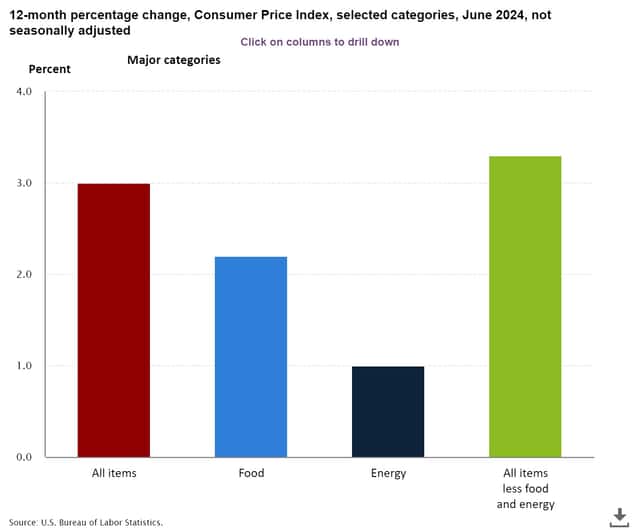
The recent Core CPI trend, running at 2.1% annualized over the past three months, shows significant progress from earlier this year, reducing previous inflationary concerns.
A change in the Fed's tone is expected at the upcoming July meeting, with further price deceleration and labor market softening supporting a potential rate cut in September.
Both September and December are now viable options for the Fed to cut rates. However, expectations of multiple cuts over the next year may be overly optimistic given the current US inflation outlook.
The Fed may struggle to implement a "hawkish cut," and any initial cut is likely to lead to further market expectations.
The latest CPI and labor market data strengthen the Fed's case for a September rate cut, with two more crucial reports due before the September FOMC meeting.
This report aligns well with the Fed's and investors' desires for rate cuts, possibly as early as September, likely benefiting markets.
The CPI report suggests continued equity support, with potential rate cuts expected to maintain shallow market dips.
The combination of declining inflation and a weakening economy creates a favorable scenario for the Fed to begin lowering rates cautiously.
The current data provides a strong case for the dovish approach, indicating it’s time for rate cuts.
Looking Ahead
As Wall Street processes this new data, the consensus leans towards a September rate cut. However, uncertainty remains regarding the Fed's future actions and the broader economic implications. Investors and analysts will closely monitor upcoming economic reports for further insights.
In summary, today's CPI data has significantly impacted market sentiment and expectations for Federal Reserve actions. With cooling inflation and potential rate cuts on the horizon, the economic landscape is set for substantial changes in the coming months.