View Charts
GOLD, SILVER, AND BITCOIN PRICES, DAILY MARKET NEWS. FEB 2023.
 0
0Inflationary Challenges in the Eurozone: Consumer Prices Rise in France and Spain
Feb. 28, 2023
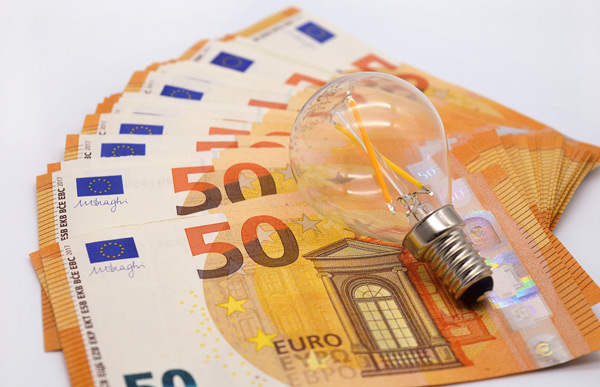
Consumer prices in France and Spain have continued to rise in February, driven by higher food and energy costs, according to official statistics. This trend highlights the ongoing challenge of containing inflationary pressures in the Eurozone, which has been struggling with high inflation for several months.
In France, preliminary data from the statistics bureau Insee showed that the consumer price index increased to 6.2% from 6.0% in January. The report noted that food inflation edged higher to 14.5% from 13.3%, while prices of manufactured goods rose slightly to 4.6% from 4.5%, with the end of winter sales.
Energy prices jumped 14.0% on year in February, according to the report. The EU-harmonized index stood at 7.2% compared to 7% in January.
Meanwhile, in Spain, which had succeeded in containing price growth in the second half of 2022, inflation has now risen for two consecutive months in annual terms. Consumer prices increased 6.1% year-on-year in February, the National Statistics Institute (INE) reported.
Higher electricity and food prices were the key drivers of the increase, according to preliminary data.
Core inflation, which excludes volatile fresh food and energy prices, stood at 7.7% year-on-year, up from 7.5% recorded in January. Consumer prices, harmonized for comparison with other European Union countries, rose to 6.1% in February in annual terms from 5.9% in the previous month.
The rise in inflation in both countries is not unexpected, as higher energy costs and supply chain disruptions have led to increased prices across a range of goods and services. Economists project that inflation in Spain and France will continue rising in the coming months, prompting more interest rate hikes by the European Central Bank (ECB).
The ECB has already promised to raise rates by 50 basis points to 3% in March, to get soaring inflation in the 20-nation Eurozone under control. However, some analysts believe that this may not be enough and that the ECB may still need to raise interest rates significantly beyond March, as inflation remains too high.
Overall, the recent rise in consumer prices in France and Spain highlights the ongoing challenges facing the Eurozone as it seeks to contain inflationary pressures and maintain economic stability.
While the ECB has taken steps to address these challenges, it may need to take further action in the coming months to ensure that inflation remains under control and that the Eurozone economy can continue to grow and thrive.
Today in precious metals, gold prices rose 0.51% to $1,835.90 per ounce. Silver grew 0.82% to $21.03 per ounce. Platinum increased by 1.49% to $974.50 per ounce, while Palladium fell by 2.29% to $1,454.00 per ounce. Bitcoin sunk 0.07% to $23,471.40.
What could be the potential consequences of the continued rise in consumer prices in France and Spain, and how might this impact the broader Eurozone economy?
US Stock Market Could Crash 26% within Months, Morgan Stanley Warns
Feb. 27, 2023
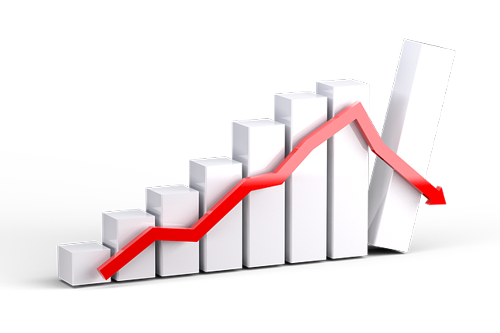
The US stock market has been on a wild ride over the past few years, with major indexes reaching new highs even as economic and geopolitical risks loom. But according to Morgan Stanley's chief US equity strategist, Mike Wilson, the market may be in a "death zone" of unsustainable valuations that could lead to a crash.
In a recent note to clients, Wilson compared the current state of the stock market to the high-altitude conditions in which mountain climbers cannot survive without supplemental oxygen. He noted that investors have found themselves in this position before, with the market reaching unsustainable heights and eventually crashing back down to earth.
Wilson's warning is not without precedent. In 2022, the stock market suffered its worst year since the 2008 financial crisis, with all three major indexes posting losses. The Dow Jones Industrial Average fell 8.8%, while the S&P 500 dropped 19.4%, and the Nasdaq Composite plunged 33.1%.
Wilson's concerns are driven by fears of inflation and rising interest rates. As the US economy continues to recover from the pandemic, the risk of inflation has risen sharply, and many analysts believe that the Federal Reserve will be forced to raise interest rates sooner rather than later to keep prices in check.
This would be a major blow to the stock market, as higher interest rates typically lead to lower stock prices. The market has already been hit hard by fears of inflation and rising interest rates, and if those fears come to pass, it could trigger a major sell-off.
Wilson's warning is a reminder that the stock market is not always a one-way bet. While the market has delivered strong returns for much of the past decade, investors should not assume that those gains will continue indefinitely.
With the risk of inflation and rising interest rates, investors should be prepared for volatility and potential losses in the months and years ahead.
One strategy that some investors use to protect their portfolios during a stock market crash is to invest in precious metals such as gold or silver. Precious metals are often seen as a safe haven asset, as their value tends to rise during times of economic and political uncertainty. If the US stock market were to crash 26%, investors who have allocated a portion of their portfolios to precious metals could potentially offset some of their losses.
Today in precious metals, gold prices rose 0.25% to $1,825.10 per ounce. Silver dropped 0.41% to $20.89 per ounce. Platinum increased by 3.52% to $959.20 per ounce, while Palladium grew by 2.16% to $1,484.50 per ounce. Bitcoin sunk 0.77% to $23,375.10.
What steps should investors take to protect their portfolios in the event of a 26% crash in the US stock market?
Gold Prices Fell Again as Economic Data Strengthens US Dollar
Feb. 24, 2023
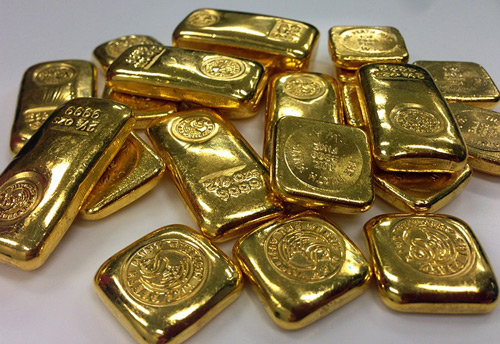
Gold prices are on track to fall again this week, as prospects of more interest rate hikes by the U.S. Federal Reserve have dampened the precious metal’s appeal amidst strong economic data. Spot gold was last down 0.48% at $1,813.88 per ounce, while U.S. gold futures dipped 0.31% to $1,821.10.
Since the beginning of February, gold has lost about 7% and has seen significant declines in the previous two out of three weeks, with the precious metal down about 1% this week.
Ole Hansen, head of the commodity strategy at Saxo Bank, noted that gold is trying to find support around the $1,820 level, but prices could drift still lower towards $1,776 on strong personal consumption expenditure data. Hansen added that the market is looking to stabilize after the long overdue correction, which has now been unfolding for the past three weeks.
The U.S. Federal Reserve’s preferred inflation measure, the PCE data for January, came in higher than expected. Recent economic data out of the United States points to a resilient economy, giving more ammunition to central banks to raise rates.
Data on Thursday showed U.S. GDP increased at a revised 2.7% annualized rate last quarter, while new claims for unemployment benefits unexpectedly fell last week.
Kinesis Money analyst Rupert Rowling said in a note that while the metal may continue to drift slightly downward in the near term, the medium-term prospects look more promising, particularly given the view that the U.S. dollar has now peaked. The dollar index edged up 0.48%, making bullion a less attractive bet for overseas buyers.
Silver dropped 0.89% to $21.84 per ounce, platinum increased by 0.74% to $967.30 per ounce, and palladium dipped by 2.74% to $1,534.50 per ounce. Bitcoin sunk 3.01% to $23,718.00.
Will gold prices continue to decline in the short term, or will they stabilize and increase in the medium term given the potential for a weaker US dollar and the current economic outlook?
Iraqi Central Bank to Settle Trade with China in Yuan, Rather than US Dollar
Feb. 23, 2023

The Iraqi central bank announced on Wednesday that it plans to allow trade from China to be settled directly in yuan instead of the US dollar for the first time, in order to improve access to foreign currency.
The decision marks a major shift in Iraq's economic policy towards international trade and financial transactions.
According to the government’s economic adviser, Mudhir Salih, the new option would boost the balances of Iraqi banks with accounts in Chinese banks. This means that for the first time, Iraqi imports from China would be financed in yuan, as they have been financed in US dollars only in the past.
The availability of this option, however, depends on the size of the central bank’s yuan reserves.
In addition to settling trade directly in yuan, the central bank is also exploring the possibility of converting US dollars held in its accounts with JP Morgan and the Development Bank of Singapore (DBS) to yuan before paying the final beneficiary in China. This would help boost local banks’ yuan balances and support their efforts to access foreign reserves.
This decision comes as the Iraqi central bank has been struggling to address a dollar shortage in local markets. Earlier this month, the cabinet approved a currency revaluation to compensate for the crisis.
Last year, the US Treasury and the Federal Reserve Bank of New York imposed stricter controls on international transactions by Iraqi commercial banks, which were forced to comply with specific SWIFT global transfer system criteria to access their foreign reserves.
The move was meant to curtail money laundering and the illegal siphoning of dollars to Iran and other heavily sanctioned West Asian countries. However, the sudden rules change for Iraqi banks sent the economy reeling as 80% or more of Iraq’s daily US dollar wire transfers could no longer be completed.
Following the crisis, a senior Iraqi delegation visited the US capital to discuss easing the US Treasury measures. Foreign Minister Fuad Hussein denied reports that Washington imposed conditions on Baghdad to help with the dollar crisis, stating that it is "only a matter of time" before the exchange rate stabilizes.
This decision by the Iraqi central bank to settle trade directly in yuan follows a trend in the Global South to move away from the US dollar in bilateral trade with China.
Many countries are choosing to boost their Chinese yuan reserves at a time when the hegemony of the US dollar continues to weaken.
As such, it is expected that other countries will follow suit in the near future, seeking to strengthen their own financial positions in the face of changing global dynamics.
Today, gold fell 0.30% to $1,830.10 per ounce. Silver dropped 0.67% to $21.56 per ounce. Platinum decreased by 0.63% to $961.30 per ounce, while Palladium dipped by 3.54% to $1,479.00 per ounce. Bitcoin sunk 1.51% to $23,820.10.
How will the US react to Iraq’s new international settlements policy change?
Federal Reserve Signals More Interest Rate Hikes Needed to Control Rising Inflation
Feb. 22, 2023
Federal Reserve officials have indicated that inflation is still a major concern, especially since the recent CPI increased more than expected.
Meeting minutes released from the Jan. 31-Feb. 1 meeting showed that while there was a smaller rate hike than in recent years, concerns about inflation remained high.
Inflation has remained above the Fed’s 2% target while labor markets have remained tight, contributing to upward pressure on wages and prices. The Fed approved a 0.25 percentage point rate increase, bringing the fed funds rate to a target range of 4.5%-4.75%, but officials stressed that more rate hikes are needed to tackle inflation.
While the quarter-point hike received unanimous approval, not all members of the Federal Open Market Committee were on board. A few members wanted a more aggressive half-point increase.
Since the meeting, regional presidents James Bullard of St. Louis and Loretta Mester of Cleveland have publicly voiced their support for the more aggressive move. However, the minutes did not elaborate on how many members were in favor of the half-point increase.
The consumer price index rose 0.5% from December and is up 6.4% from the same point last year. The producer price index rose 0.7% on the month and 6% annually.
Fed officials have emphasized the need to stay vigilant. Some officials see the risk of recession as elevated, while others believe that the Fed can avoid a recession and achieve a “soft landing” for the economy.
Markets are concerned that if the Fed moves too quickly or too far, it could tip the economy into a recession, while some economists believe the US is already in a recession and will get worse if higher rates.
St. Louis Fed President Bullard Urges More Aggressive Action to Tackle Inflation
Feb. 22, 2023
St. Louis Federal Reserve President James Bullard has expressed confidence that the central bank can beat inflation and advocated for a more aggressive strategy in the fight against inflation.
In a recent live interview with CNBC, Bullard argued that a more aggressive interest rate hike would give the Federal Open Market Committee (FOMC) a better chance to bring down inflation that, while falling off some of the precarious levels of 2022, is still high.
Bullard has been calling for a more aggressive interest rate hike for some time, along with Cleveland Fed President Loretta Mester.
The two were pushing for a half-percentage point rate hike at the last FOMC meeting, instead of the quarter-point move that was ultimately approved. They have said that they will continue to favor a more aggressive move at the March meeting.
While some investors fear that higher interest rates could tip the economy into recession, Bullard believes that a more aggressive move is part of a strategy that will ultimately be successful in controlling inflation. He argued that the risk now is that inflation doesn't come down and reaccelerates and that the Fed would need to react.
Bullard said that the key is to be sharp now and get inflation under control in 2023, so as to avoid a replay of the 1970s.
Despite Bullard's call for a more aggressive strategy, futures trading indicates that the benchmark short-term borrowing rate will top out at a "terminal" level of 5.36% this summer, which is higher than the 5.1% estimate committee members made in December but about in line with Bullard's projection of a 5.375% rate.
The markets still largely expect the Fed to go with the quarter-point move next month, according to CME Group data.
The recent remarks from Bullard and Mester, along with a batch of inflation data that came in higher than expected, have stoked fears that the Fed has more work to do to bring down prices.
The markets have been volatile in the wake of these remarks, with major averages experiencing their biggest sell-off of the year on Tuesday, erasing all the gains that the Dow Jones Industrial Average had made in 2023.
Today in precious metals, gold prices fell 0.15% to $1,840.70 per ounce. Silver dropped 0.89% to $21.84 per ounce. Platinum increased by 0.74% to $967.30 per ounce, while Palladium dipped by 2.74% to $1,534.50 per ounce. Bitcoin sunk 3.01% to $23,718.00.
What are the potential implications of a more aggressive interest rate hike in the fight against inflation, and how might this affect the overall health of the economy?
US Existing Home Sales Continue to Decline: What it Means for the Housing Market
Feb. 21, 2023

The US housing market has been facing some challenges in recent months, as the existing home sales have been on a continuous decline for a record 12 straight months, according to a report released in January. This trend is quite alarming, especially since January's sales figures were well below the 2% rebound that was expected, instead tumbling 0.7% on a month-on-month basis.
This decline in home sales represents a significant challenge for the housing market as a whole, as it suggests that the market is struggling to maintain momentum. The declining trend is expected to have a negative impact on the economy and could pose significant challenges for the housing industry.
One of the factors contributing to this decline is the shortage of inventory. Buyers are struggling to find homes that fit their needs, which has made it difficult for them to make a purchase. As a result, the number of homes on the market has been decreasing, and this has put upward pressure on prices.
However, Lawrence Yun, NAR's chief economist, believes that the decline in home sales is bottoming out, and buyers are starting to gain better negotiating power. Properties remained on the market for an average of 33 days at the start of the year, up from 19 days a year earlier.
Yun also noted that homes that sit on the market for more than 60 days can be purchased for around 10% less than the original list price, which has put downward pressure on home prices.
The median selling price was up just 1.3% from a year earlier, the smallest annual gain in home prices since January 2012, to $359,000. The report also showed that high-end homes priced at $1 million or more saw the biggest drop in sales. This trend could be attributed to the high prices of luxury homes, which could be deterring potential buyers.
While the decline in home sales is not good news for the housing industry, there are some silver linings. For instance, the decrease in home prices could be good news for buyers who have been struggling to afford a home.
Moreover, the lower prices could help stimulate demand in the coming months, which could help to reverse the declining trend in home sales.
Today in precious metals, gold prices fell 0.09% to $1,848.40 per ounce. Silver rose 0.62% to $22.17 per ounce. Platinum increased by 1.62% to $962.20 per ounce, while Palladium grew by 1.24% to $1,582.00 per ounce. Bitcoin dropped 1.00% to $24,560.40.
What impact do you think the continuous decline in US existing home sales, combined with a shortage of inventory and downward pressure on home prices, will have on the housing market in the coming months?
EU and G7 Seek to Restrict Russian Diamond Trade with Watertight Tracking System
Feb. 20, 2023

The European Union and G7 are reportedly collaborating to develop a tracking system that would restrict the trade of Russian diamonds across borders. Bloomberg reported on Sunday that the proposed tracking system aims to be "watertight" and would make it difficult for Russian diamonds to reach consumers outside of Russia.
Russia's diamond trade has been largely resistant to sanctions, partly due to opposition from major importers of gems, such as Belgium. Antwerp, Belgium, is the world's largest diamond trading hub, with around 85% of the world's rough diamonds passing through the city before reaching consumers. An estimated 10,000 people rely on the diamond trade for employment in Antwerp.
Belgian authorities argue that imposing sanctions on Russian diamonds without building a global system to track the gems would be pointless, as trade would shift to other markets such as India and China.
Diamonds' origins can only be traced at the start of the supply chain when the Kimberley Process certificate, designed to prevent the sale of so-called 'blood diamonds,' is issued for a rough gem. Cut and polished stones that later flow through other markets and trading houses with 'mixed origin' documentation are difficult to track.
However, tracing polished diamonds in a global market is extremely complicated, and a solution is not imminent, according to people with knowledge of the G7 and EU discussions.
The EU has been debating a potential ban on Russian diamonds for some time, with the upcoming tenth round of sanctions reigniting the debate. The latest data shows that Russian diamond sales in the EU increased after the start of Moscow's military operation in Ukraine in February 2022.
In the second quarter of 2022, Russian rough diamond exports surged to $1.11 billion from $1.01 billion in the first quarter of the year and from $1.09 billion in the second quarter of 2021, according to a Kimberley Process report. While no data is available for the third and fourth quarters of 2022, preliminary third-quarter numbers also show an increase.
The US has already sanctioned Russian mining giant Alrosa, which is the world's largest diamond producer and accounts for 30% of the $80 billion global trade in rough diamonds. Washington has banned the importation of Russian rough diamonds but still imports gems substantially altered in other countries.
Today markets are closed for precious metals, the gold price is $1,850.80 per ounce. Silver is at $22.03 per ounce. Platinum sits at $942.40 per ounce, while Palladium hovers at $1,560.50 per ounce. Bitcoin rose 2.01% to $24,765.60.
What do you think will be the outcome of the EU and G7's efforts to introduce a "watertight" tracking system to restrict the trade of Russian diamonds across borders?
US Wholesale Inflation Rebounds Rising More Than Expected
Feb. 16, 2023
The US Labor Department reported on Thursday that inflation rebounded in January, with the producer price index (PPI) rising more than expected at the wholesale level.
The PPI, which measures the first price producers get on the open market, rose 0.7% for the month, marking the largest increase since June. This increase was higher than the expected 0.4% rise, as forecast by economists surveyed by Dow Jones, following a decline of 0.2% in December.
Excluding food and energy, the core PPI increased by 0.5%, compared with the predicted 0.3% increase. Meanwhile, the core, excluding trade services, rose 0.6%, compared to the estimated 0.2% rise. On a 12-month basis, the headline PPI increased 6%, still high but a considerable decrease from its peak of 11.6% in March 2022.
Despite the PPI not being as closely watched as other inflation metrics, it is a leading indicator as it tracks the first price that producers get on the open market.
The PPI increase coincided with a 0.5% jump in the January consumer price index (CPI), which measures the prices consumers pay for goods and services. Together, the metrics suggest that inflation appeared to be subsiding as 2022 came to a close, but it started the year off with a pop.
Economists are attributing the January inflation increase mainly to seasonal factors and payback from previous months that showed muted price rises. An unseasonably warm winter may have played a part, while fuel prices, which are volatile, also increased during the month.
Today for in precious metals, gold prices fell 1.14% to $1,842.90 per ounce. Silver dropped 1.42% to $21.75 per ounce. Platinum decreased by 1.82% to $934.40 per ounce, while Palladium dipped by 2.82% to $1,494.00 per ounce. Bitcoin rose 2.39% to $22,737.90.
What impact might the higher-than-expected producer price index (PPI) reading in January have on the US economy, and what steps could the Fed take to address inflationary pressures?
US Retail Sales Soar in January, Defying Inflation Pressures
Feb. 15, 2023

Sales at retailers in the United States rose higher than expected in January, according to a report from the Commerce Department.
Despite growing inflation pressures, consumers continued to spend, with advance retail sales for the month increasing by 3% compared with expectations for a rise of 1.9%. The increase in sales was driven by a surge in food services and drinking places, which rose by 7.2%, and an increase in motor vehicle and parts dealers, which increased by 5.9%.
Furniture and home furnishing stores also saw a rise of 4.4%, while online retailers increased by 1.3%, and electronics and appliances stores increased by 3.5%. Even with a 2.4% increase in gas prices, receipts at service stations remained flat. No categories saw a decline in sales, following a December in which sales fell 1.1%.
The report comes as the Federal Reserve is grappling with rising prices that appear to be abating but are still well ahead of the central bank’s 2% annual target.
Inflation, as gauged by the consumer price index, accelerated by 0.5% in the first month of the year, according to the Labor Department. However, the sales report indicates that even with elevated inflation pressures, consumers continued to spend.
Several Fed officials spoke on Tuesday, with each indicating that while they see some progress being made, there is still more work to do. The markets currently expect the Fed to approve quarter percentage point interest rate hikes at each of its next two meetings, then pause to assess the impact that the monetary policy moves have had on inflation, the labor market, and broader economic growth.
Today, gold fell 1.14% to $1,842.90 per ounce. Silver dropped 1.42% to $21.75 per ounce. Platinum decreased by 1.82% to $934.40 per ounce, while Palladium dipped by 2.82% to $1,494.00 per ounce. Bitcoin rose 2.39% to $22,737.90.
Have rising inflation pressures changed your spending habits, or are you still shopping as usual?
US Inflation Rises in January 2023, Increasing Recession Risks
Feb. 14, 2023
Inflation in the US is off to a troubling start in 2023, as increasing shelter, gas, and fuel prices took their toll on consumers, according to the Labor Department.
The consumer price index (CPI), which measures a broad basket of common goods and services, rose 0.5% month-over-month (MoM) in January, translating to an annual gain of 6.4%. Economists surveyed by Dow Jones had been looking for respective increases of 0.4% MoM and 6.2% Year-over-year (YoY).
Excluding volatile food and energy, the core CPI increased 0.4% monthly and 5.6% from a year ago, against respective estimates of 0.3% and 5.5%. Markets were volatile following the release, with the Dow Jones Industrial Average down about 200 points at the open.
Rising shelter costs accounted for about half the monthly increase, according to the Bureau of Labor Statistics, with the component accounting for more than one-third of the index. Shelter costs rose 0.7% on the month and were up 7.9% from a year ago, while energy was a significant contributor, up 2% and 8.7%, respectively. Food costs also rose 0.5% and 10.1%, respectively.
Rising prices have meant a loss in real pay for workers, with average hourly earnings falling 0.2% for the month and being down 1.8% from a year ago, according to a separate BLS report that adjusts wages for inflation.
While price increases had been abating in recent months, January’s data shows inflation is still a force in a US economy that is in danger of slipping into recession this year.
This data arrives amid the Federal Reserve’s efforts to quell the problem. The central bank has hiked its benchmark interest rate eight times since March 2022 as inflation rose to its highest level in 41 years last summer.
Today, gold fell 0.37% to $1,856.30 per ounce. Silver dipped 1.57% to $21.89 per ounce. Platinum decreased by 2.82% to $948.00 per ounce, while Palladium grew by 4.44% to $1,537.00 per ounce. Bitcoin sunk 0.90% to $21,984.90.
What extra measures do you believe the Fed should take to mitigate inflation and its negative effects on the economy?
Saudi Arabia Expresses Interest in Joining BRICS and Shanghai Cooperation Organization
Feb. 13, 2023

Saudi Arabia has expressed interest in joining the BRICS, a group of the world's five major developing economies, and the Shanghai Cooperation Organization (SCO), according to Russia's ambassador to the kingdom, Sergey Kozlov.
The BRICS nations – Brazil, Russia, India, China, and South Africa – currently account for over 40% of the world's population and nearly a quarter of global GDP.
The SCO, however, is a regional security bloc led by China and Russia and includes significant powers (including India) as members.
Kozlov stated that Saudi Arabia's interest in joining these organizations is part of the country's efforts to diversify its foreign policy. He added that the possibility of Saudi Arabia joining the SCO is being actively discussed and the idea of joining BRICS is under consideration.
The ambassador also said that Saudi Arabia shows a willingness to become an integrated part of these multilateral organizations.
Several other countries have also expressed interest in joining BRICS, including Algeria, Argentina, and Iran.
Meanwhile, Bangladesh, Egypt, the United Arab Emirates, and Uruguay are members of the New Development Bank under BRICS. Other countries like Bahrain, Bangladesh, Indonesia, Egypt, Mexico, Nigeria, Pakistan, Sudan, Syria, Turkey, the UAE, Venezuela, and Zimbabwe have also shown interest in becoming BRICS members.
Today, gold fell 0.64% to $1,862.50 per ounce. Silver spiked 0.30% to $22.15 per ounce. Platinum increased by 0.85% to $971.80 per ounce, while Palladium grew by 0.14% to $1,581.00 per ounce. Bitcoin sunk 1.42% to $21,642.50.
What are the potential benefits or impacts of Saudi Arabia joining the BRICS and the Shanghai Cooperation Organization?
Moldova Government Collapses Amid Massive Missile Attack by Russia on Ukraine Over its Airspace
Feb. 10, 2023

The conflict between Russia and Ukraine has taken a new turn as Ukrainian authorities claim that a massive missile attack was launched against critical infrastructure sites in the country.
According to the Ukrainian air force, 71 missiles were fired from the Black Sea, with 61 of them being shot down by Ukrainian forces. The attack was focused on the Kharkiv and Zaporizhzhia regions.
The Ukrainian President, Volodymyr Zelensky, seized on the fact that one of the missiles is believed to have narrowly missed entering the airspace of NATO member Romania and argued that it constitutes a fresh "challenge" to NATO and its collective security.
President Zelensky has been pushing for NATO to become more directly involved in the conflict in an attempt to drive the Russians out of Ukraine.
The situation in Moldova, which has seen debris from Russian missiles during the conflict, has also become unstable as the government has effectively collapsed. The Prime Minister, Natalia Gavrilita, has resigned after 18 months in power and an ongoing war at its border.
Western allies have long accused Russia of seeking to destabilize Moldova, and there are fears that Russian forces could cross into the country. Western countries have donated hundreds of millions of dollars to Moldova in an effort to shore up its resources amid renewed fears of Russian aggression and energy supply cuts.
The fighting in Bakhmut continues, with Western media increasingly acknowledging that time is running out for Ukrainian troops defending the city. Russia has surrounded Bakhmut from three sides, but the Ukrainians have vowed to fight till the end, similar to what happened in Mariupol.
Control of Bakhmut would strategically link large areas of eastern and southern Ukraine currently under Russian control.
In conclusion, the missile attack and the instability in Moldova have added new elements to the ongoing conflict between Russia and Ukraine. The situation is rapidly deteriorating and the international community must take action to ensure the protection of civilians and to bring an end to the conflict.
Henry Kissinger warns of domestic division and international disorder in the US
Feb. 10, 2023

Henry Kissinger, former US Secretary of State and National Security Adviser spoke at an event honoring former President Ronald Reagan at the Ronald Reagan Presidential Library on February 5th, 2023, warning that the US political establishment was suffering from a lack of "domestic cohesion."
Kissinger stated that the country was facing "domestic division and international disorder" and that the current situation made it difficult for the US to handle the various challenges it was facing.
He listed China's challenge to world order, Russia's military operations in Ukraine, Iran's supposed development of "the world's most devastating weapons", and the transformation of human consciousness through artificial intelligence as among the most pressing challenges.
Kissinger argued that the late Reagan, who was honored on the 112th anniversary of his birth, was a leader who understood that America needed to be powerful in both substance and mind to protect world order and that a stable world couldn't be based on American isolationism.
However, despite describing Reagan as a "peacemaker," the former President's legacy was marked by several military interventions, including the invasion of Grenada, the deployment of troops to the Middle East, and the support of the Contras in the attempted overthrow of the government of Nicaragua through the CIA.
Reversing his previous position, Kissinger expressed support for Ukrainian membership of NATO at the World Economic Forum last month. He had previously called for an end to the conflict between Ukraine and Russia to avoid driving Russia toward China.
Today, gold fell 0.20% to $1,868.80 per ounce. Silver spiked 0.39% to $22.27 per ounce. Platinum decreased by 0.31% to $969.20 per ounce, while Palladium dipped by 5.21% to $1,588.50 per ounce. Bitcoin sunk 0.65% to $21,659.90.
Why do you think Kissinger reversed course and is now pushing for NATO membership of Ukraine?
Half a Billion Dollars Lost in Nickel Trading Market Fraud
Feb. 09, 2023
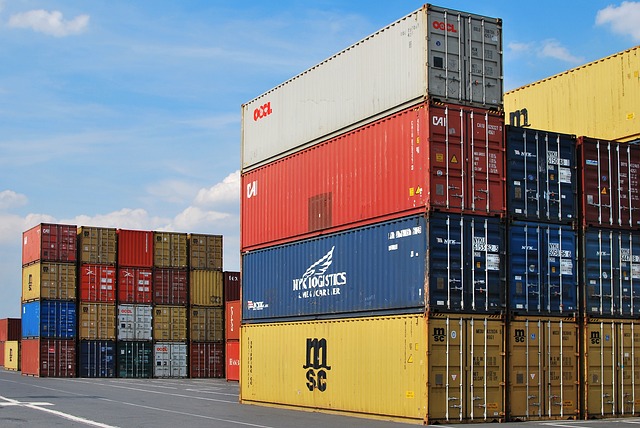
The nickel trading market is in the headlines once again, as commodity trader Trafigura Group faces significant losses after discovering that metal cargoes it bought did not contain the metal they were supposed to.
The company recorded a $577 million discrepancy as a result of the scam and has terminated the head of nickel and cobalt trading, Socrates Economou, due to the discovery.
Trafigura has brought forward legal action against Indian businessman Prateek Gupta and several companies connected to him, including TMT Metals and subsidiaries of UD Trading Group.
The company stated that a slight proportion of the containers bought from these companies have been inspected and found to not contain nickel. The bulk of the freight remains in transit and is awaiting additional inspection.
This latest incident is just one more problem in a metals-trading industry that has been plagued by tales of fake warehouse receipts, duplicate shipping documents, and containers filled with painted rocks.
Nickel, in particular, is a popular metal among fraudsters. A single container full of nickel can be worth half a million dollars, and it is traded in relatively large volumes and without the same strict security measures that accompany shipments of precious metals like gold and silver.
The situation highlights the importance of conducting proper due diligence and ensuring that the metal being traded is legitimate. It also serves as a reminder of the risks involved in the commodity trading industry, where even the largest and most established companies can fall victim to fraud.
Trafigura’s situation raises questions about the security measures in place for metal trading and the need for increased precautions to prevent similar incidents from occurring in the future.
Today, gold fell 0.30% to $1,880.40 per ounce. Silver dropped 0.85% to $22.37 per ounce. Platinum decreased by 1.34% to $977.30 per ounce, while Palladium dipped by 1.21% to $1,664.00 per ounce. Bitcoin sunk 1.52% to $22,613.90.
What measures do you think should be taken to ensure the authenticity of metal cargoes in the commodity trading industry, in light of the recent fraud discovered by Trafigura Group in the nickel trading market?
Growing Copper Deficit Threatens Market Stability Amid South American Mining Setbacks
Feb. 08, 2023

The copper market is facing a deficit that could impact the market for years to come as mining setbacks in South America persist.
Chile, which accounts for 27% of the global supply of copper, recorded a 7% year-on-year decline in November. Meanwhile, Peru, which accounts for 10% of the global copper supply, is also facing challenges such as poor ore quality, strikes, and water restrictions. As a result, the copper market is expected to be in deficit for years to come.
The demand for copper was solid in 2022, and if China sees a robust reopening, prices could rally significantly. Copper is a valuable indicator of economic health as it is widely used in electrical equipment and machinery.
A decrease in supply could mean global inflationary pressures are getting worse, causing central banks to maintain their hawkish stance to cool consumer prices and strengthen currencies.
As of Tuesday, copper futures were trading at $4.03 per pound, down 0.09% from the previous session. Copper had risen above $9,000 per tonne in January as traders anticipated a bounce in Chinese demand, but it has since slipped and is now approximately 10.5% lower over the last year.
Publicly traded copper producers include BHP Group, Freeport-McMoran, and Teck Resources.
Today, gold fell 0.02% to $1,881.70 per ounce. Silver spiked 0.79% to $22.56 per ounce. Platinum decreased by 0.01% to $994.40 per ounce, while Palladium dipped by 0.51% to $1,679.50 per ounce. Bitcoin sunk 1.42% to $22,915.30.
How do you think the global economy would react to a significant copper price increase?
Federal Reserve Chairman Powell Comments on Inflation and Interest Rates: Long Process Ahead
Feb. 07, 2023
Federal Reserve Chairman Jerome Powell stated on Tuesday that the process of reducing inflation, which he referred to as the "disinflationary process," has begun and is starting in the goods sector of the economy. However, he noted that it is still in the early stages and will take time to get inflation down to the Fed's target of 2%.
Powell also warned that if strong economic data such as strong labor market reports or higher inflation reports continue, the Fed may have to raise interest rates more than expected.
The Fed recently raised its benchmark interest rate to a target range of 4.5% to 4.75%. Powell said it will likely take into 2024 to get inflation to a comfortable level for the Fed and that the disinflationary process is likely to be bumpy and will take time.
Binance Temporarily Halts US Dollar Transactions on Its Crypto Exchange
Feb. 07, 2023

Binance, the largest cryptocurrency exchange by trading volume, has announced that it will be suspending transactions in US dollars starting from February 8th.
The company did not provide a reason for the move, but said that it was "temporary." Affected customers have been notified directly. Binance noted that only 0.01% of its monthly active users use US dollar bank transfers and that all other methods of buying and selling cryptocurrencies will remain unaffected.
According to data from Arkham Intelligence, the announcement prompted a surge in outflows of dollar-pegged stablecoins from Binance's crypto wallets. However, the exchange's overall crypto assets are worth about $42.2 billion, and it is "still overwhelmingly net-positive on net deposits."
Binance's US unit said that it will not be affected by the measure, as the main Binance exchange does not serve American users.
Today, gold grew 0.45% to $1,884.80 per ounce. Silver spiked 0.40% to $22.56 per ounce. Platinum increased by 0.41% to $992.90 per ounce, while Palladium jumped by 2.50% to $1,674.00 per ounce. Bitcoin rose 0.72% to $22,927.00.
Why do you think Binance has decided to temporarily suspend US dollar deposits and withdrawals on its cryptocurrency exchange?
Russia's Foreign Exchange Reserves Increase by $3.1 Billion
Feb. 06, 2023
The Bank of Russia announced that Russia's foreign exchange reserves increased by $3.1 billion last week, reaching $597.7 billion. The increase, which amounts to a 0.5% increase, is attributed to a positive revaluation of currencies.
Russia's international reserves, which consist of monetary gold, Special Drawing Rights with the IMF, and foreign currency held within the country, were roughly half frozen by Western central banks in March due to anti-Russia sanctions over the Ukraine conflict. These sanctions also banned operations related to the management of the funds.
The remaining holdings consist of gold, foreign currency, and Chinese yuan assets. Before the conflict, Russia's forex reserves had reached a historical high of $643.2 billion.
Today, gold grew 0.05% to $1,874.00 per ounce. Silver fell 0.74% to $22.38 per ounce. Platinum decreased by 0.21% to $991.10 per ounce, while Palladium sunk by 1.74% to $1,635.00 per ounce. Bitcoin rose 0.29% to $23,003.60.
What factors do you think contributed most to the increase in Russia’s Foreign Exchange Reserves? What do you think this increase signals next for the global economy?
High Inflation and Interest Rates Impact American Credit Card Debt
Feb. 03, 2023
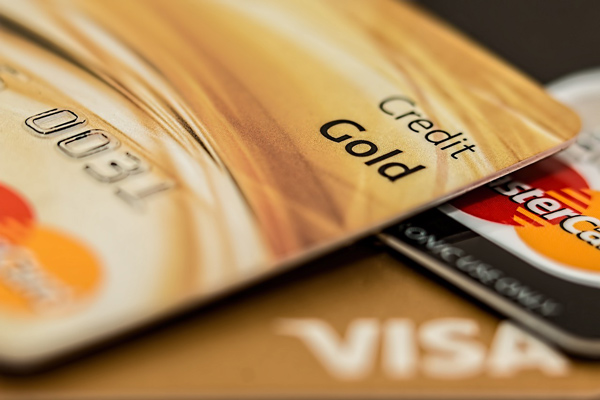
Inflation and interest rate hikes are a double blow for most Americans. Credit card annual percentage rates are close to 20% and are set to rise further, following the latest interest rate increase by the Federal Reserve.
Meanwhile, more consumers are relying on credit cards to pay for necessities like food and rent. As a result, total credit card debt reached a record $930.6 billion at the end of 2022, an 18.5% increase from the previous year, according to TransUnion.
The average credit card balance also rose to $5,805. Paying the minimum towards this average balance would take over 17 years and cost over $8,213 in interest, according to Bankrate.