View Charts
Gold Medical Uses in Arthritis, Cancer Research and Nanotech
 0
0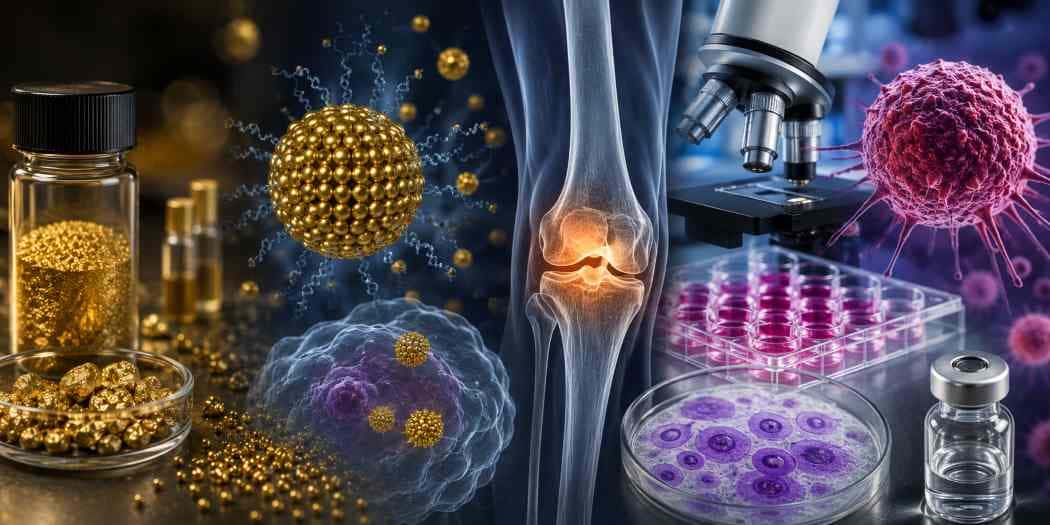
How Gold Helps Scientists Rethink Treatment, Imaging and Precision Care
Gold medical uses may sound surprising to investors who primarily associate the metal with bullion, central bank reserves, jewelry, and inflation protection. Yet gold’s role in medicine is one of the clearest examples of why the metal remains valuable beyond its spot price. Its chemical stability, biocompatibility, optical behavior, and ability to interact with biological systems have made it useful in drug development, diagnostics, rheumatoid arthritis treatment, and cancer research.
This matters now because gold sits at the crossroads of two powerful trends: elevated investor interest in physical precious metals and fast-moving biomedical innovation. While medical demand is not the largest driver of gold prices, it supports a broader investment narrative. Gold is not only a monetary asset shaped by interest rates, inflation, ETFs, and central bank buying. It is also a functional material used in high-value applications where precision, reliability, and performance matter more than bulk consumption.
Gold Prices and Healthcare Demand Tell Different Parts of the Same Story
Gold spot prices are still driven mainly by macroeconomic forces. Treasury yields, Federal Reserve policy, U.S. dollar strength, inflation expectations, geopolitical risk, and investor positioning tend to move the market more directly than medical research. A clinical laboratory using gold nanoparticles or a pharmaceutical company studying a gold-based compound does not consume enough metal to move spot prices on its own.
However, advanced medical use adds depth to gold’s long-term demand profile. In medicine, gold is valued because very small quantities can perform specialized tasks. It can help carry drugs, enhance imaging, generate heat under certain light conditions, interact with proteins, and remain stable in biological environments. That is a different demand story than bullion buying, but it reinforces a broader point: gold’s value is not built on tradition alone. Its physical and chemical properties keep it relevant in modern science.
Auranofin Shows Gold’s Established Role in Rheumatoid Arthritis
Auranofin is one of the best-known examples of a gold-based medicine. It is an oral gold compound developed for rheumatoid arthritis, an autoimmune disease in which the immune system attacks the joints and causes inflammation, pain, stiffness, and long-term tissue damage. Auranofin belongs to a group of disease-modifying antirheumatic drugs, often called DMARDs, because it can influence disease activity rather than simply masking symptoms.
Today, auranofin is not typically considered a first-line rheumatoid arthritis treatment. Modern biologics, methotrexate, JAK inhibitors, and other therapies have changed standard care. Still, auranofin remains important historically and scientifically because it proves that gold can be more than an inert metal. In pharmaceutical form, gold can participate in biological pathways, affect inflammatory activity, and influence immune-related disease processes.
The distinction is important. Gold bullion and gold medicine are not interchangeable. A coin or bar is valued by weight, purity, and market premium. Auranofin is a regulated drug with specific dosing, safety considerations, and medical oversight. The connection lies in the element itself, not in how investors should use it.
Cancer Research Is Renewing Interest in Gold-Based Compounds
Auranofin has attracted renewed attention because researchers are studying whether its biological behavior can be useful beyond rheumatoid arthritis. In cancer research, auranofin is being explored for its ability to disrupt redox balance, inhibit thioredoxin reductase, induce oxidative stress, and potentially make certain cancer cells more vulnerable to treatment. These mechanisms have made it a candidate for drug repurposing studies.
This research is promising, but it should be described carefully. Auranofin is not a universal cancer cure and is not a standard oncology treatment for most patients. Much of the current work remains preclinical, early-stage, or focused on combination strategies with existing therapies. Researchers are investigating whether gold-based compounds can improve sensitivity to chemotherapy, help overcome drug resistance, or target vulnerabilities in specific tumor types.
For readers interested in gold medical uses, this is where nuance matters. The story is not that gold suddenly replaces conventional medicine. The story is that a long-established gold drug is being reexamined with modern cancer biology, molecular targeting, and precision medicine tools.
Gold Nanoparticles Offer a New Platform for Targeted Medicine
Gold nanoparticles are tiny particles of gold measured at the nanoscale, where materials can behave differently than they do in bulk form. At this size, gold can interact with light, cells, proteins, and imaging systems in useful ways. Scientists can also modify nanoparticle surfaces with molecules designed to improve targeting, stability, or drug delivery.
In cancer research, gold nanoparticles are being studied for several roles. They may help deliver drugs to tumors, improve imaging contrast, support photothermal therapy, enhance photodynamic therapy, or act as carriers for genetic material and other therapeutic agents. Their appeal comes from tunability. Size, shape, coating, and surface chemistry can be adjusted for different biological goals.
One of the most discussed applications is photothermal therapy. In this approach, gold nanoparticles absorb specific wavelengths of light and convert that energy into heat. If particles accumulate near tumor tissue, that heat may help damage cancer cells while limiting effects on surrounding tissue. This remains an active research area, with important questions still surrounding targeting precision, safety, clearance from the body, manufacturing consistency, and clinical translation.
Diagnostic Testing Uses Gold’s Optical Behavior
Gold is already familiar in medical diagnostics because gold nanoparticles can produce visible color changes. This property has been used in lateral flow tests and other rapid diagnostic technologies. When gold particles interact with target molecules, the optical response can help signal the presence of a disease marker, hormone, antibody, antigen, or other biological indicator.
This diagnostic role is one reason gold has become so important in point-of-care testing. A material that can produce a clear visual signal, remain stable, and be manufactured at small scale is valuable in medical testing environments. The same optical behavior that makes gold nanoparticles attractive in diagnostics also supports research in biosensors, imaging, and disease monitoring.
Unlike large bullion markets, diagnostic gold use involves extremely small quantities spread across high-value products. The demand effect is not about volume alone. It is about gold’s ability to enable reliable, sensitive, and scalable medical tools.
Scarcity and Purity Matter Differently in Medicine Than in Bullion
Gold’s scarcity supports its investment appeal, but medicine values gold through a different lens. In bullion, buyers care about spot price, purity, premium, mint, weight, and liquidity. A one-ounce gold bar or government-minted coin is judged primarily by metal content and market recognition. Numismatic coins add another layer, where mintage, condition, rarity, grade, and historical importance can create value far above melt price.
In medicine, purity and consistency still matter, but the purpose is different. A gold nanoparticle used in a diagnostic test must meet manufacturing and performance standards. A gold-based drug must be evaluated for safety, dosage, absorption, metabolism, and biological activity. Medical gold is not valued because it can be resold as bullion. It is valued because it can perform a specific scientific function.
This difference helps investors understand gold more clearly. The same element can support wealth preservation, collectible markets, electronics, space technology, and biomedical research, but each use case follows its own economics.
Institutions Turn Gold Into Very Different Products
Gold’s journey through the economy depends heavily on institutions. Mints and refiners convert gold into investment-grade bars and coins. Central banks hold it as a reserve asset. ETFs create financial exposure for institutions and traders. Pharmaceutical researchers study gold compounds such as auranofin. Biomedical engineers design gold nanoparticles for imaging, diagnostics, and treatment research.
These roles are not interchangeable, but they are connected by gold’s unusual combination of properties. It is scarce enough to serve as a store of value, stable enough for long-term storage, conductive enough for electronics, reflective enough for aerospace, and chemically useful enough for specialized medical research. Few metals occupy that broad a range of economic and scientific relevance.
That breadth is part of why gold retains authority in both financial and technological conversations. Investors may buy it for protection against uncertainty, while researchers may use it to solve biological problems at microscopic scale.
Biomedical Innovation Adds a Future-Facing Layer to Gold Demand
The future of gold in medicine will likely depend on how successfully researchers translate promising laboratory results into safe, effective, scalable clinical applications. Auranofin repurposing studies continue to explore cancer, infectious disease, and inflammatory pathways. Gold nanoparticles remain active in research involving drug delivery, imaging, biosensing, photothermal therapy, and targeted treatment strategies.
Not every promising idea will become a standard medical therapy. Clinical development is demanding, expensive, and highly regulated. Nanoparticles must be evaluated for biodistribution, immune response, toxicity, long-term retention, clearance, reproducibility, and manufacturing quality. Those challenges are real, and they are why careful language matters.
Still, the direction is meaningful. Gold’s medical role shows how an ancient store of value can remain relevant in next-generation science. In financial markets, gold may rise or fall with inflation data, yields, and investor sentiment. In laboratories, the same metal is being shaped into particles, compounds, and diagnostic tools that may influence future healthcare. That combination gives gold a rare identity: a traditional safe-haven asset with a modern biomedical frontier.