View Charts
Gold and Silver Pull Back After Record Highs: Normal or a Warning?
 0
0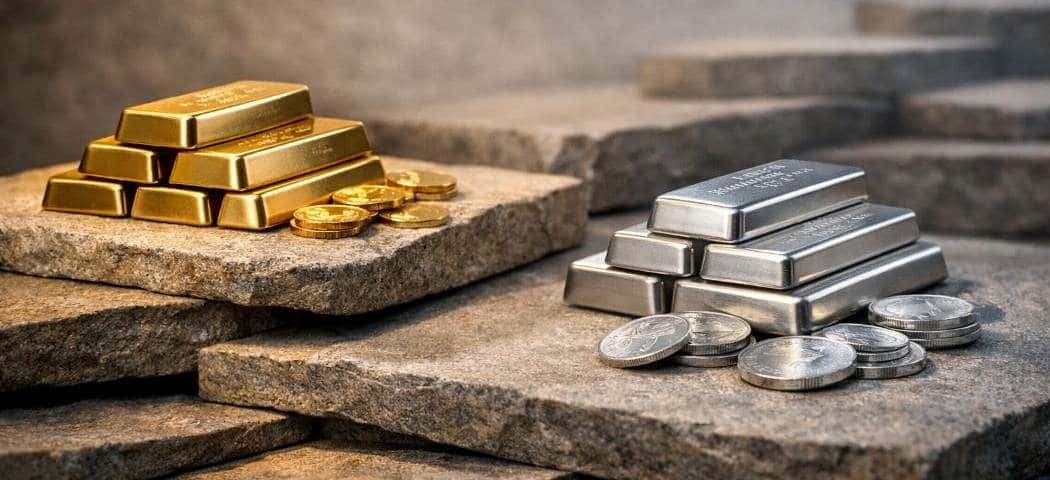
From Record Breakouts to Market Digestion
Earlier today, January 29, 2026, precious metals reached extraordinary milestones, with the price of gold surging beyond $5,500 per ounce and the price of silver briefly crossing the $120 level, rocketing both metals into historic territory. As the trading session progressed, both metals pulled back—gold settling near $5,350 and silver around $115.
For investors, this rapid shift raised an important question: does this pullback signal a change in direction, or is it a normal response following a powerful breakout? History and market structure suggest the latter.
Why Breakout Rallies Are Often Followed by Pullbacks
When gold and silver break major psychological and technical thresholds, markets typically move through a two-phase process. The first phase is price discovery, where momentum accelerates as buyers rush in and sellers step aside. The second phase is price digestion, where markets pause, retrace, and reassess.
This digestion phase serves an important function. It allows short-term traders to take profits, reduces excessive leverage, and enables prices to stabilize above newly established support levels. Rather than weakening the trend, this process often strengthens it by creating a more balanced market structure.
Profit-Taking Reflects Strength, Not Fear
Profit-taking following record highs is a natural feature of strong markets. Round-number milestones—such as $5,000 or $5,500 gold and $100 or $120 silver—tend to attract heightened trading activity from institutional desks, algorithmic strategies, and technically driven funds.
As prices approach these levels, selling pressure often increases—not due to collapsing confidence, but because gains have accumulated rapidly. This behavior is consistent with healthy liquidity and active participation, not panic or systemic stress.
Silver’s Volatility Magnifies Both Sides of the Move
Silver’s pullback warrants special context. Compared with gold, silver operates in a smaller, thinner market and carries a dual identity as both an investment asset and a critical industrial metal. These characteristics make silver inherently more volatile.
During bull markets, silver frequently overshoots on the upside and retraces more sharply than gold. A move from $120 back to the mid $110s remains well within historical norms and does not signal a breakdown in the broader trend. Instead, it reflects silver’s tendency to exaggerate both momentum and consolidation phases.
Macro Conditions Remain Largely Unchanged
Importantly, the underlying forces that drove gold and silver to record highs earlier today have not meaningfully shifted. Geopolitical uncertainty remains elevated, inflation concerns persist, and the Federal Reserve’s recent decision to hold interest rates steady reinforces an environment of constrained real yields.
A rate pause in the face of persistent inflation reduces the opportunity cost of holding non-yielding assets such as gold and silver. This monetary backdrop continues to support precious metals, even as prices fluctuate in the short term.
Historical Perspective: How Past Bull Markets Behaved
Looking back provides valuable perspective. During the 1970s gold bull market, prices experienced multiple sharp pullbacks after breaking new highs—often retracing 10% to 20%—before continuing higher as inflationary pressures intensified. Similarly, in the early 2000s, gold frequently consolidated after major breakouts before resuming its long-term ascent.
More recently, during the 2020–2021 cycle, gold and silver both experienced rapid rallies followed by abrupt corrections, even as macro conditions remained supportive. In each case, pullbacks served as transitional phases, not endpoints.
These historical patterns suggest that volatility following record highs is not an anomaly, but a recurring feature of precious metals bull markets.
Why Pullbacks Can Improve Market Structure
While short-term declines can feel unsettling, they often improve the durability of long-term trends. Pullbacks help:
-
Flush out speculative excess
-
Shift ownership toward longer-term holders
-
Establish clearer technical support zones
Markets that advance without pauses tend to become fragile. Markets that consolidate, by contrast, often emerge with stronger foundations.
What This Means for Precious Metals Investors
For investors, the current environment underscores the importance of perspective. Precious metals are inherently volatile during periods of heightened interest, and short-term price swings do not negate long-term drivers.
Many experienced investors focus less on daily price moves and more on broader signals—such as monetary policy direction, inflation trends, and structural demand—when evaluating gold and silver’s role in a portfolio.
A Market Catching Its Breath, Not Losing Momentum
The pullback from today’s highs does not invalidate the historic surge in the price of gold or the price of silver. Instead, it reflects a market pausing to absorb gains after an extraordinary advance.
History suggests that such moments often represent recalibration rather than reversal. Whether gold and silver prices consolidate further or resume upward momentum, the current phase highlights the resilience and relevance of precious metals in an uncertain global environment.
For informed investors, understanding how markets behave after record highs can be just as valuable as recognizing the breakouts themselves.