View Charts
Elections and the Gold Price: How Politics Shape Metals and Crypto
 0
0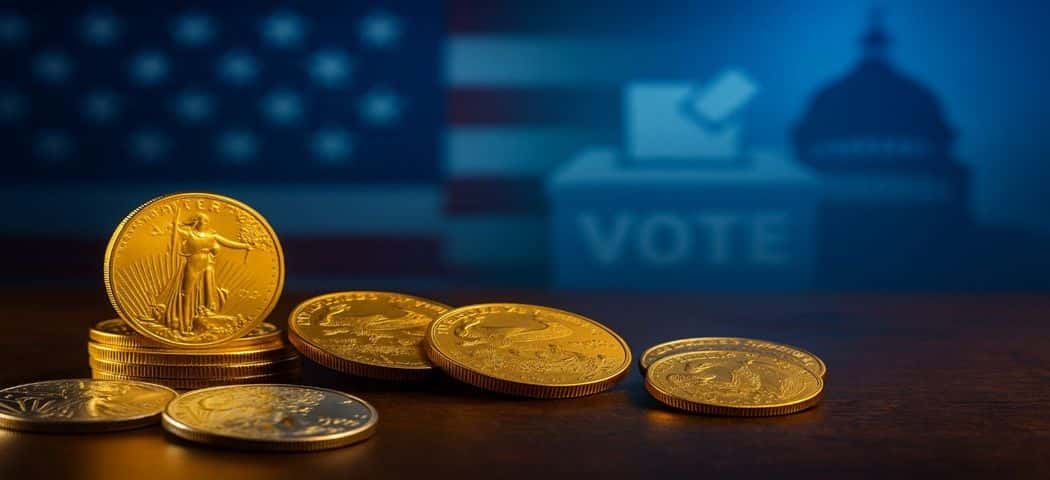
Election Day may not move mountains — but it can move markets.
Why Even Off-Year Elections Matter
While today’s off-year elections may not decide the presidency or congressional control, they still play a powerful role in shaping investor sentiment. State and local results can signal voter priorities, hinting at future fiscal policy, inflation expectations, and even potential regulatory shifts that affect both traditional and alternative assets.
Today, gold trades around $3,970 per ounce, silver hovers near $47.75, and Bitcoin sits near $101,000. These prices reflect markets that remain highly sensitive to political tone, government spending debates, and macroeconomic uncertainty. For investors in precious metals (gold, silver, platinum, palladium) and cryptocurrencies (Bitcoin, Ethereum), even local elections can subtly influence confidence and capital flows.
How Political Cycles Influence the Gold Price and Crypto
Elections—whether national, midterm, or local—tend to shape market behavior in recurring ways:
-
Uncertainty drives safe-haven demand: Political or fiscal instability often sends investors toward gold and silver as protection against volatility and inflation.
-
Fiscal priorities affect inflation outlook: Spending policies and tax decisions impact debt levels and inflation expectations, two of the biggest drivers of the gold price.
-
Crypto regulation evolves with leadership: Election outcomes can influence the tone of oversight and taxation for Bitcoin and Ethereum, swaying sentiment and short-term pricing.
-
Risk appetite shifts with policy direction: Confidence in pro-growth policies can strengthen equities, while gridlock or deficit fears tend to favor precious metals and digital stores of value.
Historical Perspective: Gold and Crypto in Election Years
While no two election cycles are the same, the historical relationship between election results and safe-haven assets offers valuable insight:
-
2010 (Midterms): Gold rose nearly 29%, fueled by post-recession stimulus and fears of rising U.S. debt.
-
2014 (Midterms): The economy strengthened, tempering safe-haven demand — gold held steady while equities advanced.
-
2018 (Midterms): Political division and tariff tensions lifted gold about 1.5%, as Bitcoin cooled after its 2017 rally.
-
2022 (Midterms): Inflation and global supply concerns pushed gold up roughly 6%, while crypto entered a prolonged correction as investors favored tangible assets.
-
Off-Year Elections: Historically subtler in effect, local elections can still move sentiment if they signal fiscal tightening or shifts in regional tax policy — both of which influence appetite for hard assets like gold and silver.
These examples highlight a consistent theme: investors react less to who wins and more to what the results imply for the economy, regulation, and inflation.
Today’s Election Climate: Subtle but Significant
This year’s off-year contests come at a time of sluggish economic recovery, persistent inflation, and ongoing government shutdown concerns. Markets are watching for clues about:
-
Voter attitudes toward spending and taxation, which could influence federal and state fiscal priorities.
-
Crypto regulation at the state level, as some candidates push innovation while others advocate stricter oversight.
-
Signals of potential gridlock ahead of 2026, which could encourage a defensive shift toward gold and silver investments.
Even modest results today can ripple into broader trends if they reshape expectations for monetary policy, regulation, or consumer confidence.
Investment Takeaways: Navigating Politics with Precious Metals
Political seasons can bring uncertainty — but for long-term investors, uncertainty often means opportunity.
What to watch next:
-
U.S. dollar and Treasury yields — A weaker dollar typically boosts the gold price.
-
Inflation readings — Delays in federal data due to the shutdown may amplify market reactions.
-
Crypto policy headlines — Expect more state-level discussion about blockchain innovation or regulation in the coming months.
Diversification remains key. Gold tends to perform best during periods of uncertainty, while silver and platinum often follow as investors broaden exposure to physical assets. For crypto enthusiasts, understanding how policy direction affects sentiment can provide valuable timing insight for re-entry or rebalancing.
For investors positioning ahead of 2026’s midterm cycle, Bullion Exchanges offers a range of options—from 1 oz gold and silver coins to fractional Goldbacks—ideal for building stability in any political climate.
Politics Come and Go — Gold Endures
Off-year elections rarely cause dramatic market swings overnight, but their psychological and policy implications can shape trends for months. Whether results point to fiscal restraint or new spending, the gold spot price tends to reflect the broader narrative of trust, confidence, and caution.
For investors, elections are reminders that while political tides shift, gold and silver remain timeless hedges against volatility. Crypto may rise or fall with regulation, but physical metals endure as a foundation of tangible wealth.
As votes are counted, markets will adjust—but true diversification remains the most reliable strategy. At Bullion Exchanges, we help investors navigate uncertainty with confidence, offering trusted access to the world’s leading precious metal products and educational insights for every market cycle.