View Charts
Does Tarnish Reduce the Value of Silver Bullion?
 0
0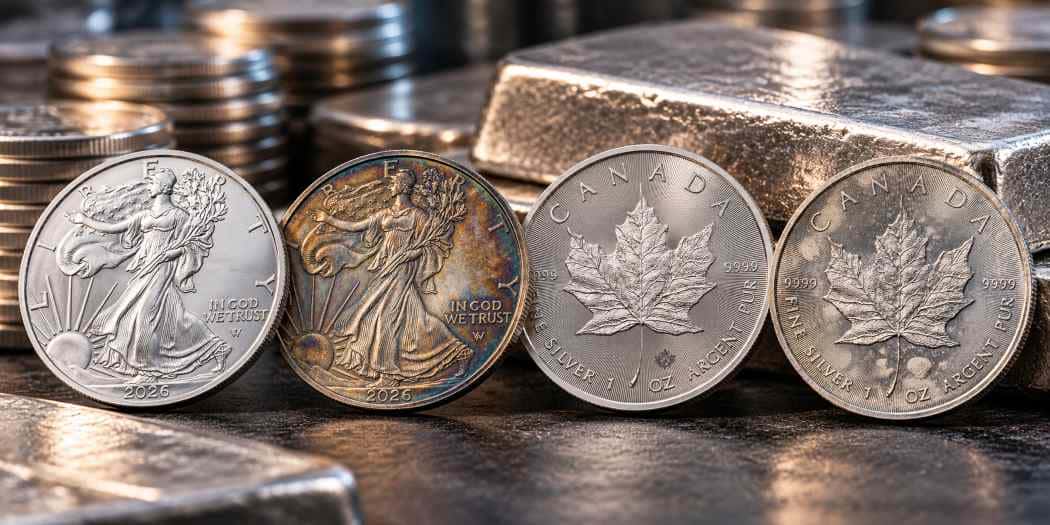
A Change in Appearance Is Not Necessarily a Loss in Value
Pull an older silver round from a tube and it may no longer look anything like the brilliant piece that went in. The edges might have darkened, the surface may show gray or golden toning, or a government bullion coin might have developed cloudy white spots. For an owner accustomed to bright silver, the immediate concern is understandable: did the silver just lose value? Usually, the answer depends on what kind of value is being measured.
Tarnish does not ordinarily change the amount of silver in a bullion product. A one-ounce .999 fine silver round does not stop containing one ounce of silver because its surface darkens. Physical silver can, however, carry value above its underlying metal content, and that additional value may be sensitive to condition. The effect can range from negligible on ordinary investment bullion to substantial on rare or collectible coins. Understanding that difference requires separating three things that are often treated as interchangeable: intrinsic silver value, bullion premium, and numismatic value.
Tarnish Does Not Erase the Silver
The starting point for most bullion is its precious-metal content. The silver spot price provides a benchmark for the market value of one troy ounce of silver, while physical products generally trade at prices that reflect both their metal content and a premium. Tarnish develops when silver reacts with compounds in its environment, particularly sulfur-containing substances, creating a thin surface layer that alters the metal's appearance. Depending on storage conditions and exposure, silver can take on shades ranging from pale gold and gray to brown, blue, violet, or nearly black.
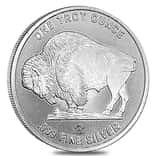
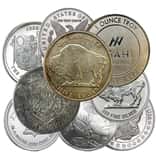
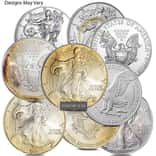
Those visual changes do not normally mean that a meaningful amount of silver has disappeared. For a generic round or common secondary-market bar purchased primarily for its weight and purity, that distinction is important. Bullion Exchanges, for example, offers generic silver rounds that may show signs of previous handling or storage while still being valued fundamentally for their stated precious-metal content. An unattractive bullion piece is therefore not the same thing as an underweight or lower-purity piece. Its appearance may influence what someone is willing to pay, but the silver itself remains the foundation of its value.
Metal Value and Resale Premium Are Different Things
Consider two one-ounce .999 fine silver rounds from the same manufacturer. One has bright, clean surfaces; the other is heavily toned and scratched. Assuming both remain authentic and contain their full stated weight and purity, their intrinsic silver content is essentially the same. A buyer primarily interested in accumulating ounces may place little importance on the cosmetic difference, while another buyer may prefer the cleaner example and be willing to pay more for it.
That distinction exists because physical bullion does not trade solely according to melt value. Recognizability, manufacturer or mint, product demand, condition, available inventory, and the strength of the secondary market can all influence premiums. As a result, asking whether tarnish affects silver value has no universal dollar answer. Tarnish generally does not eliminate intrinsic silver value, but it can affect the portion of a product's market value that depends on something beyond its metal content.
The effect generally becomes more significant as more of the purchase price depends on those additional attributes. Low-premium generic bullion derives much of its appeal from weight and purity, so ordinary cosmetic imperfections may have relatively little significance. A government bullion coin, proof issue, limited release, or certified collectible may carry more value because of its source, finish, scarcity, grade, or collector demand. The more buyers are paying for the specific object rather than simply the silver it contains, the more its condition can matter.
Toning, Milk Spots, and Scratches Affect Silver Differently
Tarnish, toning, milk spots, fingerprints, and scratches are often grouped together because they all change a silver item's appearance, but they do not have the same cause or necessarily produce the same market response. Tarnish on silver is a chemical surface reaction, while naturally developed tarnish on coins is commonly described as toning. Some toning is considered unattractive, particularly when it is dark, uneven, or obscures important design elements. Other naturally toned coins can attract collector interest when their colors, patterns, and originality create unusual eye appeal. As discussed in our article on natural and artificial coin toning, the effect on value becomes particularly subjective once a coin enters the collector market.
Milk spots are a different surface issue. These cloudy white marks are associated with certain modern silver coins and can appear after minting. They do not remove the underlying silver, but they may diminish visual appeal and affect the premium a collector or buyer is willing to pay. The grading market illustrates why this distinction matters: NGC notes that white spots on modern silver coins can negatively affect grade, while also explaining that these spots cannot currently be removed through its conservation process. On an ordinary raw bullion coin, the financial effect may be relatively modest. On a coin whose market price depends heavily on achieving or maintaining a high numerical grade, the consequences can be greater.
Scratches, scuffs, abrasions, and fingerprints introduce still another consideration because they represent physical surface impairments rather than simply a change in coloration. A lightly scuffed generic round still contains its silver, and a bullion-focused buyer may care little about the mark. A prominent scratch across a proof field, high-grade coin, or scarce collectible can be far more consequential because the damaged surface directly affects one of the characteristics supporting the premium. The same visual defect can therefore be almost irrelevant on one silver product and financially important on another.
Government Bullion Coins Occupy the Middle Ground
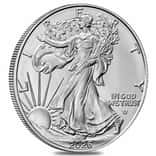
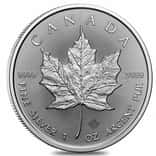
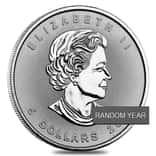
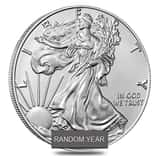
The distinction becomes especially useful when evaluating silver coins. Widely traded government bullion issues such as American Silver Eagles and Canadian Silver Maple Leafs have clearly defined precious-metal content, yet buyers may also pay premiums for government backing, recognizable designs, annual issues, liquidity, and strong secondary-market demand. These characteristics place many government bullion coins somewhere between generic investment silver and traditional numismatics.
A toned Silver Eagle does not suddenly lose the silver that establishes its basic bullion value. Nevertheless, two otherwise identical Eagles—one with attractive original surfaces and another heavily spotted, scratched, or discolored—may not receive identical offers from every buyer. The difference is not necessarily about the silver content; it can reflect how easily the product can be resold and whether another buyer will pay the customary premium for an impaired example.
That equation shifts further with proof versions, special finishes, privy-marked issues, low-mintage releases, or certified coins. In those markets, part of the purchase price may reflect presentation, scarcity, grade, or collector demand rather than metal alone. Damage to the attributes collectors value can therefore affect considerably more than a small bullion premium. This is why the familiar phrase "silver is silver" is useful when discussing intrinsic metal content but incomplete when discussing total market value.
Collectible Silver Can React Very Differently
At the numismatic end of the spectrum, condition can become central to price because a collectible silver coin may derive only a fraction of its value from its precious-metal content. Date, mint mark, rarity, grade, provenance, originality, eye appeal, and collector demand can outweigh melt value by a wide margin. In that environment, toning can help, hurt, or sometimes materially alter market interest depending on its appearance and whether collectors believe it developed naturally.
Natural toning with attractive coloration and preserved underlying luster may be desirable to some collectors, while artificial toning, harsh cleaning, and altered surfaces are treated very differently. Major grading services examine these characteristics because originality is an important part of numismatic evaluation. PCGS warns against cleaning collectible coins, noting that abrasive cleaning can leave hairlines and other evidence of surface alteration that may prevent a coin from receiving an ordinary numerical grade.
The lesson for bullion owners is not that every tarnished round requires numismatic-level preservation. Rather, an owner should know what type of silver item is being handled before attempting to improve its appearance. The less of the item's value that comes from its silver content alone, the more important that distinction becomes.
Cleaning Can Cause More Damage Than the Tarnish
A dark or spotted silver coin can create a strong temptation to reach for polish, a cloth, baking soda, or another household cleaning method. That approach can turn a largely cosmetic problem into permanent surface damage. Cleaning does not increase the amount of silver in a coin or bar, and abrasive methods can create fine scratches, remove original surface characteristics, disturb luster, or leave a piece looking unnaturally polished.
For ordinary generic bullion, those consequences may not destroy the product's fundamental metal value, but cleaning still may not improve what a buyer will pay. For collectible material, the stakes are substantially higher because originality and surface preservation may account for part of the premium. Our detailed article on how cleaning can damage numismatic value examines that issue more fully, but the practical principle is straightforward: making silver brighter does not automatically make it more valuable.
The same caution applies to milk spots and heavy toning. Before attempting any intervention, determine whether the item is ordinary bullion, a premium bullion issue, or a potentially valuable collectible. Professional conservation and casual household cleaning are not equivalent, and an irreversible attempt to remove an appearance problem can be more damaging to market value than leaving the original surface alone.
Judge the Product Before You Judge the Tarnish
For investors holding ordinary silver bullion, tarnish is often more alarming visually than financially. A generic bar or round does not lose its stated silver content simply because its surface darkens, and normal handling marks do not make the underlying precious metal disappear. Condition can still affect buyer preference and resale premiums, but its importance depends on how much of the product's value came from attributes beyond silver weight and purity in the first place.
That creates a practical sliding scale. Condition generally matters least when a product's value is driven overwhelmingly by metal content. It becomes more important when recognizability, mint, finish, or normal bullion premiums contribute meaningfully to price, and it can become critical when rarity, grade, originality, and collector appeal account for a large portion of market value. Tarnish itself is therefore neither universally harmless nor automatically value-destroying.
Before worrying about a spot, scratch, or patch of toning, the better question is where the item's value actually comes from. If most of that value comes from the silver, a cosmetic issue may have only a limited financial effect. If much of it comes from the coin as a collectible object, preserving its original surfaces can matter far more than making it shine.
Related reading you may find interesting:
Why High-Grade Walking Liberty Half Dollars Are Setting Records