View Charts
Could Silver Reach $500 an Ounce? The Case for a Silver Supercycle
 0
0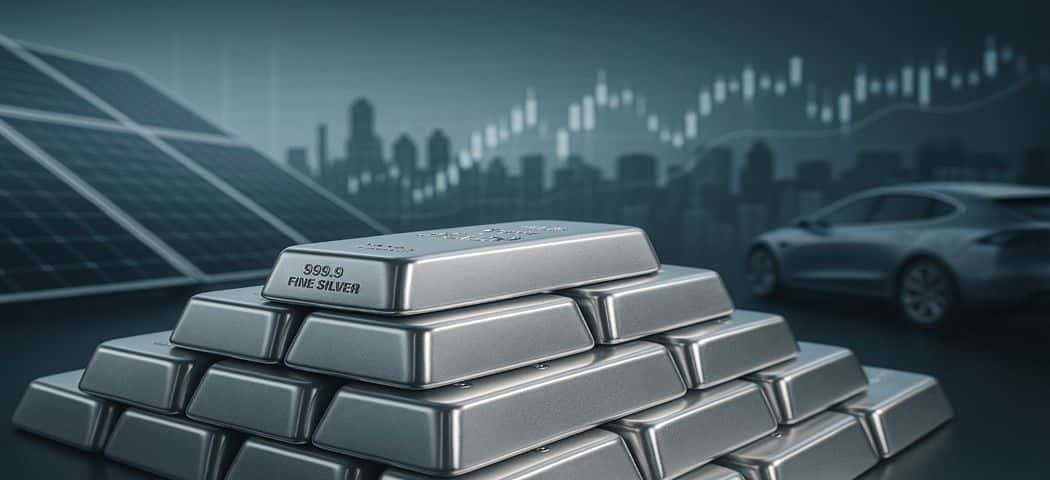
The Silver Question of a New Era
As the silver price today hovers near $47.50 per ounce after setting an all-time high of $54.47 in mid-October, investors are asking a bold question: Could silver one day reach $500? At first glance, that price target might sound far-fetched — but silver’s recent surge has revived discussions about its true potential in an era defined by inflation, innovation, and shifting global power dynamics.
Unlike gold, which thrives primarily on monetary confidence, silver bridges two critical roles — it’s both an industrial necessity and a store of enduring value. This unique duality positions silver as a standout asset during times of fiscal strain and technological growth.
From solar energy and electric vehicles (EVs) to AI hardware and renewable infrastructure, silver is now indispensable to the modern economy. Its ongoing pullback from October’s record high may represent not a retreat, but a strategic pause in what could evolve into the most powerful secular bull market for silver in generations — what many analysts are calling a “Silver Supercycle.”
The 2025 Silver Rally: Setting the Stage for a New Benchmark
The year 2025 has redefined the silver market, delivering the strongest price performance in more than a decade. On October 17, 2025, silver achieved a record-breaking $54.47 per ounce, surpassing its 2011 peak and establishing a new era of investor attention. While prices have since consolidated around $47.50, the factors that propelled silver to its highs remain firmly in place.
-
Industrial demand continues to surge, fueled by the rapid expansion of clean energy, EV production, and AI technologies.
-
Investment demand remains elevated as inflation pressures, central-bank diversification, and sovereign debt challenges drive interest in tangible assets.
-
Mining supply remains tight, with falling ore grades and higher extraction costs constraining output in key producing nations.
These forces have shifted silver’s identity from a secondary precious metal to a strategic industrial and financial asset. Even amid its short-term retracement, silver’s foundation for long-term appreciation has arguably never been stronger.
What Would It Take for Silver to Reach $500 per Ounce?
For silver to climb from its current price of about $47.50 per ounce to $500, several extraordinary conditions would need to align across economic, industrial, and monetary systems:
-
Major Currency Devaluation
A global loss of confidence in fiat currencies could trigger a flight to tangible assets, with silver gaining as a more accessible alternative to gold. -
Massive Industrial Expansion
Surging demand from renewable energy, AI infrastructure, and electric transportation could create chronic supply deficits. -
Monetary Realignment
If nations or digital systems begin backing currencies with gold or silver reserves, the revaluation effect could dramatically lift silver’s floor price. -
Severe Supply Constraints
With limited new mining projects and rising environmental restrictions, production shortfalls could amplify price pressure. -
Speculative and Institutional Capital Rotation
As the gold-to-silver ratio narrows, institutional investors could flood into silver, creating an accelerating feedback loop of demand.
While $500 silver remains a long-term projection, these drivers highlight how global macro shifts — rather than mere speculation — could lay the foundation for an unprecedented revaluation.
The Gold-to-Silver Ratio: A Critical Clue for Investors
Currently sitting near 80:1, the gold-to-silver ratio provides valuable insight into relative pricing and market psychology. Historically, when this ratio compresses — as it did in past bull markets — silver tends to outperform gold by a wide margin.
In prior cycles, the ratio fell as low as 30:1, coinciding with silver’s most explosive runs.
If gold were to climb into the $5,000–$10,000 range in the coming years and the ratio tightened accordingly, silver could trade between $166 and $333 per ounce. For prices to approach $500, global structural changes would likely need to occur: persistently high industrial demand, fiat currency erosion, and a long-term supply crunch.
Industrial Power: Why Silver Demand Keeps Rising
Silver’s future is increasingly defined by its industrial applications, which now account for more than half of global demand. Its unmatched electrical and thermal conductivity make it indispensable in several high-growth sectors:
-
Renewable Energy: Silver is a core material in solar panels. As nations scale up solar power, demand is projected to consume over 25% of annual output by 2030.
-
Electric Vehicles: Each EV uses between 30 and 50 grams of silver in its electronics and charging components, creating compounding demand growth.
-
AI, 5G, and Data Infrastructure: Silver’s conductivity supports next-generation computing chips, sensors, and high-frequency communication systems.
With global investment accelerating across all three sectors, silver’s industrial foundation has transformed from cyclical to structural, creating conditions that could sustain higher silver prices for decades.
Investor Watchpoints: Signals and Strategy
For investors positioning ahead of potential long-term gains, these signals warrant close attention:
-
Gold-to-silver ratio declines: Historically a precursor to silver outperformance.
-
Mining production trends: Falling output in Mexico, China, and Peru signals looming shortages.
-
Physical premiums: Rising premiums for silver coins and bars indicate tightening availability.
-
Macro conditions: Persistent inflation or interest-rate cuts amplify silver’s safe-haven appeal.
Diversifying through physical bullion, silver coins, and IRA-approved metals remains one of the most straightforward strategies for those seeking inflation protection and portfolio balance.
Timeline: How Could $500 Silver Emerge?
- Short-Term (6–12 Months): After setting its all-time high at $54.47 in October 2025, silver consolidates between $45 and $55 per ounce as traders take profits and industrial demand stabilizes.
- Medium-Term (2–4 Years): Continued growth in solar, EVs, and AI infrastructure tightens supply, potentially driving prices toward $150–$200 per ounce.
- Long-Term (5–10 Years): In a scenario involving global currency revaluation, inflation persistence, and ongoing mining constraints, silver could test $500 per ounce, marking a historic redefinition of its monetary and industrial importance.
A Metal Redefining Its Own Value
While $500 silver may seem speculative today, the metal’s recent performance proves that underestimated assets can surprise even seasoned investors. The combination of industrial innovation, monetary strain, and physical scarcity continues to drive silver’s long-term outlook higher.
After reaching $54.47 in October 2025 and consolidating near $47.50 today, silver appears to be building a base rather than reversing course. Its dual role — as both a technological essential and a timeless store of value — ensures that silver’s significance will only deepen in the years ahead.
Whether it eventually peaks at $100, $250, or $500, silver’s trajectory points to one undeniable truth: the metal’s role in shaping the future of industry and finance is only just beginning.
Key Takeaways
-
Silver reached a record $54.47 per ounce on October 17, 2025.
-
Industrial demand remains the main growth driver, with energy and tech sectors leading the charge.
-
The gold-to-silver ratio continues to suggest long-term potential for silver outperformance.
-
Structural deficits in supply and global monetary shifts may support much higher prices over time.
-
Physical silver remains a cornerstone asset for inflation protection and diversification.
Related reading you may find interesting:
Silver Prices Surge: How Industrial Demand Could Drive a 2026 Bullion Boom