View Charts
Coin Toning: Natural vs Artificial Damage Risks
 0
0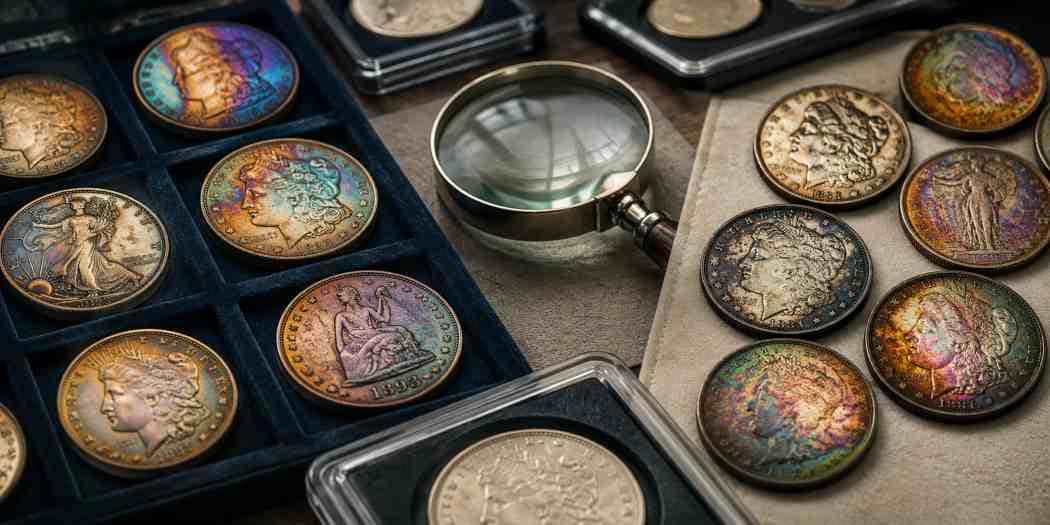
Color Can Add Beauty—or Permanently Hurt a Coin’s Value
Coin toning is one of the most misunderstood subjects in collecting. A softly toned Morgan Dollar, a silver commemorative with original rainbow color, or an old copper cent with even chocolate-brown surfaces can be far more appealing than a lifeless coin with stripped or unnatural color. But the same color that attracts collectors can also raise serious questions. Is the toning natural? Has the coin been chemically altered? Is the surface still original?
That difference matters because coin toning can either support value or damage it. Natural toning often develops slowly as a coin’s metal reacts with its storage environment, while artificial toning is usually created through intentional chemical or heat exposure. Collectors may pay premiums for attractive, original color, but altered color can lead to lower bids, “details” grading, or outright rejection from buyers who prioritize originality. Toning is not just about appearance—it is about trust.
Original Surfaces Carry Real Market Weight
Collectors value originality because coins are historical objects, not decorative blanks. A coin’s surface tells part of its story: how it was struck, stored, handled, and preserved. Natural toning can become part of that story when it develops gradually and consistently with the coin’s age, metal, and storage conditions.
Silver coins are especially known for toning because silver reacts with sulfur and other compounds in the environment, forming a thin tarnish layer on the surface. Toning may appear as gray, gold, blue, violet, amber, or rainbow-like color, depending on the storage material, humidity, air exposure, and time involved. Toning can occur on the entire coin, only one side, or in partial patterns. Bag-stored coins, for example, can develop crescent-shaped toning when another coin covers part of the surface.
That originality can add eye appeal. A coin with attractive natural color may stand out in a certified holder or auction listing. But toning is highly subjective. Some collectors love vivid color; others prefer brilliant white silver or evenly toned copper. The premium depends on beauty, originality, market taste, and confidence that the color was not manipulated.
Artificial Color Breaks Collector Confidence
Artificial toning is different because it attempts to create the look of age, rarity, or premium eye appeal without the natural passage of time. It may be caused by chemical exposure, heat, or other intentional alteration. The goal is often to make an ordinary coin look more desirable, more colorful, or more valuable than it truly is.
This is where artificial toning becomes dangerous for value. A buyer may initially be drawn to bright rainbow colors or dramatic contrast, but experienced collectors and grading services look closely at whether the surface appears natural. If the color looks forced, uneven, unusually vibrant, or inconsistent with the coin’s age and metal, confidence drops quickly.
Unnatural toning on rare coins can reduce value when detected, while original surfaces are generally preferred in the marketplace. That does not mean every toned coin is suspicious. It means color must be judged alongside luster, surface texture, storage history, and how the toning sits on the coin. Artificial color is not a shortcut to value; it is a risk that can permanently limit buyer interest.
Natural Toning Usually Develops With Time and Storage
Natural toning tends to look integrated with the coin rather than layered on top of it. It often follows logical patterns based on how the coin was stored. Album toning may appear around rims or exposed openings. Bag toning may show crescent shapes or uneven coverage. Envelope toning may create soft gold, amber, or gray hues. Long-term storage in older holders can also produce gradual color changes.
The key word is gradual. Natural toning usually develops over time as the metal surface reacts with its environment. It often preserves underlying luster if the coin is uncirculated. When tilted under light, a naturally toned coin may still show cartwheel movement or original mint bloom beneath the color.
Artificial toning often fails this test. Color may look too intense, too uniform, too sudden, or disconnected from the coin’s surface. A coin that has flat luster, dull texture, or oddly placed color may raise concerns. Collectors should not rely on color alone. They should study the entire surface.
Eye Appeal Can Help—or Hurt—the Final Price
Toning affects value because coin grading is not based only on wear. Eye appeal matters. A coin with the same technical grade can sell for more or less depending on color, luster, marks, strike quality, and surface originality. Attractive toning may raise demand, while spotty, dark, uneven, or questionable color may reduce it.
This is especially visible in series such as Morgan Dollars, Peace Dollars, classic commemoratives, Washington quarters, Roosevelt dimes, and older copper coins. Rainbow-toned Morgan Dollars, for example, can bring strong premiums when the color is natural, vibrant, and paired with strong luster. By contrast, a harshly toned or suspiciously colored coin may trade below similar examples with more original surfaces.
For bullion-related coins, toning usually plays a different role. A common silver round or bullion coin is often valued closer to metal content and product demand. A rare numismatic coin, however, can be highly sensitive to originality. The more collector value a coin carries, the more surface quality matters.
Grading Services Treat Altered Surfaces Seriously
Third-party grading services exist partly because collectors need independent opinions on authenticity, grade, and surface condition. Major grading companies review coins for signs of cleaning, alteration, damage, questionable color, and other issues that may prevent a straight numerical grade. Coins judged to be altered or impaired may receive a “details” designation rather than a standard grade, which usually affects market value.
This is important for artificial toning. A coin with questionable color may still be genuine, but that does not mean it will be treated the same as a coin with original surfaces. A certified coin labeled with surface problems can become harder to sell at full market value, even if the underlying date and mint mark are desirable.
Collectors should also remember that grading is an expert opinion, not a perfect science. Toning can be difficult to evaluate, and borderline cases exist. That is why buying from reputable dealers, reviewing certified examples, and comparing known natural toning patterns can help reduce risk.
Red Flags Buyers Should Notice Before Purchasing
Collectors do not need laboratory equipment to become more cautious. Several visual clues can help identify coins that deserve closer review. Extremely bright colors with no natural progression may be suspicious. Color that appears only in odd isolated patches can also raise questions. A surface that looks dull beneath vivid color may suggest alteration or prior cleaning.
Another warning sign is color that does not match the coin type. Copper, silver, nickel, and gold tone differently. A pattern that looks believable on an old silver dollar may not make sense on a modern bullion coin. Similarly, a coin with heavy artificial-looking color but no signs of long-term storage history should be examined carefully.
Price is another clue. If a seller is asking a major premium solely because of dramatic color, the buyer should slow down. Toning premiums are strongest when color, originality, luster, and certification all support the same story.
Artificial Toning Is Not the Same as Natural Patina
A natural patina can give a coin depth, character, and historical feel. Artificial toning tries to imitate that result without the same natural development. The difference may seem subtle to beginners, but the market treats it seriously.
This distinction is especially important for older copper coins. Original copper surfaces can range from red to red-brown to brown, and color designations can significantly affect value. A coin that has been altered to appear redder or more vibrant than it should may lose credibility. The same applies to silver coins that appear artificially rainbow-toned to attract a premium.
Collectors should avoid experimenting with color changes, cleaning, dipping, heating, or chemical exposure. Once a surface is altered, the damage cannot always be reversed. Even if the coin still looks attractive to the casual eye, experienced buyers may discount it.
Safe Storage Helps Preserve Original Color
The best way to protect coin value is prevention. Coins should be stored in inert holders, high-quality capsules, archival albums, or certified slabs. Avoid PVC flips, moisture-heavy environments, paper products with unknown chemical content, and direct handling of coin surfaces. Even fingerprints can create long-term spotting or uneven toning.
Stable storage does not guarantee that a coin will never tone, but it reduces the risk of unattractive or damaging environmental exposure. Some collectors enjoy natural color development, while others prefer to preserve coins as close to their current appearance as possible. In both cases, controlled storage is better than accidental exposure.
Collectors should also avoid cleaning toned coins. Removing toning can strip originality, dull luster, and leave hairlines. A toned coin that appears dark or unattractive may still be worth more untreated than after an attempt to “improve” it.
Smarter Collecting Starts With Surface Awareness
Coin toning can be beautiful, but it should never be judged by color alone. Natural toning may enhance eye appeal and support premiums when the surfaces are original, attractive, and consistent with the coin’s history. Artificial toning, on the other hand, can create suspicion, reduce liquidity, and hurt long-term value.
The safest approach is to treat toning as one part of a larger evaluation. Look at luster, surface quality, storage patterns, certification, rarity, and comparable sales. When value is significant, consider buying certified coins or consulting a reputable dealer or grading service. Color can make a coin memorable, but originality is what gives that color lasting credibility.
Related reading you may find interesting:
Byzantine Solidus: Gold Coin of Empire and Stability
Cleaning Coins Can Destroy Their Numismatic Value