View Charts
Central African Republic Mine Collapse Exposes Artisanal Mining Risks
 0
0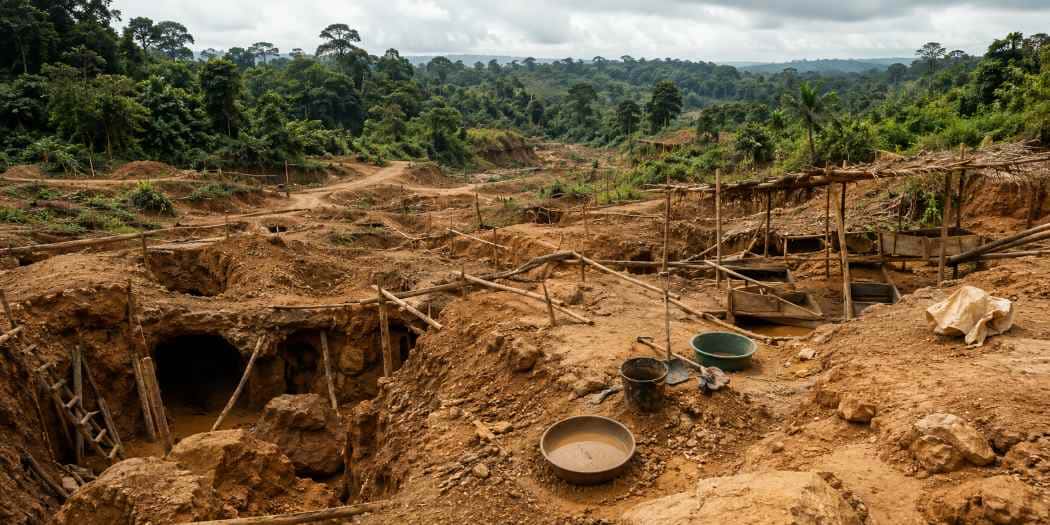
A Gold-Mining Tragedy Brings a Persistent Risk Into Focus
A devastating mine collapse in the Central African Republic has brought renewed attention to the dangers that can accompany artisanal gold mining, particularly where miners work with limited equipment, engineering support, safety oversight and emergency resources. The collapse occurred Tuesday, August 18, 2026, at an artisanal mining site in Zamboye, in the western Nana-Mambéré prefecture near the border with Cameroon.
By Thursday, local officials and Red Cross personnel said more than 100 people had died, while rescuers continued recovering bodies and the number of people still buried remained uncertain. The evolving toll makes precision important: recovery work is continuing, and early figures changed sharply as rescuers reached more of the site.
The significance of Zamboye lies in what it reveals about the beginning of the gold supply chain, where the people extracting the metal can face risks largely invisible by the time that gold reaches the international market. The tragedy brings together several difficult realities surrounding artisanal mining: communities that depend on it for income, workers operating with limited resources, and the challenge of improving safety without eliminating livelihoods.
What Happened at the Zamboye Mining Site?
According to the Associated Press, several underground tunnels collapsed at the site, triggering a landslide and trapping miners beneath debris. Heavy rainfall is believed to have weakened the soil, although authorities have not established a final cause. The Baboua subprefecture court has opened an investigation to determine why the tunnels failed, identify victims and site operators, and establish whether criminal liability is involved.
The disaster has also exposed the limitations of emergency response at remote artisanal sites. People involved in the recovery described shortages of equipment and expertise appropriate for a collapse of this magnitude, while additional bodies were still being recovered Thursday morning.
Pits at artisanal sites in the region may be excavated manually and extend several meters underground, while stabilization, protective equipment, engineering expertise and formal safety systems can be limited. Heavy rainfall can make vulnerable workings more dangerous. None of those conditions establishes the cause at Zamboye before investigators complete their work, but they illustrate why worker safety is inseparable from the broader discussion surrounding artisanal and small-scale gold mining.
Behind the Gold Is a Livelihood
Focusing exclusively on the dangers of artisanal mining misses an essential part of the issue: why people continue to depend on it. Gold and diamond extraction have long provided income in parts of the Central African Republic where formal employment and other economic opportunities are scarce. World Bank research has identified artisanal mining as an important livelihood strategy for mineral-rich communities in the country, with many more people depending indirectly on the economic activity surrounding the sector.
Reporting from Zamboye reflects how far that dependence can extend. Some miners had traveled from neighboring countries in search of work, illustrating a reality common to artisanal mining regions: participation may be driven less by occupational preference than by the limited ways available to earn income and support a household.
That distinction matters when considering reform. Closing informal mines without creating viable alternatives can remove income without addressing the economic conditions that brought workers there. The challenge is not simply reducing artisanal mining activity, but finding ways to make an economically important sector safer, more transparent and better connected to legitimate markets.
Why Artisanal Mining Safety Is So Difficult to Improve
The dangers associated with artisanal mining rarely have a single solution because the underlying problems are interconnected. Remote geography can make inspection difficult, while miners may lack geological expertise, modern excavation equipment, protective gear, financing and technical training. Governments in mining regions may also have limited resources to monitor numerous small operations spread across large territories.
Weather adds another complication. Heavy rainfall can destabilize soil and mine workings, making operations with limited structural reinforcement substantially more dangerous. When an accident occurs, distance from population centers and shortages of specialized rescue equipment can compound the consequences.
Effective regulation therefore has to address conditions on the ground rather than exist primarily on paper. Minimum safety standards matter, but miners and local authorities also need the training, technical support and emergency capacity required to make those standards achievable. Without that support, regulations can be difficult to enforce and mining activity may remain outside formal systems altogether.
Formalization Must Work for the Miners It Is Meant to Protect
Bullion Exchanges recently examined how artisanal gold mining fits into global gold supply, including questions surrounding traceability, environmental practices and access to legitimate markets. Zamboye adds worker safety to that discussion in especially stark terms.
Formalization can bring mining activity into systems where operating standards, training, inspections and oversight become possible. It can also improve access to legitimate buyers and financing, potentially reducing incentives that keep production outside regulated channels. Yet registration or licensing alone does not make a mine safe, just as traceability alone does not guarantee responsible working conditions.
Regulation also has to be realistic enough for miners and small operators to follow. Requirements that are prohibitively expensive or administratively inaccessible can unintentionally push activity further outside the formal economy. A more effective approach combines enforceable safety requirements with practical assistance, including safer excavation practices, geological guidance, weather-risk monitoring and appropriate emergency planning.
The objective is not formalization for its own sake. It is a system in which people can continue earning a livelihood while facing fewer preventable risks.
Responsible Gold Sourcing Begins at the Mine
Gold can pass through numerous hands between extraction and the finished bar, coin, jewelry product or industrial component. By the time it reaches an end buyer, the circumstances surrounding the original mine may be difficult to see. That distance is one reason responsible-sourcing standards, traceability programs and efforts to formalize artisanal production have become increasingly important.
The Zamboye disaster illustrates why responsible sourcing cannot be defined solely by whether gold is connected to conflict financing, smuggling or environmental damage. Worker safety belongs within the same conversation. Establishing where gold originated is valuable, but knowing its origin does little to protect miners unless responsible production also encompasses the conditions under which extraction takes place.
For the broader gold industry, that means looking farther upstream. Improving conditions at artisanal mines requires governments, development organizations and participants throughout the supply chain to recognize both the economic importance of these operations and the vulnerabilities of the people who depend on them.
What Zamboye Adds to the Artisanal Gold Conversation
The investigation in the Central African Republic still has important questions to answer, including what caused the tunnels to collapse, how the site was being operated and whether preventable failures contributed to the loss of life. Until those findings emerge, assigning responsibility or drawing conclusions about the precise cause would be premature.
What is already clear is that artisanal gold cannot be understood through production estimates alone. The sector can provide vital income where few alternatives exist while exposing workers to hazards that better-resourced mining operations are more capable of controlling. Those realities coexist, which is why simplistic answers—whether condemning artisanal mining outright or viewing it merely as another source of global gold supply—fall short.
Meaningful reform has to recognize that tension. Formalization, workable regulation, safety training, technical assistance, responsible sourcing and stronger emergency capacity will not eliminate every mining risk, but they can help create conditions in which livelihoods do not have to depend on avoidable danger.
For gold buyers thousands of miles from Zamboye, the connection can seem distant. A finished ounce carries no visible record of the mine, working conditions or people behind its earliest stage of production. Yet that distance is precisely why responsible sourcing and effective formalization matter. The journey from the ground to the bullion market begins with people, and the tragedy at Zamboye is a sobering reminder that improving the gold supply chain must include protecting those who work at its beginning.