View Charts
Artisanal Gold Mining: The Hidden Force in Global Gold Supply
 0
0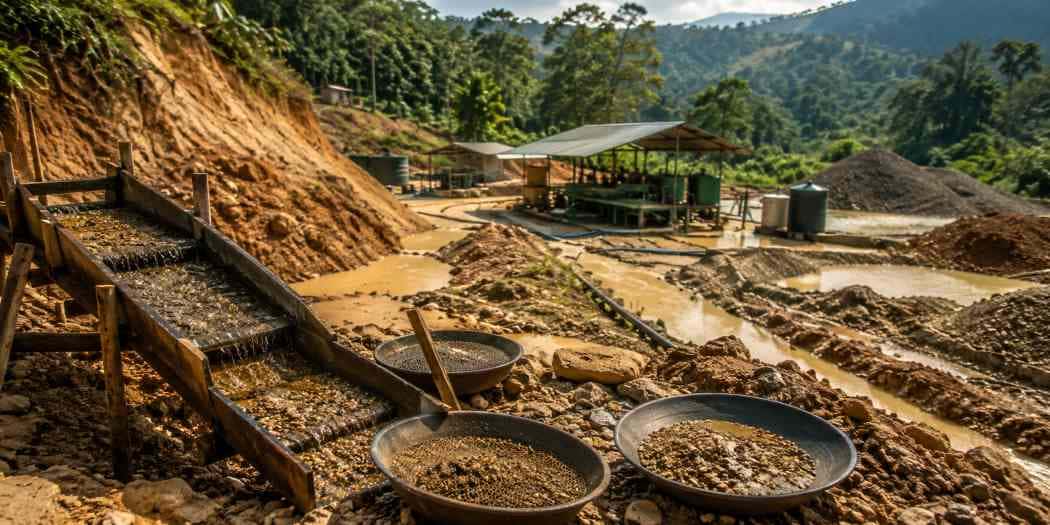
A Major Gold Source Few Investors Ever See
When investors picture a gold mine, the image is usually industrial: enormous excavators, processing plants, geological teams and a publicly traded mining company operating a carefully engineered site. Yet a substantial share of the world's newly mined gold comes from an industry that can look entirely different. Artisanal and small-scale gold mining, commonly shortened to ASGM, ranges from individuals working relatively simple deposits to organized cooperatives and small enterprises using increasingly mechanized equipment.
Its scale makes ASGM impossible to dismiss as a fringe of the gold market. The World Gold Council estimates that at least 20% of newly mined gold originates from artisanal and small-scale sources, while the sector supports millions of livelihoods, particularly in Africa, Asia and Latin America.
The difficult question is not whether artisanal gold belongs in the global market. Much of it already does. The challenge is creating a supply chain in which legitimate miners can participate without the environmental damage, exploitation and illicit trade that have become associated with informal mining.
What Actually Makes a Gold Mine Artisanal?
There is no single mine design that defines ASGM. The World Gold Council describes it broadly as formal or informal mining characterized by relatively low capital investment, high labor intensity and comparatively simple methods of exploration, extraction and processing. Operations can involve individuals, families, partnerships, cooperatives and other associations, and mechanization is increasingly common.
That distinction matters because artisanal mining is not another term for illegal mining. A small-scale operation can be legitimate and responsibly managed, just as activity described as artisanal can violate mining, environmental or property laws. The World Gold Council separately defines illegal mining as activity contrary to applicable laws, including unauthorized mining on another rights holder's land or extraction methods that violate environmental or social regulations.
This leaves a large and complicated middle ground. Small miners may operate in regions where licensing systems are difficult to navigate, land rights are unclear, financing is scarce or formal gold buyers are inaccessible. Bringing responsible participants into regulated channels is therefore more complicated than simply distinguishing legal mines from illegal ones.
Why Artisanal Mining Matters to the Gold Market
ASGM's importance becomes clearer when measured against global production. Estimates vary because so much activity occurs outside formal reporting systems, but the World Gold Council places its contribution at roughly one-fifth of newly mined supply. Its 2025 research described ASGM as supporting about 20 million livelihoods and estimated that approximately 85% operates outside formal regulatory frameworks
High gold prices can make the sector even more significant. Unlike a major commercial mine, which may require years of exploration, permitting, financing and construction before producing its first ounce, some small-scale operations can respond more quickly when higher prices make marginal deposits worthwhile. The World Gold Council has noted that record gold prices have contributed to the proliferation of ASGM activity, adding urgency to efforts to improve oversight.
For investors, this adds another dimension to understanding gold supply and demand. Mine supply is not produced solely by multinational companies operating large, highly visible projects. A meaningful portion begins in decentralized operations whose output can be difficult to measure and whose path into the international market may be considerably harder to trace.
Mercury, Labor and the Risks Behind Informal Gold
The same characteristics that make ASGM economically important can also create serious problems. In areas with weak regulation, miners may have limited access to safer processing technology, protective equipment, financing or legitimate buyers. Informality can make environmental and labor standards difficult to enforce while creating opportunities for intermediaries and criminal organizations to exploit miners or move gold outside regulated channels.
Mercury is among the sector's most persistent environmental concerns. It can be used to bind with gold during processing, offering miners a relatively inexpensive method of recovering metal from ore. The World Gold Council identifies ASGM as the principal source of human-caused mercury pollution, with potential consequences for air, soil, water and human health. International efforts under the Minamata Convention seek to reduce mercury use and encourage safer alternatives.
The risks extend beyond processing. Informal ASGM has been associated in some jurisdictions with unsafe working conditions, child and forced labor, corruption, smuggling and money laundering. Gold produced outside transparent supply chains can also reach criminal organizations or armed groups. Those problems are serious, but treating all artisanal miners as illicit actors can make reform harder by pushing legitimate operators further away from regulated buyers and financial services.
Formalization Could Change Where Artisanal Gold Goes
That tension explains why formalization has become central to international efforts surrounding ASGM. Rather than trying to eliminate small-scale mining, formalization attempts to give responsible miners a viable route into the legal economy through clearer property rights, licensing, better processing facilities, financing, traceability and access to legitimate purchasers.
One emerging approach focuses on centralized processing. The World Gold Council's Gold Processing Initiative envisions facilities where responsible artisanal miners can bring ore for more sophisticated recovery. Better processing can increase the amount of gold recovered while eliminating mercury, giving miners an economic reason to participate rather than relying on informal processing and sales channels. Centralized facilities can also create points where regulators verify origin and supervise material entering the formal market.
Traceability remains crucial because refining gold removes many obvious clues about where it originated. The World Gold Council is supporting origin-verification technology designed to use the chemical characteristics of mine-site material to help establish provenance. Combined with due diligence, this could make it easier for refiners and institutional buyers to accept legitimate ASGM gold without inadvertently opening their supply chains to illicit material.
Ghana Is Becoming a Test of the New Approach
A notable real-world test began in July 2026, when the World Gold Council and the Government of Ghana announced a strategic partnership aimed at formalizing the country's artisanal and small-scale gold sector. The agreement includes work on responsible processing facilities, policy and standards, miner training, traceability and origin verification, with the broader objective of directing legitimate artisanal production into formal gold channels.
Ghana is particularly important because it combines substantial gold production with a large small-scale mining sector. The initiative's first step includes a $250,000 World Gold Council development grant supporting cooperative registration, but its significance lies in the model being tested. If miners can obtain better recovery rates, transparent pricing and reliable market access by entering the formal system, responsible behavior gains an economic incentive rather than depending on enforcement alone.
Central banks could become part of that equation. Under the London Principles, participating institutions are exploring domestic purchase programs through which responsibly produced artisanal gold can be bought in local currency. Such programs can give miners a credible buyer while allowing central banks to acquire domestic gold without using foreign-currency reserves.
The Future of Artisanal Gold Is About Visibility
ASGM exposes an unusual contradiction in the modern gold market. Gold is valued partly because it is durable, recognizable and globally transferable, yet the origin of newly mined metal can be remarkably difficult to establish once it moves through informal channels. With artisanal production accounting for a meaningful share of new supply, improving that visibility has consequences well beyond the communities where mining occurs.
The strongest reforms therefore combine enforcement with economic incentives. Responsible miners need legal access to deposits, safer technology, competitive prices and buyers willing to accept properly verified production. Governments and the gold industry need traceability capable of separating legitimate supply from gold connected to environmental abuse, criminal finance or conflict.
For gold investors, artisanal mining offers a useful reminder that the journey from ore to bullion is more complex than the finished product suggests. Formalizing responsible ASGM will not solve every challenge surrounding small-scale mining, but better processing, verification and market access could bring more of a major global gold source into a supply chain where its origins—and its consequences—are easier to see.
Related reading you may find interesting:
Central African Republic Mine Collapse Exposes Artisanal Mining Risks
Why Treasury Bond Buybacks Can Move Gold Prices