View Charts

2026 U.S. Mint Robin Gold Coin and Silver Medals
 0
The Boy Wonder Joins the U.S. Mint's Comic Art Collection
Robin is the latest DC Super Hero to join the U.S. Mint's Comic Art Coin and Medal Program. Scheduled for release on December 3, 2026, the collection includes a 24-karat gold proof coin, a 2.5-ounce silver medal, and a one-ounce silver medal. Each celebrates Batman's famous partner through designs that connect his superhero identity with his origins as a circus performer.
The Robin collection continues a program combining precious-metal craftsmanship with characters from DC Comics. Unlike conventional bullion, these pieces emphasize original artwork, specialized finishes, and collector appeal. The three formats offer different ways to collect the Boy Wonder while highlighting the distinction between government-issued coins and commemorative medals.
Three Robin Collectibles in Gold and Silver
The Robin collection includes one gold coin and two silver medals, each produced by the U.S. Mint. The gold proof comes from West Point, while Philadelphia manufactures both silver editions. Although the products share a character and artistic theme, they differ in precious-metal content, dimensions, finish, and legal-tender status.
|
Robin collectible |
Metal content |
Mint |
Legal tender |
|
1/2 oz .9999 fine gold |
West Point (W) |
Yes, $50 | |
|
2.5 oz .999 fine silver |
Philadelphia (P) |
No | |
|
1 oz .999 fine silver |
Philadelphia (P) |
No |
The gold edition offers the program's precious-metal proof format, while the silver medals provide two sizes for displaying the character's artwork. The larger medal offers additional surface area for the design, whereas the one-ounce version provides a more compact collectible. All three are intended primarily for collectors rather than everyday circulation or conventional bullion investing.
Robin's Artwork Celebrates His Circus Origins
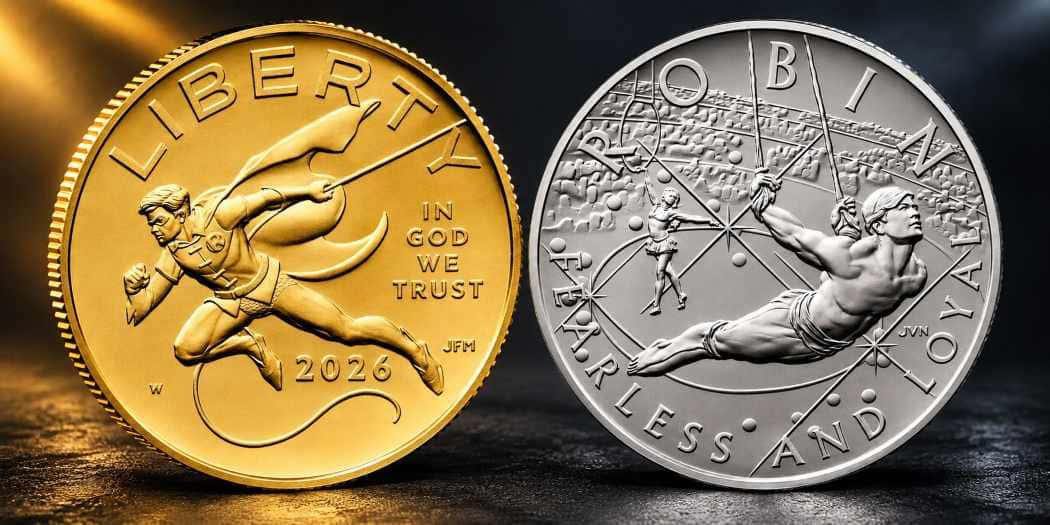
Robin's designs connect two defining elements of the character's history: his athleticism as a crimefighter and his childhood as a circus acrobat. The obverse portrays Robin swinging forward on a rope, emphasizing the movement and agility associated with Batman's partner. Rather than relying on a conventional portrait, the composition captures the character in action, giving the artwork a dynamic quality suited to the superhero theme.
The reverse depicts a young Dick Grayson performing on aerial straps above a circus audience, with his mother watching below. This scene recalls the Flying Graysons, the family of trapeze artists central to the original Robin's backstory. Together, the designs connect his early performance skills with the abilities he later brings to his superhero identity.
The artwork underwent review by the Citizens Coinage Advisory Committee and the Commission of Fine Arts. Both groups supported the swinging-Robin obverse, although their initial reverse preferences differed. The selected circus-themed design ultimately gives the release a narrative connection to Dick Grayson's history, extending its appeal beyond a familiar superhero costume.
The 24-Karat Gold Proof Coin
The Robin gold proof coin contains one-half troy ounce of .9999 fine gold and carries a $50 legal-tender denomination. Produced at West Point, it features a proof finish with polished fields and contrasting frosted design elements. This specialized manufacturing process emphasizes the sculpted details and gives the character artwork a different appearance from standard bullion strikes.
The gold coin's monetary denomination distinguishes it from the accompanying silver medals, but its face value does not determine its commercial worth. Its market value reflects gold content, proof craftsmanship, collector demand, and any applicable numismatic premium. Buyers should therefore evaluate it as a collectible precious-metal coin rather than treating the $50 denomination as an indication of its underlying value.
Compared with American Gold Eagles, the Robin proof serves a different collecting purpose. Standard Gold Eagles are generally purchased for precious-metal ownership, while Comic Art proofs place greater emphasis on licensed artwork and specialized presentation. Both contain genuine gold, but their premiums and resale markets may behave differently.
Two Silver Medals Highlight the Character's Design
The silver portion of the Robin collection consists of a 2.5-ounce medal and a one-ounce medal, both struck in .999 fine silver at Philadelphia. Neither carries a monetary denomination because medals, unlike legal-tender coins, are not issued as currency. Their official U.S. Mint origin nevertheless makes them part of the same collectible program as the gold proof coin.
The larger medal provides more room for the character's detailed artwork, particularly the flowing costume, rope movement, and circus imagery. The one-ounce version offers a smaller format for collectors who prefer consistent silver medal collections. Both editions emphasize design and craftsmanship alongside their precious-metal content.
These pieces also differ from conventional silver rounds, which are generally purchased primarily for their metal content and competitive premiums. Licensed collectible medals can command additional premiums based on artistic appeal, production characteristics, and demand. Those premiums are not guaranteed to increase, making it important to distinguish personal collecting interests from expectations of future appreciation.
Robin's Place in the DC Comic Art Program
The U.S. Mint introduced its Comic Art Coin and Medal Program in 2025 through a collaboration with Warner Bros. Discovery Global Consumer Products. Superman, Batman, and Wonder Woman formed the inaugural lineup, followed by Supergirl, Robin, and Green Lantern in 2026. The program combines recognizable comic-book characters with traditional numismatic production techniques, creating a collection that appeals to both coin enthusiasts and DC fans.
Robin is particularly significant because of his longstanding connection to Batman. First appearing in Detective Comics #38 in 1940, the original Robin, Dick Grayson, helped establish the superhero-sidekick tradition. Although several characters have subsequently assumed the Robin identity, the Mint's circus-inspired artwork specifically references Grayson's origins.
The series is expected to continue with The Flash, Batgirl, and Aquaman in 2027. This expanding roster allows collectors to pursue individual characters, annual groupings, or a broader collection across different precious-metal formats. As with other modern numismatic programs, future collectability will depend on availability, condition, character popularity, and secondary-market demand.
What Collectors Should Consider
Collectors evaluating the Robin products should begin by identifying their primary interest: precious-metal content, character artwork, or completing the Comic Art series. The gold proof offers a high-purity gold format, while the silver medals provide two different sizes for appreciating the designs. These distinctions matter because the three products are not interchangeable from a metal-content or numismatic perspective.
Condition and original presentation may also influence collector interest. Protective packaging can help minimize unnecessary handling, while accompanying documentation supports identification and provenance. Collectors comparing original Mint packaging with third-party certified examples should understand how coin grading affects collectible value, particularly when assessing premiums associated with condition.
Robin Expands the Comic Art Collection
The Robin collection brings another recognizable DC character into the U.S. Mint's growing Comic Art Coin and Medal Program. Its gold proof coin and two silver medals combine precious-metal craftsmanship with artwork celebrating the Boy Wonder's superhero identity and Dick Grayson's circus origins. Each format offers a different balance of metal content, presentation, and collecting appeal.
For numismatists and comic-book enthusiasts, the release represents another opportunity to explore the intersection of American coinage and popular culture. Its lasting appeal will depend on the artwork, collector interest, and the broader development of the Comic Art series rather than precious-metal content alone.