
 View Charts
Swedish Gold Coins
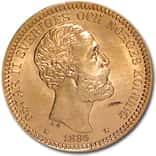
Swedish Gold Coins
Swedish gold coins represent a cornerstone of Scandinavian numismatic history, reflecting the nation’s long-standing royal heritage, economic stability, and participation in the Scandinavian Monetary Union. First introduced in the late 19th century, these coins are highly regarded for their gold content, elegant engraving, and historical significance tied to Sweden’s monarchy and evolving monetary system.
The Krona and Scandinavian Monetary Union
The Swedish krona was introduced in 1873 as part of the Scandinavian Monetary Union, which included Sweden, Denmark, and Norway. This system established a gold-backed standard that unified regional currencies and strengthened trade across Northern Europe. Early Swedish gold krona coins were issued in denominations such as 10 and 20 kronor, later joined by the 5-kronor gold coin in 1881.
These coins were struck in 90% gold and typically feature finely detailed portraits of reigning Swedish monarchs alongside the national coat of arms, symbolizing both royal authority and national identity.
Historic Swedish Gold Krona Coins
Swedish gold coinage from this era is widely collected today, particularly issues featuring monarchs such as Carl XV, Oscar II, and Gustaf V. Each reign introduced subtle design variations while maintaining the core elements of the crowned portrait and heraldic reverse.
The 20-kronor gold coins of Oscar II are especially notable among collectors due to their limited mintages and strong historical appeal, while coins from the early 20th century under Gustaf V represent the final phase of Sweden’s classic gold coin production before major monetary changes in Europe.
Silver Krona Context and Monetary Evolution
While gold krona coins are highly sought after, Sweden also issued extensive silver coinage during the same period. These coins, struck in 80% silver and later reduced fineness during the mid-20th century, reflect Sweden’s adaptation to changing economic conditions. Together, gold and silver krona coins form a complete picture of Sweden’s evolving monetary system from the late 1800s through the modern era.
Design, Minting, and Royal Portraits
Swedish gold coins consistently feature detailed portraits of monarchs such as Carl XV, Oscar II, Gustaf V, and later Carl XVI Gustaf on related silver issues. The reverse typically displays the Swedish coat of arms, reinforcing national identity and continuity across different reigns.
Coins were produced by Swedish mints including Stockholm and Sundsvall, with careful attention to engraving quality, weight standards, and gold purity, making them highly respected within European numismatics.
Collectibility and Investment Appeal
Swedish gold coins are valued for both their intrinsic gold content and their historical significance. Many issues from the 19th and early 20th centuries are now scarce, particularly lower-mintage dates, making them attractive to collectors focused on European gold coinage.
Their combination of royal portraiture, gold standard history, and limited availability gives them strong appeal in both numismatic and investment markets. Collectors often seek Swedish gold krona coins as part of broader European or Scandinavian collections.
Swedish gold coins offer a rich connection to Scandinavia’s monetary heritage and royal history. From the establishment of the gold-backed krona under the Scandinavian Monetary Union to beautifully struck royal portrait coins, these pieces represent both historical importance and enduring precious metal value—making them a distinguished addition to any world gold coin collection.