View Charts
Why High-Grade Walking Liberty Half Dollars Are Setting Records
 0
0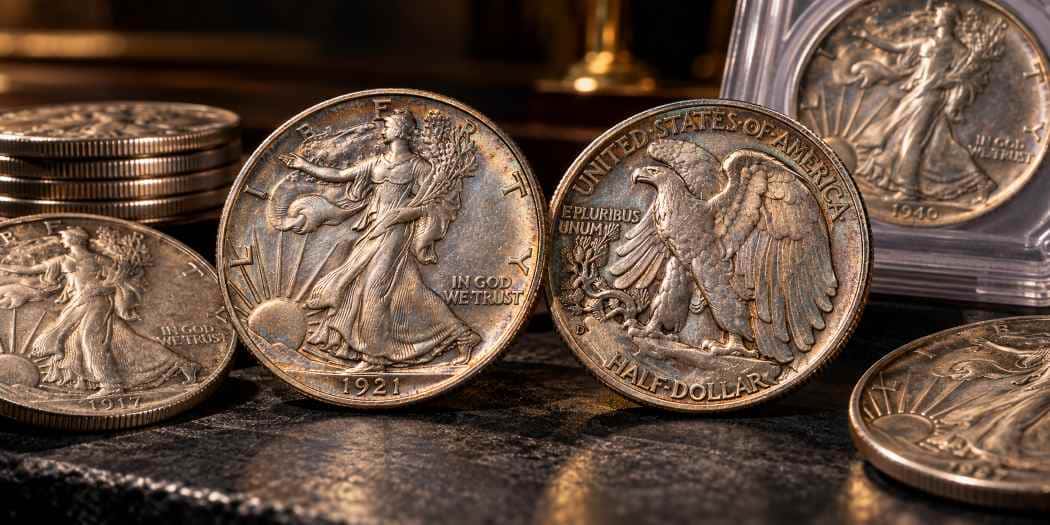
A $2.45 Million Auction Shows How Rarity Changes With Grade
A Walking Liberty Half Dollar can be a well-worn piece of 90% silver or a six-figure numismatic rarity. The difference is not simply the date stamped beneath Liberty’s feet. At the highest levels of the market, preservation can become a form of scarcity all its own.
That distinction was on display in the Mack C. Chase Collection, sold by Stack’s Bowers Galleries on September 3. The 253-lot offering realized $2,448,125, according to results published by the auction house on September 24. A 1921-D graded PCGS MS-66 and approved by CAC and CMQ led the collection at a record $183,000. A 1917-D with the mintmark on the reverse, graded PCGS MS-67 and described by Stack’s Bowers as the sole finest example at PCGS, reached $122,000. Other auction highlights included an MS-66 1918-D at $115,900 and an MS-66 1918-S at a record $91,500.
Those results expose an important feature of advanced coin collecting. As the grade rises, the market can stop behaving like a market for a particular date and begin behaving like a market for a very small number of individual survivors.
The 1921-D Starts Rare and Becomes Rarer
The 1921-D is a useful example because its scarcity does not begin with condition. Only 208,000 were struck at Denver, the lowest circulation-strike mintage in the Walking Liberty Half Dollar series. It is already a recognized key date before collectors begin separating ordinary Mint State coins from elite examples.
The $183,000 Chase coin adds a second scarcity filter. Once collectors demand a 1921-D with the preservation necessary for MS-66, the available pool becomes dramatically smaller than the original mintage suggests. The buyer is no longer searching merely for a 1921-D; the competition is for one of the finest certified survivors of an issue that was difficult in the first place.
That distinction helps explain why mintage figures, though essential, cannot function as a complete rarity scale. A mintage records production. It says nothing about how many coins entered circulation, were lost, cleaned, damaged or melted, nor how many survived decades of storage without acquiring marks that prevent an elite grade.
Collectors researching the series can see the broader hierarchy in Bullion Exchanges’ Walking Liberty Half Dollar key-date guide. The Chase sale demonstrates what happens after that traditional key-date analysis ends: preservation can create another level of scarcity within an already difficult coin.
One 1917-D Exposes the Limits of Mintage Numbers
The 1917-D reverse-mintmark half dollar makes the point from the opposite direction. Its original production was considerably larger than that of the 1921-D, yet the Chase example still reached $122,000.
Why? At MS-67, the relevant supply was no longer the number struck in 1917. Current PCGS population data list only one 1917-D reverse-mintmark example at MS-67, with none higher. The same report lists five at MS-66. Moving one numerical grade higher therefore changes the certified PCGS population from a small group to a single coin.
That is condition rarity in unusually clear form.
Walking Liberty Half Dollars were made for circulation, not to spend a century protected in modern holders. Coins that entered commerce accumulated wear. Others were cleaned or mishandled. Even uncirculated pieces could acquire bag marks, abrasions, fingerprints or hairlines during storage. Strike quality varied as well, so an otherwise well-preserved coin might lack the sharp detail or visual character required at the highest level.
As the grading threshold rises, these imperfections become increasingly consequential. The population does not necessarily decline evenly from one grade to the next. A bottleneck can develop in which a coin remains obtainable in MS-64 or MS-65 but becomes extraordinarily difficult one or two grades higher.
The Chase auction turned that statistical idea into an actual market event. Someone seeking the PCGS MS-67 1917-D reverse-mintmark was not choosing among dozens of equivalent examples. The certification data indicated there was no higher-graded PCGS coin to pursue instead.
Population Reports Measure Scarcity, Not Desirability
Third-party grading has made these upper-grade bottlenecks far easier to study. Population reports allow collectors to see where certified numbers contract and identify dates whose difficulty changes sharply at higher grades. Yet the numbers are most useful when treated as evidence rather than a price formula.
A grading-service population is not necessarily the number of distinct surviving coins. Resubmissions can affect reported totals, and coins certified by another service sit outside a service-specific population. Two coins carrying the same numerical grade can also differ visibly in strike, luster, toning, surfaces and overall eye appeal. Provenance or additional quality verification may influence bidding as well.
Availability introduces another complication. An extraordinary coin can be rare statistically and still require interested buyers to compete aggressively when it finally appears. Conversely, a small population does not guarantee strong demand. Rarity describes supply; an auction price emerges when that supply meets actual collector interest.
The Chase Collection created an unusual concentration of high-level material. Instead of one exceptional Walker appearing in isolation, advanced collectors were presented with a deep specialized collection containing multiple opportunities that rarely coexist in a single sale. Stack’s Bowers reported records across the offering, and another installment of Chase material is scheduled for its November 2026 Showcase Auction.
That next sale should provide another test of how collectors distinguish population rarity from individual coin quality.
The Same Design Serves Several Different Coin Markets
Part of the Walking Liberty Half Dollar’s durability comes from the fact that there is no single market for the series. Circulated common dates can appeal to buyers interested in classic American silver. These coins contain 90% silver and can be encountered alongside other 90% silver half dollars, where precious-metal content remains an important part of the buying decision.
Date collectors operate differently. They may pursue circulated sets, Mint State examples or the difficult early issues. At the upper end, specialists compete for exceptional varieties, pedigrees and condition-census coins. A buyer seeking a circulated Walker and a collector bidding on the sole PCGS MS-67 1917-D reverse-mintmark may technically be pursuing the same series, but they are not competing for remotely comparable supplies.
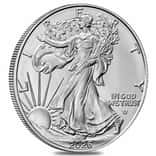
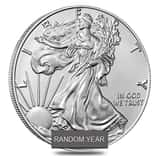
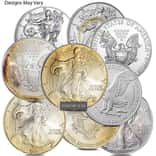
Adolph A. Weinman’s design also gives the half dollar recognition beyond specialists. Walking Liberty appeared on the half dollar from 1916 through 1947, and its obverse returned on the American Silver Eagle in 1986. That connection has kept Weinman’s Liberty visible to generations of bullion buyers who may never have assembled the original half-dollar series.
The recent Chase records show where that broad familiarity can lead at the highest end of collecting. Original mintage remains important, particularly for an established key such as the 1921-D, but production is only the beginning of the rarity story. Survival reduces the available population. Preservation narrows it further. Grade can eventually leave collectors competing for only a handful of coins—or one.
That also means the next major Walking Liberty record does not necessarily have to come from the lowest-mintage date. It could emerge from a more widely produced issue represented by an extraordinary survivor. For advanced collectors, the $183,000 1921-D and $122,000 1917-D offer two different versions of the same lesson: sometimes rarity belongs to the issue, and sometimes it belongs to the remarkable condition in which one particular coin survived.
Related reading you may find interesting:
Why Do Coins Have Reeded Edges?
Rare 1943 Bronze Cent Authenticated After 60 Years in One Family