View Charts
Why Gold Bullion Sells Above Spot Price
 2
2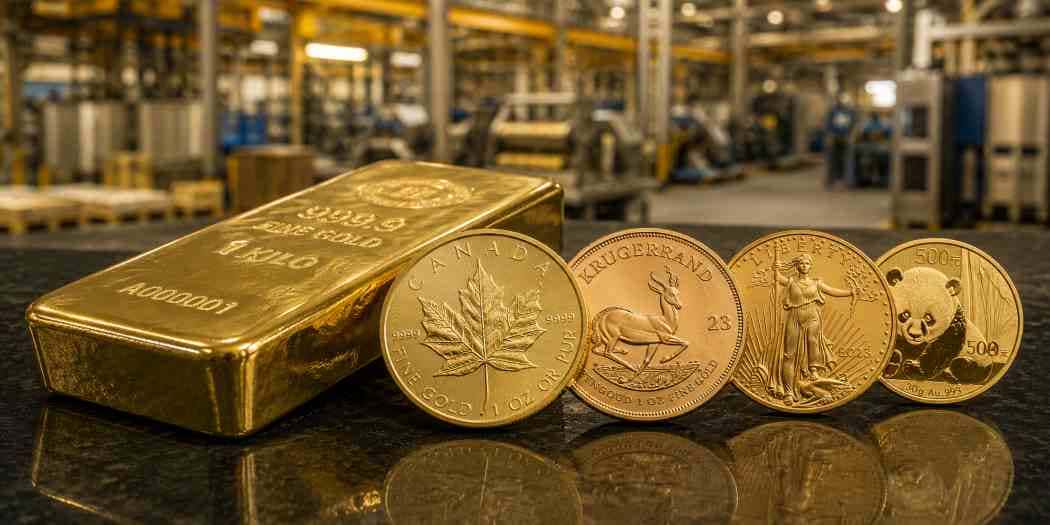
The Number Investors Watch Isn't the Price They Pay
There's a question almost every first-time gold buyer asks.
If gold is trading at $4,000 an ounce, why does every one-ounce coin cost more than $4,000?
At first glance, it can look as though dealers are simply adding a markup to the market price. In reality, that assumption starts with a misunderstanding of what the spot price actually represents. The number quoted on financial news channels isn't the retail price of investment gold, nor was it ever intended to be. It's a benchmark created in the wholesale market, where enormous quantities of raw metal change hands long before they become the coins and bars purchased by individual investors.
That distinction becomes especially obvious during periods of heavy demand. Investors often notice premiums widening just as headlines proclaim that gold is reaching new highs. The instinct is to assume someone is charging more because prices are rising. More often than not, the opposite is happening: the supply chain is under pressure, fabrication capacity is tightening, and the cost of delivering physical bullion has changed even if the underlying metal has not.
Once you understand how a gold coin reaches a dealer's display case, the gap between spot price and retail price begins to make far more sense.
Spot Gold Isn't a Finished Product
The word spot creates its own confusion because it sounds immediate. In practice, the spot price is simply the globally recognized reference value for unfabricated gold traded between large financial institutions, bullion banks, refiners and industrial users. Those transactions usually involve London Good Delivery bars weighing roughly 400 troy ounces—bars designed for vaults, not for private investors.
Retail bullion begins life in that wholesale market, but it doesn't stay there for long. Large bars are refined again, divided into smaller formats, manufactured into blanks or investment bars, inspected, packaged, shipped through authorized distributors and finally offered by dealers. Somewhere along that journey, raw gold becomes a recognizable investment product backed by a sovereign mint or respected private refinery.
That transformation is easy to overlook because buyers rarely see it. A Gold Eagle or Gold Maple Leaf appears in a protective capsule with a familiar design and guaranteed specifications, making the process feel invisible. Yet every stage between wholesale gold and finished bullion carries costs that never appear in the quoted spot price.
Why Manufacturing Matters More Than Many Investors Realize
Consider two ounces of identical gold.
One remains inside a London Good Delivery bar sitting in a professional vault. The other becomes a newly struck bullion coin with detailed artwork, anti-counterfeiting technology, precise dimensions and government-backed specifications. Although the precious metal itself may be worth exactly the same amount, the finished coin represents considerably more work.
Modern bullion production has become increasingly sophisticated over the past two decades. Mints now incorporate microscopic security features, laser engraving, radial lines, latent images and advanced quality-control processes that simply didn't exist on many bullion coins a generation ago. Those improvements help protect investors from counterfeits while preserving confidence in the global bullion market, but they also make production more expensive.
None of those costs are reflected in the spot price because spot gold isn't a finished investment product. It's the starting point from which every bullion coin and bar is created.
When Premiums Move Faster Than Gold
One of the more surprising lessons for new bullion buyers is that the spot price and the retail price of gold don't always move together.
During quiet markets, the difference may be barely noticeable. Dealers have steady inventory, refiners are operating normally, and popular coins remain readily available. Premiums settle into a fairly predictable range because the supply chain is functioning as expected.
That balance can change remarkably quickly.
The early months of the COVID-19 pandemic offered perhaps the clearest recent example. Gold itself was still trading every day, but refineries temporarily reduced production, transportation networks slowed, and demand for physical bullion accelerated as investors sought safe-haven assets. The result was an unusual market where obtaining finished coins and bars became more difficult even though the global gold market remained open.
The same pattern has appeared during banking crises, periods of elevated inflation, and episodes of geopolitical uncertainty. Investors often rush toward tangible assets at precisely the moment mints and refiners are least able to increase production overnight. Premiums rise not because the gold becomes intrinsically more valuable, but because finished bullion becomes temporarily more difficult to replace.
The reverse is equally true. As production catches up and inventories rebuild, premiums often ease even if the underlying gold price remains relatively unchanged. That is why experienced buyers watch more than the spot market. They are also watching availability.
Not Every Gold Product Carries the Same Premium
Walk through any bullion dealer's inventory and an interesting pattern emerges. Two one-ounce products containing exactly the same amount of gold can sell for noticeably different prices.
The difference rarely comes down to the metal itself.
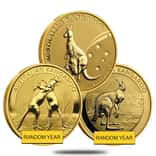
Government-issued bullion coins generally command stronger premiums than generic bars because they combine investment gold with global recognition. A Gold American Eagle, Canadian Gold Maple Leaf, South African Krugerrand or Australian Kangaroo is immediately familiar to dealers around the world, making resale straightforward and liquidity exceptionally strong.
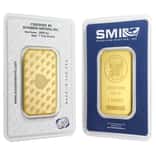
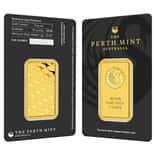
Private refinery bars occupy a different part of the market. Produced by respected names such as PAMP Suisse, Valcambi and Argor-Heraeus, they often appeal to investors seeking the lowest acquisition cost while still purchasing internationally recognized bullion. Generic products from smaller refiners may carry even lower premiums, reflecting differences in brand recognition rather than precious-metal content.
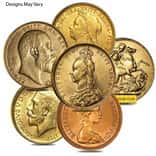
Limited mintages, annual design changes and collector demand add another layer. Some bullion coins gradually develop numismatic premiums that extend well beyond their gold value, while others remain closely tied to the underlying metal price throughout their lives.
Understanding those distinctions helps explain why comparing products solely by premium can sometimes be misleading. The lowest premium is not automatically the best value if another product offers stronger liquidity or broader market acceptance when it comes time to sell.
Looking Beyond the Premium
Premiums matter because they form part of an investor's total acquisition cost, but treating them as the only measure of value can create a false comparison.
A slightly higher premium may reflect tighter manufacturing tolerances, advanced anti-counterfeiting technology, stronger global recognition or deeper liquidity in the secondary market. Those characteristics can become particularly valuable during periods of heightened demand, when well-known bullion products often remain easier to authenticate and resell.
For long-term investors, the better question is rarely, 'Which product has the lowest premium today?' It is, 'Which product offers the best overall value for my investment goals?'
That answer will differ from one buyer to another. Someone building the largest possible gold position may prioritize lower-premium bars, while another investor may place greater importance on the international recognition of sovereign-mint bullion coins. Neither approach is inherently better; each simply reflects different priorities.
The gold spot price will always remain the foundation of the physical gold market, but it is only the starting point. Premiums tell the rest of the story, revealing the costs of refining, fabrication, distribution and market demand that transform wholesale gold into the investment products held by collectors and investors around the world.
Related reading you may find interesting:
Canadian Gold Maple Leaf: One of the World's Most Trusted Gold Coins
2 Comments