View Charts
Rare Discovery: 1945 Lincoln Wheat Penny Struck on Silver Alloy
 4
4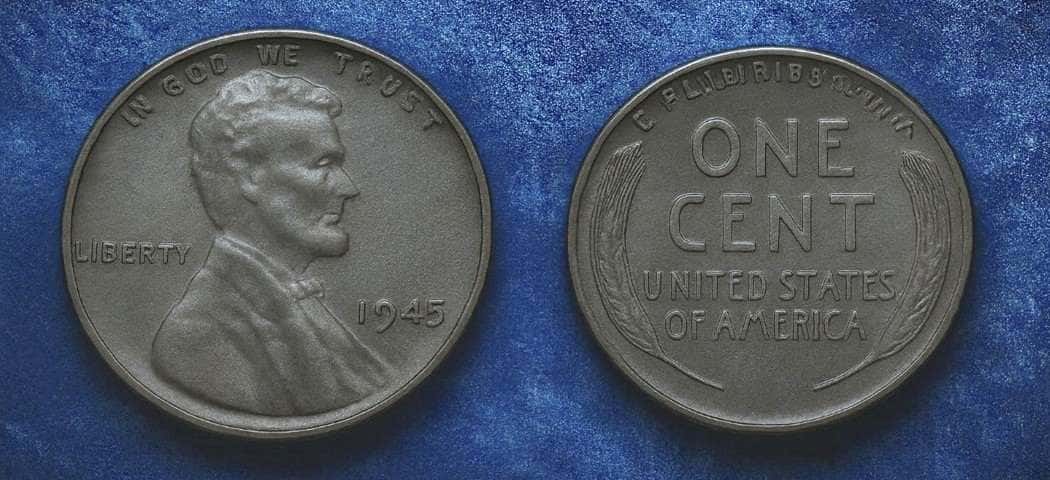
A Stunning New Mint Error Discovery
A remarkable numismatic discovery has surfaced—an extraordinarily rare 1945 Lincoln Wheat Cent struck on a silver-alloy planchet. Containing roughly 12% silver, this wartime anomaly departs dramatically from the standard bronze composition used in 1945 and appears to be the first known example of its kind. Its unusual weight, color, and metal content point to either a significant minting error or a previously undocumented experimental strike, making it a standout rarity in the Lincoln Cent series and a major point of interest for mint error specialists.
A 1945 Lincoln Cent Unlike Any Other
The coin exhibits several unmistakable traits that confirm it was not struck on a standard 1945 cent planchet. Weighing approximately 3.61 grams, it is significantly heavier than the normal 3.11-gram bronze cent. Its appearance is equally striking—a silver-grey surface tone rather than the traditional copper color. Technical testing has revealed increased density consistent with a silver-bearing alloy, and the coin’s design elements otherwise match a genuine 1945 Lincoln cent.
These combined characteristics firmly support its classification as a true off-metal mint error—or conceivably, an experimental pattern piece never intended for circulation.
How a Silver-Alloy Cent Could Have Been Produced
1. Wartime Planchet Contamination
In 1945, U.S. Mint operations were stretched by wartime production demands. The Mint struck both bronze cents and wartime five-cent pieces containing silver. Under high-volume, high-pressure conditions, it is plausible that a silver-bearing planchet—or alloy mix—was mistakenly fed into the cent presses. Similar off-metal mint errors from the WWII era are well documented.
2. A Possible Experimental or Pattern Strike
Another possibility is an intentional alloy test. During the 1940s, the Mint periodically evaluated alternative compositions due to metal shortages. Several undocumented alloy experiments are known from this period, and this coin may represent one such strike. If confirmed as intentional, this piece would transition from a mere error to a rare pattern coin—significantly elevating its historical and collector value.
Historical Context: Minting During the Last Year of WWII
The discovery is especially significant in light of the complex metal-use patterns of the era. The war had already triggered steel cents in 1943, recycled ammunition brass cents in 1944, and experimental alloy trials across multiple denominations. Minting errors and off-metal strikes were more likely during this turbulent period. This new 1945 silver-alloy cent fits squarely into that historically chaotic environment, offering a tangible artifact of the Mint’s wartime adjustments.
Why This Discovery Matters
Uniqueness and Extreme Rarity
Only one example of a 1945 Lincoln Cent struck on a silver-alloy planchet is known. Its singular nature makes it one of the most intriguing wartime mint anomalies and positions it alongside some of the most coveted off-metal U.S. errors.
Numismatic and Historical Significance
This discovery challenges existing assumptions about 1945 cent production and reveals that undocumented alloy experimentation—or significant planchet errors—still remain undiscovered in U.S. Mint history.
Cross-Market Appeal
Containing precious metal while existing within a popular U.S. coin series, this piece appeals to:
-
Mint error specialists
-
Lincoln cent enthusiasts
-
Wartime numismatic historians
-
Precious metals collectors seeking unique crossover items
How Was the Coin Discovered?
The discovery began when a collector noticed the coin’s unusual coloration—a dull silver-grey instead of copper. A subsequent weight test revealed a higher-than-expected mass. Metallurgical analysis, including density evaluation and alloy testing, confirmed the presence of approximately 12% silver. Only after this scientific review did its significance become clear: the coin was not plated, altered, or counterfeit—it was an authentic Mint-struck Lincoln cent on the wrong alloy.
Known Provenance
While the full historical chain of custody is not documented, the coin is believed to have:
-
Entered circulation normally in the 1940s
-
Been saved by a collector without knowledge of its anomaly
-
Remained in private hands for decades
-
Been reexamined only recently, triggering the metallurgical testing that confirmed its unusual alloy
This relatively “quiet” provenance is common among major mint error discoveries, where anomalies go unnoticed for generations.
Estimated Value (Speculative Range)
Because this coin is newly discovered and not yet sold at auction, any valuation is preliminary. However, based on market performance of similar off-metal or wartime pattern errors:
-
If authenticated as an off-metal error:
$10,000–$30,000 -
If attributed as an experimental or pattern strike:
$30,000–$75,000+ -
If confirmed to be unique and tied to wartime alloy experimentation:
Potentially well into six-figure territory, depending on demand from advanced collectors.
These estimates may rise sharply if additional analysis, grading, or publicity increases the coin’s profile.
Identifying a Potential Silver-Alloy 1945 Cent
Collectors who believe they’ve encountered a similar anomaly should evaluate:
-
Weight: near 3.61 g
-
Color: silver-grey, not copper-bronze
-
Density: heavier than standard bronze
-
Strike quality: authentic Lincoln Wheat Penny details
-
Metal composition: via XRF or metallurgical testing
Professional grading companies should handle any suspected example immediately.
A Landmark Find in Modern Numismatics
The 1945 Lincoln Wheat Penny struck on a silver-alloy planchet represents one of the most captivating wartime mint discoveries in recent memory. Whether ultimately classified as an off-metal error or a previously unknown pattern, it expands our understanding of WWII-era coinage and stands as a powerful reminder that rare and historically important coins continue to surface—even in the most familiar series.
Related reading you may find interesting:
Hoarding Pennies: Why Americans Save Coins When They Disappear
4 Comments