View Charts
Rare 1943 Bronze Cent Authenticated After 60 Years in One Family
 0
0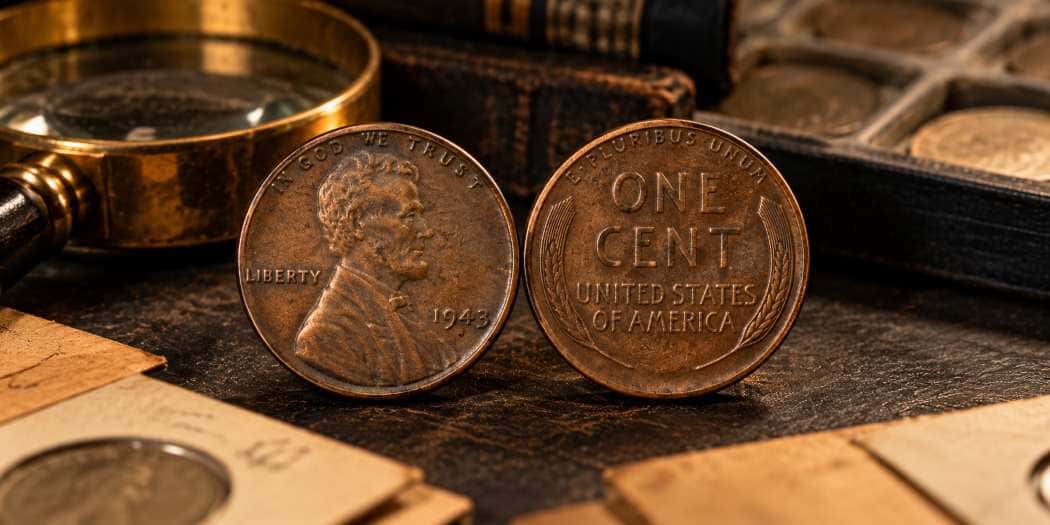
A Famous Wartime Error Gets a New Chapter
One of America's most famous error coins has gained another authenticated example after spending more than six decades in the same family's possession. A Texas family that acquired a 1943 bronze Lincoln cent from a collector in the early 1960s recently had the coin professionally examined, ending years of uncertainty over whether their unusual penny was genuine.
Professional Coin Grading Service (PCGS) authenticated the cent and graded it XF-40, or Extremely Fine-40. According to the American Numismatic Association, the coin has since been acquired by Houston-based U.S. Coins and Jewelry, which values it at approximately $235,000 and plans to place it on public display beginning October 3. The announcement is notable not simply because another valuable coin has surfaced, but because an uncertified example of a legendary U.S. rarity has entered the documented numismatic population more than 80 years after it was struck.
How the 1943 Bronze Cent Stayed in One Family for 60 Years
The family reportedly purchased the cent from a collector during the early 1960s and retained it for more than 60 years without obtaining professional certification. More recently, they brought it to professional appraiser Alvin Stern, who helped arrange authentication. After PCGS confirmed the coin as genuine, Stern offered it to U.S. Coins and Jewelry, where co-owner Kenny Duncan Jr. acquired it.
That history distinguishes the latest discovery from the familiar image of a rare penny suddenly appearing in pocket change or a forgotten jar. The family apparently understood that the coin might be important, yet its status remained unverified for decades. Authentication transformed it from a suspected rarity into a professionally certified example with a documented modern provenance.
The ANA describes the coin as one of an estimated 20 known 1943 bronze cents. Exact totals can vary depending on how surviving examples and Mint facilities are counted. Current PCGS CoinFacts data, for example, estimates approximately 15 to 17 Philadelphia examples, while only one Denver example and six San Francisco examples are currently known. Regardless of the precise total, genuine specimens remain exceptionally rare.
Why a Bronze Penny From 1943 Is So Unusual
The error only makes sense in the context of World War II. Copper was strategically important for military production, leading the U.S. Mint to replace the cent's traditional bronze composition with zinc-coated steel for 1943. More than one billion steel cents were produced across Philadelphia, Denver, and San Francisco, giving the year's regular-issue penny its distinctive silver-gray appearance.
Bullion Exchanges has previously explored the unusual composition, history, and counterfeit concerns surrounding the 1943 Steel Lincoln Wheat Cent. The bronze cents are extraordinary because they were never intended to be part of that production. The generally accepted explanation is that a small number of bronze planchets associated with earlier cent production remained in Mint equipment and entered the presses after steel-cent production began.
The U.S. Mint's historical account similarly explains that experts believe copper-alloy blanks remained in the press hopper when production switched to steel. Those blanks were then struck with 1943 dies, creating coins with the date and design of the wartime cent but the earlier bronze composition.
Collectors interested in the broader series can compare the error with other key dates and varieties through Bullion Exchanges' Lincoln Wheat Penny guide.
Authentication Separates a Rarity From a Convincing Fake
The enormous difference between an ordinary 1943 steel cent and a genuine bronze error has made authentication especially important. PCGS President Stephanie Sabin said in the ANA announcement that the 1943 bronze cent is among the most frequently submitted and widely misidentified coins the grading service encounters. Most suspected examples prove to be ordinary steel cents or copper-plated counterfeits.
Collectors can perform several preliminary checks without damaging a suspected coin. A genuine bronze cent should not be attracted to a magnet, while the regular zinc-coated steel issue should be magnetic. Weight provides another clue: PCGS lists the bronze issue at approximately 3.11 grams, compared with roughly 2.7 grams for a steel cent. Specialists can also examine the shape of the numeral 3 because altered-date cents have historically been used to imitate the rarity.
None of these tests independently proves that a coin is genuine. A nonmagnetic penny weighing close to 3.11 grams still requires expert examination of its date, dies, surfaces, composition, and other characteristics. That is why the XF-40 certification matters so much in the newly announced case: professional authentication established that the family's coin was not merely another apparent 1943 bronze cent but a genuine example.
Bullion Exchanges' dedicated 1943 Lincoln Wheat Penny guide provides additional identification information for collectors comparing ordinary steel cents with the famous bronze error.
How Rare and Valuable Are Genuine 1943 Bronze Cents?
Rarity does not translate into one fixed value. Mint of origin, grade, color designation, surface quality, provenance, and the circumstances of an individual transaction can all affect what a 1943 bronze cent commands. PCGS currently records an auction record of $372,000 for a Philadelphia 1943 bronze cent graded MS62BN, illustrating how strongly condition can influence the market for such scarce pieces.
The newly authenticated XF-40 specimen has been publicly valued at approximately $235,000, but that figure should not be interpreted as a universal price for the issue. With so few genuine examples available, transactions occur infrequently and individual coins can have substantially different characteristics. The unique Denver example also occupies a different rarity category from the known Philadelphia and San Francisco pieces.
The broader appeal of the error extends beyond six-figure valuations. The story is easy to understand even for someone new to numismatics: almost every cent produced in 1943 was supposed to be steel, yet a tiny number emerged in bronze. That contradiction helped turn the coin into an American collecting legend and inspired generations to examine old Wheat Cents for an improbable discovery.
Collectors exploring historic copper coinage and other tangible pieces can also browse Bullion Exchanges' selection of copper coins.
Why This Authentication Still Matters 83 Years Later
The most significant part of the latest story may be the length of time between the coin's production and its formal authentication. Population reports and grading records can create the impression that the universe of major U.S. rarities is already fully documented, yet this example remained outside professional certification for decades while sitting in private hands.
Its emergence does not mean large numbers of undiscovered 1943 bronze cents are waiting in collections. Genuine pieces remain extraordinarily scarce, while copper-plated steel cents and altered dates are far more common. What the story demonstrates instead is that private holdings can occasionally contain important coins whose status has never been formally established.
For collectors, the practical lesson is measured rather than sensational. An unusual coin with credible characteristics deserves careful evaluation, but apparent rarity should never be assumed from appearance alone. Cleaning, polishing, filing, chemical testing, or other alterations can damage a coin before an expert has the opportunity to examine it.
The Texas family's cent survived that process intact. More than 60 years after they acquired it—and 83 years after the Mint accidentally produced it—the coin finally received professional confirmation. Its XF-40 grade adds another documented specimen to the history of the 1943 bronze Lincoln cent while reinforcing why this tiny wartime mistake remains one of the most enduring stories in American numismatics.
Related reading you may find interesting:
8 Times Metal Prices and Shortages Changed U.S. Coins