View Charts
Is Gold Really Stardust? The Cosmic Origin of Earth's Gold
 0
0
The Gold in Your Hand Began Somewhere Far More Violent
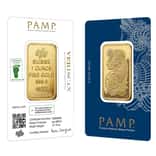
A gold bar looks almost defiantly terrestrial. It is dense, tangible and chemically stable, a material people have mined, traded and stored for thousands of years. Follow its atoms backward, however, and the story leaves every mine, continent and even the Earth itself behind. The gold in a modern bar existed before our planet did.
That makes the familiar description of gold as 'stardust' broadly right, but incomplete. Ordinary stars can build many elements through nuclear fusion, yet producing gold requires far more extreme conditions. Scientists now have direct evidence that neutron-star mergers can create heavy elements through rapid neutron capture, while newer research points to magnetar giant flares as another possible source. The origin of gold is therefore not a single cosmic event neatly solved by astronomy. It is a continuing investigation that connects violent stellar remnants, the birth of the Solar System, Earth's molten interior and the geological processes that eventually concentrated tiny quantities of gold into deposits humans could reach.
Why Ordinary Stars Cannot Simply Make Gold
Stars spend much of their lives turning lighter elements into heavier ones. Hydrogen becomes helium, and sufficiently massive stars continue building progressively heavier nuclei. But that productive chain runs into a fundamental obstacle around iron. Fusing nuclei beyond that point no longer releases energy in the same useful way, so another mechanism is needed to create many of the heaviest naturally occurring elements.
Gold, atomic number 79, can form through the rapid neutron-capture process, or r-process. In an extraordinarily neutron-rich environment, atomic nuclei capture neutrons much faster than they ordinarily could. Subsequent radioactive decays change some neutrons into protons, building nuclei into heavier elements. The process can produce gold, platinum and even heavier species.
For decades, astronomers debated where nature provided the necessary conditions. A dramatic answer arrived in 2017, when gravitational-wave detectors recorded two neutron stars merging in an event known as GW170817. Telescopes then observed the resulting kilonova. Its light carried evidence of newly formed heavy elements, giving astronomers compelling observational confirmation that neutron-star mergers are r-process factories. Gold's story finally had an observed cosmic production site, although not necessarily its only one.
Neutron Stars May Not Explain the Earliest Gold
The discovery created an irresistible shorthand: colliding neutron stars made the universe's gold. The actual picture is still developing. Neutron-star mergers may occur too late in cosmic history to account for all of the heavy elements detected in very old stars, which implies that additional r-process sources probably contributed.
A 2025 study using archival observations from NASA and European Space Agency telescopes added an intriguing candidate. Researchers revisited a giant flare produced in 2004 by a magnetar, an intensely magnetic type of neutron star, and found a gamma-ray signal consistent with predictions for heavy-element creation. Their models suggest magnetar giant flares could contribute as much as 10% of the galaxy's elements heavier than iron. Because magnetars existed comparatively early, they may help explain how gold appeared before neutron-star mergers became common enough to account for it.
That does not mean the mystery has simply moved from one type of neutron star to another. The relative contribution of mergers, magnetar flares and other possible environments remains under investigation. What can be said with confidence is more remarkable anyway: the gold atoms now locked inside coins, jewelry and bullion required astrophysical conditions of extraordinary violence long before Earth existed.
Then a Young Earth Hid Most of Its Gold
Once r-process material became incorporated into the cloud of gas and dust that formed our Solar System, gold joined the raw ingredients from which planets were assembled. Earth formed roughly 4.5 billion years ago amid collisions, heating and extensive melting. That created a problem for anyone hoping to find gold near the surface billions of years later.
Gold is highly siderophile, a geochemical term meaning it has a strong affinity for metallic iron. As the young Earth differentiated, dense metal migrated inward to form the core. Highly siderophile elements were strongly drawn into that metallic reservoir as well. Modern geochemical models indicate that more than 99% of Earth's inventory of highly siderophile elements resides in the core.
Yet gold exists in the mantle and crust. Explaining why opens another chapter in the story. Scientists have long used the unexpectedly high abundance and distinctive ratios of highly siderophile elements in Earth's mantle as evidence for 'late accretion' or a 'late veneer': primitive Solar System material added after much of core formation had ended. Research continues to refine how much of the mantle's present inventory came from this later material and how much can be explained by metal-silicate partitioning under the immense pressures and temperatures of early Earth. In other words, the popular claim that asteroids simply delivered all accessible gold after the core formed is too tidy for the evidence.
How Gold Went From the Mantle to a Mine
Even after gold became part of Earth's silicate mantle and crust, it was nowhere near ready to become a coin. Gold is scarce, and economically useful deposits require geological processes capable of gathering material dispersed through enormous volumes of rock and concentrating it into much smaller areas.
Water, heat, pressure and tectonic activity do much of that work. Hot hydrothermal fluids can move through fractures, dissolve and transport mineral components, then precipitate gold as temperature, pressure or chemistry changes. Orogenic gold systems, associated with mountain-building and major fault zones, can form networks of gold-bearing quartz veins. Other deposits develop in geological settings connected to magmatic and hydrothermal activity.
Erosion can then begin a second journey. Because gold is unusually dense and resistant to chemical weathering, particles released from primary deposits can survive transport and accumulate in river gravels and sediments. These placer deposits gave rise to some of history's most famous gold rushes. The glittering flakes in a stream and the ore extracted deep underground therefore represent different endpoints of geological sorting processes that operated long after the atoms themselves arrived on Earth.
A Gold Bar Is the Last Stop in an Extraordinary Chain
By the time refined gold reaches a gold bar or gold coin, nearly every trace of that journey has disappeared from view. Refining produces the familiar uniform metal prized for its purity, malleability and resistance to corrosion. Nothing about a polished surface reveals whether its atoms once passed through ancient mantle rock, a hydrothermal vein or a river deposit.
Its deeper history, however, changes the way scarcity can be understood. Humans can mine gold, refine it, melt it and move it from one owner to another, but we cannot manufacture meaningful quantities economically. The nuclei themselves were created under astrophysical conditions that cannot be reproduced as an ordinary industrial process, then incorporated into a finite planet whose accessible deposits required billions of years of geological concentration.
So is gold really stardust? As a poetic description, yes, although 'cosmic debris from some of the universe's most extreme events' would be more precise. The story does not diminish gold's familiar monetary and investment roles; it adds another scale entirely. A one-ounce piece of bullion is a modern financial asset whose atoms record a history older than Earth—formed in cosmic violence, carried into the material that built the Solar System, sorted through a changing planet and finally refined into something small enough to hold in one hand.
Related reading you may find interesting:
Where Does Palladium Come From and Why Is Supply So Concentrated?