View Charts
Inflation Woes: The Persistent Pain Behind the Spin
 0
0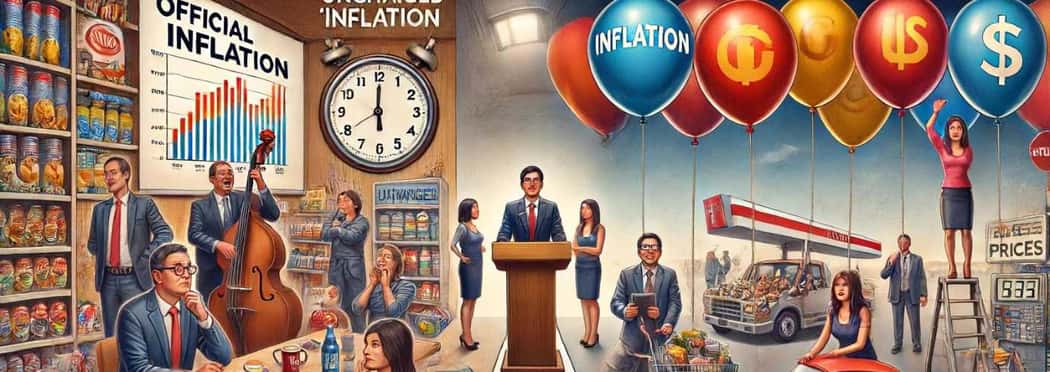
The latest inflation data has been released, accompanied by a familiar narrative. Once again, we are assured that inflation is easing, cooling, settling down, and generally becoming less of a concern. We're encouraged to relax and not worry. However, the reality is quite different from this optimistic spin.
Economic language is often metaphorical and thus imprecise. Even the term "inflation" derives from the Latin word inflare, meaning to blow into, evoking images of bellows on a fire or glass blowing. Originally, the term in English encapsulated both cause and effect: an inflated money supply led to rising prices. Post-World War Two, the term came to signify only the rise in the general price level, omitting the causal aspect entirely. This shift has caused significant confusion that persists today.
Monthly reports of the Consumer Price Index (CPI) are plagued by this metaphorical imprecision. The Bureau of Labor Statistics (BLS) recently reported that May’s inflation numbers were “unchanged” from the previous month. However, a closer look at the index reveals that prices for restaurants, used cars, and shelter all rose by 0.4% in just one month.
Anyone who has dined out or shopped for cars recently can attest to this. Trust your experience over the official narrative.
Despite this, the "unchanged" claim dominated headlines, leading major media outlets to once again declare that inflation is cooling and easing—two more favorite metaphors with vague meanings. Year-over-year, overall prices were still increasing at a rate of 3.3%!
Consider this: during the steepest declines in purchasing power in 45 years, the prevailing message has been that our predicament is improving. Retrospectively, this has never been true. Those who scrutinize the data closely have always known this narrative to be false.
Moreover, this 3.3% figure is itself an understatement. A.J. Antoni of the Heritage Foundation posits that the Federal Reserve quietly shifted its inflation target from 2% to 3% post-2020. This theory aligns with observed data and suggests that the BLS’s optimistic stance on severe declines in purchasing power is now the norm.
Yesterday’s report triggered the usual market reactions. The supposedly "unchanged" but intolerably high inflation rate provides the Fed with justification to cut rates in the fall, ahead of the election. This prospect thrilled Wall Street, sending financial stocks soaring. Within two hours, the Nasdaq was up 1.9% and the S&P 1.5%.
A closer examination of the CPI reveals more dubious adjustments, especially in medical insurance. Antoni points out that the BLS claims a staggering 19.1% decline in medical insurance prices since 2021. This dubious figure drags down the entire index. No one in the U.S. believes their insurance costs have dropped. How can this be?
The answer lies in the “hedonic” adjustment scheme adopted by the BLS. While insurance premiums have skyrocketed, consumption during the pandemic plummeted. If you’re paying but not consuming, what happens when consumption rises again? According to the BLS, this means a price decline.
Here’s their logic: if you buy one hamburger for $10 this week and two hamburgers for $15 next week, your inflation rate hasn’t risen—you simply got more for your money. This supposedly reflects increased purchasing power.
But wait, you argue.
This convoluted problem traces back to the complex American healthcare system with its insurance premiums, employer provisions, deductibles, third-party pricing, and federal subsidies. The system is so tangled that it defies sensible price tracking. But one thing is clear: health insurance costs have not decreased over the past four years.
Additional issues plague the inflation index. It inaccurately calculates rent, omits interest costs, and fails to account for shrinkflation, service fees, and quality declines. Thus, the index is not only approximate but also susceptible to political manipulation.
Inaccurate inflation readings lead to flawed adjustments, affecting income-tax brackets, real income calculations, and even retail sales reports. For instance, reported higher retail sales are merely due to consumers paying more for the same goods. Adjusting for real terms reveals a different picture.
Antoni notes that while official data reports a 13.2% increase in retail sales over three years, adjusted figures show a 3.6% decline.
Returning to the original definition of inflation, the latest M2 data indicates an upward trend, forecasting persistent inflation.
In summary, we are witnessing dramatic declines in living standards alongside massive paper profits driven by debt and monetary manipulation. This is not the foundation of robust prosperity, either now or in the future. The average person is acutely aware of the ongoing decline, while honest reporting on this issue remains conspicuously absent.