View Charts
Gold Bars vs. Gold Coins: Which Should You Buy?
 0
0
The Best Choice Depends on What You Want Gold to Do
As gold continues to command historically elevated prices amid persistent geopolitical tensions, central bank buying, and concerns over government debt, more investors are turning to physical bullion as a way to diversify their portfolios. Yet one of the first—and most important—questions new buyers face isn't whether to own gold, but what form it should take.
Gold bars and gold coins both contain investment-grade precious metal, but they serve different purposes. One emphasizes efficiency and maximizing the amount of gold purchased for every dollar spent. The other prioritizes flexibility, global recognition, and ease of resale. Neither is inherently superior, and choosing between them often comes down to understanding your own investment objectives rather than comparing specifications.
The decision also becomes more meaningful as an investment grows. Someone making a first purchase of a single ounce may value different qualities than an investor steadily accumulating wealth over decades. Premiums, liquidity, storage, and future selling strategies all deserve consideration before making a purchase.
Rather than asking whether gold bars or gold coins are "better," investors should ask a more practical question: Which option best aligns with my financial goals?
Gold Bars Maximize the Amount of Gold You Own
For investors focused primarily on accumulating precious metals at the lowest possible cost, gold bars generally offer the strongest value proposition.
The primary advantage is straightforward: bars typically carry lower premiums over the spot price of gold than similarly sized bullion coins. Because they are simpler and less expensive to manufacture, refiners can produce bars more efficiently, passing much of that savings on to buyers. As bar sizes increase—from 1 ounce to 10 ounces, 100 grams, or even 1 kilogram—the premium per ounce often declines further, allowing investors to acquire more gold for the same investment.
That cost efficiency can have a meaningful impact over time. An investor purchasing multiple ounces annually may save hundreds or even thousands of dollars in premiums by consistently choosing bars instead of coins. While the intrinsic gold content remains identical, paying less above spot means more of every dollar goes directly toward acquiring precious metal.
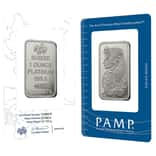
Modern gold bars are also produced by some of the world's most respected refiners, including PAMP Suisse, Valcambi, Argor-Heraeus, Asahi Refining, and Perth Mint. Many arrive sealed in tamper-evident assay packaging that verifies the bar's weight, purity, and authenticity, providing additional confidence for buyers and future purchasers alike.
Bars also store exceptionally well. Their uniform shape allows them to stack efficiently inside safes or secure storage facilities, making them particularly attractive for investors building larger physical holdings. For those who view gold primarily as long-term financial insurance rather than a collectible, this practical advantage should not be overlooked.
That said, maximizing value when buying can sometimes require accepting less flexibility when selling.
Gold Coins Offer Liquidity and Worldwide Recognition
Gold bullion coins have earned their reputation through decades of global acceptance. Produced by sovereign mints and backed by government guarantees of weight and purity, they are among the most recognizable forms of investment gold in the world.
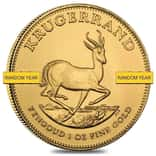
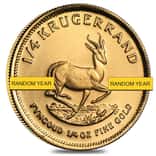
Products such as the American Gold Eagle, Canadian Gold Maple Leaf, South African Krugerrand, Austrian Gold Philharmonic, and British Gold Britannia enjoy broad recognition among dealers, investors, and collectors across international markets. That familiarity can simplify resale, particularly for investors who may eventually liquidate portions of their holdings rather than selling everything at once.
Liquidity is often the defining advantage of bullion coins. Someone holding ten one-ounce coins, for example, has the flexibility to sell one or two ounces as needed while retaining the remainder of the investment. By comparison, an investor holding a single 10-ounce bar must generally sell the entire piece, regardless of whether they only need a portion of its value.
Government-issued bullion coins also appeal to buyers who appreciate official mint production, advanced security features, and designs that often remain iconic for generations. While these characteristics don't necessarily increase the underlying value of the gold itself, they contribute to sustained global demand and widespread market confidence.
This combination of recognizability, divisibility, and consistent demand explains why many experienced precious metals investors continue to include bullion coins in their portfolios even when bars offer lower acquisition costs.
Premiums, Storage, and Security Should Shape the Decision
While purchase price often receives the most attention, long-term ownership involves more than simply comparing premiums. Storage, portability, and eventual resale all influence the overall value of a physical gold investment.
Gold bars almost always provide the lowest premium per ounce, particularly in larger sizes. That makes them attractive for investors whose primary objective is maximizing exposure to gold's price. However, lower purchase premiums don't necessarily tell the whole story. Larger bars can be less practical to liquidate because they cannot be divided. An investor holding a single 10-ounce or kilogram bar has fewer options than someone whose holdings are spread across multiple one-ounce coins or smaller bars.
Storage is another consideration. Standardized bars stack neatly and make efficient use of vault or safe space, particularly for larger holdings. Many modern bars are also sold in assay cards that protect the metal while certifying authenticity. Coins, meanwhile, are typically stored in protective capsules or mint tubes, requiring slightly more space but offering greater flexibility when organizing or selling portions of a collection.
Security has become increasingly important as counterfeit technology has advanced. Purchasing from established dealers and choosing products from respected sovereign mints or accredited refiners significantly reduces that risk. Government-issued bullion coins incorporate sophisticated security features, such as radial lines, micro-engraving, and advanced minting technology, while leading refiners have introduced serialized assay cards, QR verification, and tamper-evident packaging for many investment-grade bars.
Ultimately, the safest investment isn't determined by whether you buy bars or coins—it's determined by where you buy them and how you store them.
Matching the Right Gold Product to Your Investment Goals
The best choice depends less on the product itself than on the investor standing behind it.
If your primary objective is accumulating as much gold as possible for the lowest overall cost, bars generally make the most sense. Their lower premiums allow long-term investors to maximize the number of ounces purchased over time, making them especially attractive for those steadily building a precious metals allocation.
Bullion coins often appeal to a different type of investor. Someone who expects to make periodic purchases, values maximum flexibility, or anticipates selling portions of a holding over time may appreciate the convenience and global recognition that sovereign coins provide. Their widespread acceptance can simplify transactions regardless of market conditions or location.
Collectors represent another category altogether. Although standard bullion coins are produced primarily for investors, many become desirable collectibles over time through limited mintages, changing designs, or special editions. Gold bars generally derive their value almost entirely from metal content, whereas certain coins can develop additional numismatic premiums that are independent of gold prices.
For many buyers, the answer isn't choosing one over the other. It's understanding where each product fits within a broader investment strategy.
A Balanced Portfolio Often Includes Both
The debate between gold bars and gold coins sometimes assumes investors must pick a single winner. In practice, many experienced precious metals buyers eventually own both because each serves a different purpose.
Bars frequently become the foundation of a long-term bullion position thanks to their lower acquisition costs and efficient storage. Coins complement those holdings by adding flexibility, global recognizability, and the ability to liquidate smaller portions without disturbing the core investment.
That balanced approach reflects a broader truth about physical gold investing. Successful investors rarely focus on finding the "perfect" product. Instead, they build a portfolio that aligns with their financial objectives, purchasing strategy, storage plans, and time horizon.
Whether you choose bars, coins, or a combination of both, the most important decision is often simply getting started. Physical gold has served as a store of value for centuries, and selecting the right format can help ensure your investment works as effectively for your goals as the metal itself.
Related reading you may find interesting:
The Gold Rushes That Changed History
Why Gold Remains a Reserve Asset in a Digital Currency Era