View Charts

Fed Holds Rates at 3.75%–4.00% as Two Officials Push for Hike
 0
October's Rate Decision Sets the Stage for December
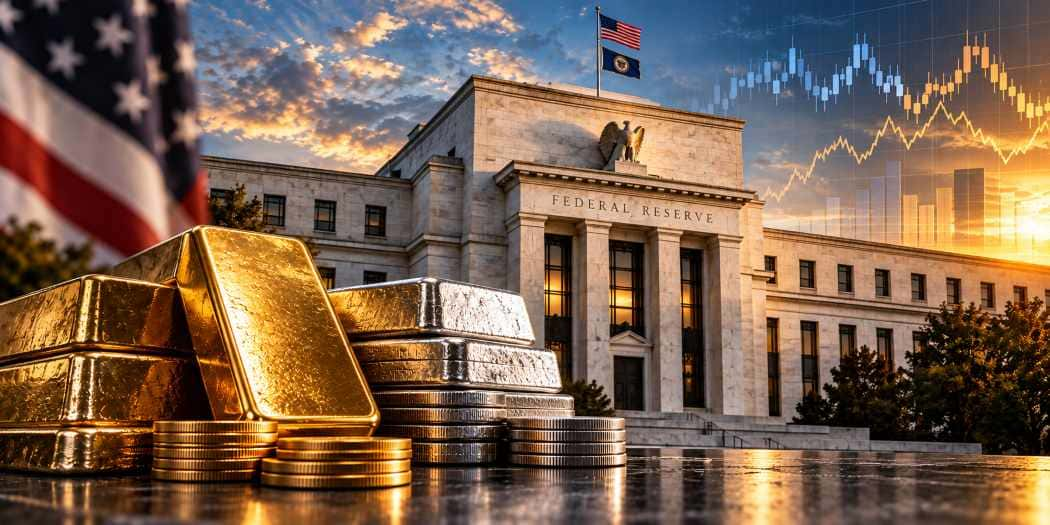
The Federal Reserve left interest rates unchanged on October 28, 2026, but the decision offered little reassurance that its inflation fight is nearing completion. Two policymakers voted for an immediate rate increase, the Committee described economic activity as strong, and its accompanying implementation note maintained the tools needed to keep money markets functioning smoothly. Together, those developments shift attention toward December, when officials will make their final scheduled policy decision of the year.
A Rate Hold With a Hawkish Division
The Federal Open Market Committee voted 10–2 to maintain its benchmark federal funds rate target at 3.75%–4.00%. According to the official October 28 FOMC statement, Governor Lisa D. Cook and Cleveland Fed President Beth M. Hammack preferred a quarter-percentage-point increase, which would have raised the target range to 4.00%–4.25%.
The dissent matters because both officials wanted tighter monetary policy, rather than additional support for economic growth. Their votes do not establish that a majority will favor a December increase, but they underscore the Committee's concern that inflation could remain above target despite already elevated borrowing costs.
The Fed described domestic spending as resilient, productivity growth as strong, and capital investment as robust. Job gains have kept pace with workforce growth, while unemployment has changed little. This combination gives policymakers room to maintain restrictive financial conditions without responding to an immediate deterioration in employment. For investors, the central question is whether continued economic strength will make additional tightening necessary.
Strong Growth Complicates the Inflation Outlook
The Fed's October statement maintained a clear distinction between economic performance and price stability. Although activity is expanding strongly, inflation remains elevated, and officials reiterated their determination to return it to the 2% objective. The Committee also acknowledged unusually high uncertainty, partly associated with geopolitical developments.
That tension helps explain why the Fed can leave rates unchanged without signaling an approaching cut. Strong consumer demand and business investment can sustain employment and output, but they may also make inflation harder to contain. Meanwhile, geopolitical disruptions can raise energy and transportation costs independently of domestic interest rates, complicating the Fed's assessment of how much restraint is appropriate.
The September Summary of Economic Projections illustrates the challenge. Policymakers' median forecasts projected 2026 headline personal consumption expenditures inflation at 3.7% and core inflation at 3.4%, both substantially above the long-term target. Those projections predate the October meeting and should not be interpreted as an updated October forecast.
The inflation outlook remains particularly important for precious metals because it influences expectations for interest rates, real yields, and the dollar. A strong economy does not automatically weaken gold, but it can reduce the urgency for monetary easing and keep pressure on non-yielding assets.
Treasury Purchases Are About Reserve Management
The Fed's accompanying October 28 implementation note maintained the interest rate on reserve balances at 3.90%, effective October 29. It also retained the standing overnight repurchase agreement rate at 4.00%, the reverse repurchase offering rate at 3.75%, and the primary credit rate at 4.00%.
More notably, the Committee authorized the New York Fed's Open Market Desk to purchase Treasury bills and, when necessary, other Treasury securities with remaining maturities of three years or less to maintain ample banking-system reserves. The directive also calls for rolling over Treasury principal payments and reinvesting agency-security principal payments into Treasury bills.
These operations should not be confused with a new quantitative easing program. Their stated purpose is to manage reserve availability and support effective implementation of the existing interest-rate target, rather than deliberately stimulate economic activity through large-scale purchases of longer-duration securities.
The New York Fed's operational guidance explains that reserve-management purchases depend on projected reserve demand, supply, and money-market conditions. The October directive does not announce a new fixed purchase amount. Consequently, interpreting this provision as an automatic source of monetary stimulus would overstate what the Fed has authorized.
What the Decision Means for Gold and Silver
For gold, the most immediate policy channels are Treasury yields, inflation expectations, and the U.S. dollar. Higher expected interest rates can increase the opportunity cost of holding bullion, which does not pay interest. A stronger dollar can also make dollar-denominated gold more expensive for international buyers. Conversely, declining real yields or renewed concern about inflation and geopolitical risk may support investment demand.
Silver shares some of these monetary characteristics but also responds to industrial conditions. Strong capital investment and manufacturing demand may offer support, while tighter financial conditions can restrain economic activity and increase uncertainty about industrial consumption. That combination means the silver price may react differently from the gold price, even when both metals are responding to the same Fed announcement.
The direction of the initial market reaction should not be assumed from the rate hold alone. If investors interpret the two dissents as evidence that a December hike is becoming more plausible, yields and the dollar could rise, creating headwinds for bullion. If attention instead shifts toward geopolitical risks or the possibility that restrictive policy will eventually slow growth, gold could find support.
The distinction between an announcement and its market interpretation is particularly important after a widely anticipated decision. Investors entered Fed week focused on inflation, growth, and future policy guidance. The October vote resolves the immediate rate question but leaves the next decision dependent on new evidence.
December's Final FOMC Meeting: Hold or Hike?
The Fed's final scheduled meeting of 2026 takes place December 8–9. Unlike October, it will include an updated Summary of Economic Projections, allowing investors to compare policymakers' forecasts for inflation, growth, unemployment, and the appropriate interest-rate path. The decision is scheduled for December 9, followed by a press conference.
Three outcomes remain possible: another hold, a quarter-point hike, or a cut. Based on the October statement and the direction of the dissents, the most relevant near-term debate appears to be whether the Fed maintains its current range or raises it. A rate cut would require a meaningful reassessment of the economic outlook, particularly inflation and employment conditions.
There is evidence that further tightening has already been part of policymakers' thinking. The September meeting minutes reported that most participants considered another rate increase likely to be appropriate before year-end, although future decisions would depend on incoming information. That assessment preceded the October hold and cannot be treated as a binding December commitment.
The data arriving before December will therefore carry considerable weight. The September PCE inflation report and third-quarter GDP estimate, scheduled for October 29, will provide an early test of whether price pressures are easing while growth remains strong. Subsequent employment, wage, inflation, and consumer-spending reports will help determine whether October's dissenters remain in the minority or attract additional support.
|
December scenario |
What could support it |
Potential precious-metals implication |
|
Rates unchanged |
Inflation remains elevated but shows sufficient progress to justify waiting |
Reaction depends on guidance for 2027 |
|
Quarter-point hike |
Persistent inflation alongside resilient growth and employment |
Higher yields could pressure bullion |
|
Rate cut |
A significant deterioration in growth or employment, accompanied by a changed inflation outlook |
Lower yields could support gold, while silver's industrial outlook may complicate its response |
These are conditional scenarios, not probability forecasts. The updated projections and accompanying policy language may ultimately matter as much as the December rate decision itself, particularly if officials revise their expected interest-rate path for 2027.
The Next Inflation Reports Will Set the Tone
October's rate hold preserves the Fed's current policy stance while exposing disagreement over whether it is sufficiently restrictive. The Committee sees an economy capable of sustaining growth and employment, but it has not declared inflation under control. Its reserve-management instructions reinforce operational stability without changing that broader monetary-policy message.
For precious-metals investors, the period before December will be shaped by incoming inflation and labor-market evidence, Treasury yields, and changes in the dollar. The decisive question is whether economic data strengthen the case for another increase or persuade policymakers that the existing rate range is sufficient. Until then, the October announcement leaves gold and silver facing competing influences rather than a predetermined direction.