View Charts
Did the Trump $1 Coin Break Tradition? What Collectors Need to Know
 0
0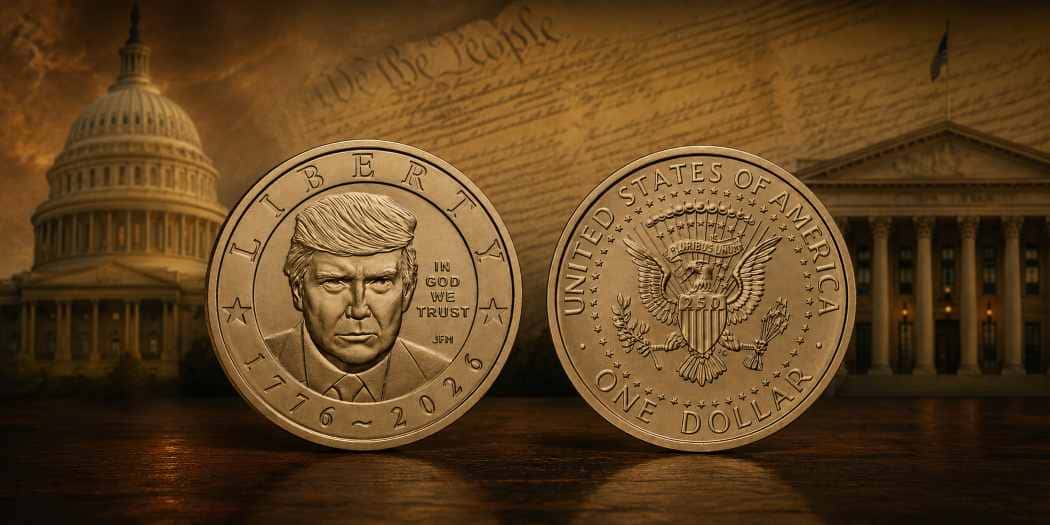
A New Dollar Coin Is Sparking One of the Biggest Numismatic Debates in Years
The U.S. Mint has announced that it is producing a new Trump $1 coin as part of the nation's 250th anniversary celebration, immediately transforming what might have been another circulating dollar release into one of the most closely watched numismatic stories in recent memory. The coin has attracted attention far beyond the collecting community, fueling debate among historians, legal scholars, policymakers, and collectors over whether a living president should appear on modern U.S. coinage.
The discussion extends well beyond politics. It raises fundamental questions about the traditions that have shaped American coin design for more than a century, the legal authority granted to the Treasury Department under recent Semiquincentennial legislation, and the role circulating commemorative coinage can play in marking national milestones.
For collectors, the announcement represents something equally significant: the arrival of an issue that could become one of the defining modern U.S. Mint releases of the decade regardless of its eventual mintage or market value. Whether remembered as a historic first or as the center of a legal controversy, the Trump $1 coin already occupies a unique place in contemporary numismatic history.
More Than a Presidential Portrait
Despite some headlines describing the piece as a 'gold coin,' the Trump $1 coin is not a precious-metal issue and contains no actual gold. It is expected to use the same manganese-brass clad composition as modern Native American and American Innovation dollars, consisting primarily of copper with smaller amounts of zinc, manganese, and nickel. The coin is being produced under the Mint's 2026 Semiquincentennial Circulating Coin Program and will be legal tender, while likely also being offered in collector products. Relatively few examples, however, may enter everyday circulation.
That distinction matters because many initial reports created confusion among investors accustomed to associating gold-colored coins with intrinsic precious-metal value. Unlike American Gold Eagles or commemorative gold coins authorized under separate legislation, this dollar derives its significance entirely from its design, historical context, and potential collectible appeal.
Treasury officials have stated that production is already underway following approval of the final design, with the coin expected to be released in fall 2026 as part of the broader Semiquincentennial coin program. Featuring President Donald Trump on the obverse, it has become one of the most politically and historically discussed U.S. coin designs in modern history before reaching the public.
For collectors, the coin's importance has little to do with its denomination. Instead, its appeal lies in the unprecedented circumstances surrounding its release and the broader constitutional and historical questions it has revived.
Why Living Presidents Rarely Appear on U.S. Coins
For much of American history, the nation's coinage has reflected a deliberate break from European tradition. Rather than portraying living rulers, early U.S. coins emphasized Liberty, national ideals, and symbolic imagery. George Washington is widely believed to have opposed placing his own likeness on American money, viewing the practice as too closely associated with the monarchies the new republic had rejected.
Portraits of historical figures did not become common on U.S. coinage until the twentieth century, beginning with the Lincoln cent in 1909. Even then, the individuals honored had already passed away. That practice eventually became embedded in both Mint policy and federal law. The Presidential $1 Coin Program, for example, requires that a president be deceased before becoming eligible for the series, reinforcing a tradition that many collectors now regard as a defining principle of modern U.S. coinage.
Why the Trump Dollar Is Different
The Trump $1 coin has generated such intense attention because Treasury officials believe the nation's 250th anniversary legislation provides broader authority to redesign circulating coins for the Semiquincentennial celebration than exists under traditional presidential coin programs.
That interpretation, however, remains disputed. Some legal scholars and numismatic experts believe existing statutes still prohibit depicting a living individual on an official U.S. coin unless Congress explicitly authorizes an exception. Others argue the anniversary legislation intentionally gives the Treasury Secretary greater flexibility to recognize significant people and events associated with America's 250th anniversary.
Although the Mint has announced that production is underway, questions surrounding the coin's legal authority could still generate additional scrutiny before its planned fall 2026 release. Regardless of the outcome, the announcement has already sparked one of the most significant discussions about American coinage in decades. More than a debate over one design, it has prompted collectors to reconsider the traditions, laws, and historical principles that have shaped U.S. coins for generations.
Why Collectors Are Paying Close Attention
Political controversy alone does not guarantee long-term collectible value, but it often generates extraordinary public interest. Coins associated with major historical events, first-of-their-kind designs, or significant legislative changes frequently attract attention from both established numismatists and first-time buyers.
The Trump dollar possesses several characteristics that collectors traditionally watch closely. It commemorates the nation's 250th anniversary, would become the first modern circulating U.S. coin to feature a sitting president, and is entering the market amid extraordinary public debate. Those factors could produce exceptional initial demand regardless of where individual collectors stand politically.
At the same time, experienced numismatists recognize that lasting premiums depend on far more than publicity. Mintage figures, production volumes, distribution methods, collector participation, and long-term availability ultimately play a much greater role in determining secondary-market performance than headlines surrounding a coin's release.
Regardless of its eventual market performance, the coin has already become historically significant. Few U.S. Mint announcements have generated such immediate discussion among collectors, historians, legal scholars, and the general public before the first examples have been released.
A Coin That Could Define a Generation of Modern Collecting
Whether the Trump $1 coin ultimately enters circulation exactly as announced or undergoes changes following legal or political challenges, it has already accomplished something remarkable: it has renewed public interest in how the United States chooses the individuals and events commemorated on its coinage.
That renewed attention may prove to be the coin's greatest legacy. The debate has encouraged collectors to revisit longstanding traditions surrounding American money, explore the legal framework governing commemorative coinage, and consider how national milestones should be reflected through modern Mint programs.
When released, the Trump dollar will almost certainly become one of the most closely watched numismatic issues of the Semiquincentennial celebration. If its legal authority is ultimately challenged, it may become equally important as a case study in the evolving relationship between law, politics, history, and coin design.
Either way, the coin has already secured a place in modern numismatic history—not because of its denomination or metallic composition, but because few U.S. Mint issues have generated such widespread discussion before reaching the hands of collectors.
Image source: @SecScottBessent/X
Related reading you may find interesting:
July 4th Privy Trump Dollar Surfaces Ahead of Official U.S. Mint Issue