View Charts

Could Your Pocket Change Contain a Valuable Quarter?
 0
The 25-Cent Coin That Sold for $76,250
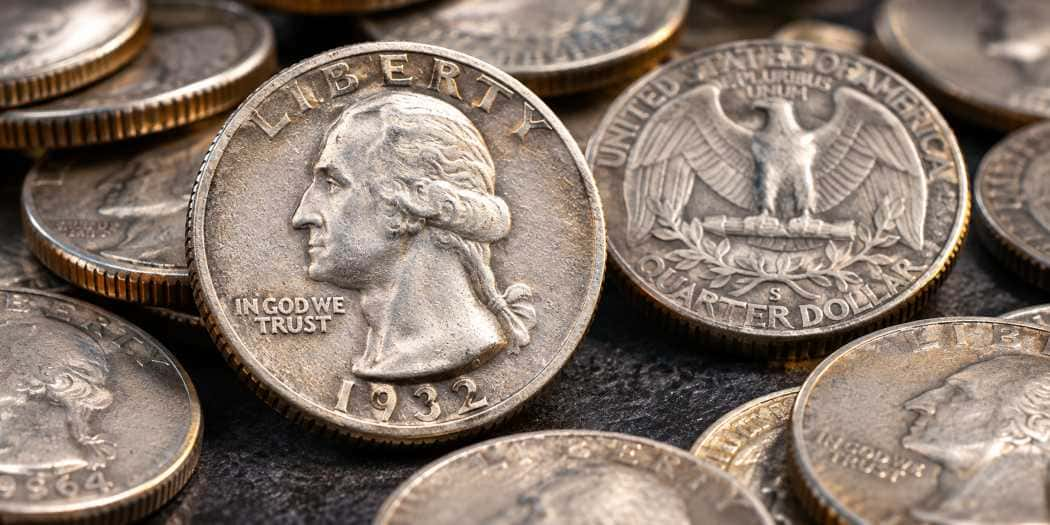
Most quarters pass through countless hands without attracting a second glance. Yet a 1932-S Washington quarter sold for $76,250 at Heritage Auctions in July 2026, demonstrating how dramatically the value of an ordinary denomination can change under exceptional circumstances.
The coin was struck at the San Francisco Mint during the first year of the Washington quarter series. Its remarkable auction result offers a reason to examine older quarters more carefully, but it also exposes a common misconception. Finding a desirable date is only the beginning; rarity, preservation, and collector demand determine whether a coin is modestly valuable or extraordinary.
For anyone checking inherited collections, old coin jars, or accumulated pocket change, the useful question is which characteristics distinguish a quarter worth saving from one worth professional examination.
Why the First Washington Quarters Became Collector Favorites
The Washington quarter debuted in 1932 to commemorate the 200th anniversary of George Washington's birth. Designed by John Flanagan, it replaced the Standing Liberty quarter and introduced a portrait that would become one of America's most recognizable coin designs.
The timing proved significant. During the Great Depression, reduced demand for new coinage contributed to unusually small production totals at two branch mints. Denver struck just 436,800 Washington quarters in 1932, while San Francisco produced 408,000. These low mintages eventually established the 1932-D and 1932-S as the series' principal key dates.
The distinction matters because otherwise similar coins can carry dramatically different values. A Philadelphia quarter dated 1932 is considerably more common than either branch-mint issue. The small D or S mint mark, located on the reverse beneath the eagle and above the denomination, identifies the scarcer versions.
According to PCGS research on the 1932 Washington quarters, both issues are desirable in circulated condition. Their relative scarcity changes at higher grades, however: the 1932-D is generally harder to obtain in exceptional uncirculated condition despite having a slightly higher original mintage.
What Made One 1932-S Quarter Worth $76,250?
The record-setting specimen was graded MS66+ by Professional Coin Grading Service and received Certified Acceptance Corporation approval. Heritage described exceptional luster, strong design details, attractive iridescent color, and unusually clean surfaces. These characteristics placed it among the finest certified survivors of the issue.
The sale illustrates why original mintage tells only part of a coin's story. Hundreds of thousands of 1932-S quarters were struck, and circulated examples remain available. Far fewer survived with the exceptional surfaces and visual quality necessary to achieve elite Mint State grades.
Small differences in preservation can produce enormous price gaps. A heavily worn quarter, an average uncirculated example, and a superb specimen may share the same date and mint mark yet attract different collectors. Competition for the finest certified examples can intensify those differences, particularly among collectors assembling high-ranking Registry Sets.
The Heritage Auctions listing documents the $76,250 realization, including the buyer's premium. That figure represents one exceptional coin, not the typical value of a circulated 1932-S quarter. Identifying a desirable date establishes potential interest; condition determines how far that interest might extend.
Which Quarters Deserve a Second Look?
Silver content provides an important starting point. Regular-issue U.S. quarters dated 1964 and earlier generally contain 90% silver, giving them intrinsic metal value beyond their denomination. Most circulated Washington quarters from this period are valued primarily for their silver content, although key dates and unusual varieties may command additional premiums.
The Coinage Act of 1965 introduced copper-nickel clad quarters for circulation. These newer coins normally reveal a copper-colored band along the edge, whereas earlier 90% silver quarters have a more uniformly silver-colored appearance. The 1964-to-1965 quarter transition explains why this distinction remains useful.
Modern quarters can also attract collector interest. The 2019-W and 2020-W quarters, released into circulation with the West Point Mint's W mint mark, are notable examples. Their appeal comes from limited distribution rather than precious-metal content.
Collectors should distinguish genuine varieties and mint errors from ordinary damage. Scratches, discoloration, flattened lettering, and unusual-looking edges frequently result from circulation. An unfamiliar appearance alone does not establish rarity, and many heavily worn or damaged quarters remain worth face value.
How to Examine Old Quarters Without Damaging Them
Never clean, polish, or attempt to restore a potentially valuable quarter. Even gentle cleaning can leave microscopic scratches, remove original toning, or permanently alter its surfaces. These changes may substantially reduce numismatic value, particularly for rare dates and high-grade specimens. A tarnished quarter may be considerably more desirable in its original condition than after someone attempts to make it shine.
Begin with the date and mint mark, handling the coin only by its edges. On Washington quarters dated 1932 through 1964, inspect the reverse beneath the eagle. Later designs may place the mint mark elsewhere. Good lighting and modest magnification usually suffice for preliminary examination, especially when comparing suspected varieties with authenticated photographs. Avoid rubbing the surfaces, even with a soft cloth, and use an appropriate protective holder.
Assess preservation without attempting improvements. Circulation wear can erase design details, while scratches, cleaning marks, and environmental damage may reduce collector value. If discoloration could represent natural toning, leave the coin untouched until an experienced numismatist can examine it.
Weight can provide another useful check. A standard 90% silver Washington quarter originally weighs 6.25 grams, compared with 5.67 grams for a regular copper-nickel clad quarter. Wear, manufacturing tolerances, and scale limitations must be considered before interpreting small differences.
The guide to identifying silver quarters provides additional context. Collectors can also compare the underlying precious-metal value of older coins with the current silver spot price, recognizing that collectible premiums are determined separately.
If a quarter appears to be a significant key date, unusual variety, or valuable mint error, professional authentication may be appropriate. Certification costs should be weighed against the coin's likely value. Not every silver quarter warrants grading, but preserving its original condition is always the safest first step.
The Real Opportunity in a Jar of Quarters
Finding a 1932-S Washington quarter in ordinary circulation today would be unusual. Collectors have searched for these coins for generations, removing many from circulation as their significance became recognized. Discovering an exceptional, record-quality specimen would be considerably less likely.
Nevertheless, inherited collections and long-stored accumulations deserve examination. They may contain silver issues, overlooked mint marks, or coins preserved before their collector value became widely understood. Their potential rests on the characteristics of individual pieces, not the assumption that every old quarter is rare.
The $76,250 sale demonstrates how a familiar denomination can become a major collectible, but spectacular auction results describe exceptional circumstances. For most people, the practical reward of checking old quarters is learning to recognize silver, identify important dates, and understand why seemingly similar coins can have very different values.