
 View Charts
Buffalo Nickel
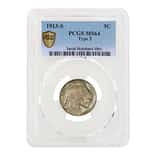
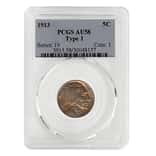
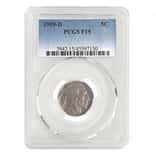
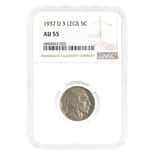
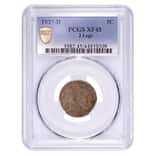
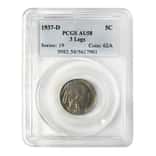
Buffalo Nickels
The Buffalo Nickel, officially known as the Indian Head Nickel, is one of the most distinctive coins in American numismatic history. Designed by sculptor James Earle Fraser and minted from 1913 through 1938, the five-cent coin replaced the Liberty Head Nickel and introduced imagery that departed sharply from the classical portraits found on much of the nation's earlier coinage. Its Native American portrait and American bison reverse have since become enduring symbols of early 20th-century U.S. coin design.
At Bullion Exchanges, collectors can explore Buffalo Nickels across a wide range of dates, mint marks, conditions, grades, and varieties. The relatively compact series offers approachable circulated coins for newer collectors alongside scarce key dates, major varieties, and professionally certified examples sought by more advanced numismatists.
James Earle Fraser and the Buffalo Nickel Design
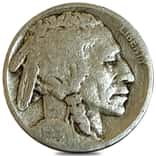
Fraser's obverse depicts a Native American in profile, a portrait generally understood as a composite rather than a definitive representation of one historical individual. LIBERTY appears along the right side, while the date is positioned on the subject's shoulder. That placement proved important over time because the date sits on a relatively exposed portion of the design and frequently became weak or unreadable after extended circulation.
The reverse features an American bison with UNITED STATES OF AMERICA, E PLURIBUS UNUM, and FIVE CENTS. Buffalo Nickels contain 75% copper and 25% nickel, weigh 5 grams, measure 21.2 mm in diameter, and have a plain edge. Coins were struck at Philadelphia, Denver, and San Francisco; Philadelphia pieces have no mint mark, while Denver and San Francisco coins carry D and S mint marks, respectively.
1913 Type 1 and Type 2 Buffalo Nickels
The Buffalo Nickel underwent a significant design modification during its very first year. On the original 1913 Type 1, the bison stands on a prominent raised mound with the denomination FIVE CENTS below. Concerns developed that the exposed denomination would wear too quickly, prompting the Mint to modify the reverse. The resulting Type 2 design places the denomination within a recessed area beneath a flatter ground line, providing greater protection from circulation wear.
Both types were produced in 1913, creating an immediate collecting distinction within the series. Mint marks add another layer: the 1913-S Type 2 is considerably scarcer than many early Buffalo Nickel issues and is recognized as one of the important keys to a complete collection.
What Is a Buffalo Nickel Worth?
Buffalo Nickel values can range considerably depending on the individual coin. Common dates in circulated condition are generally more accessible, while key dates, scarce mint marks, recognized varieties, and well-preserved examples can command substantially higher collector premiums. Date and mint mark are therefore important starting points, but condition, strike quality, variety, and authenticity can be equally significant when evaluating a particular coin.
A readable date is especially important with circulated Buffalo Nickels because Fraser's original placement left this detail vulnerable to wear. At the other end of the grading spectrum, some issues become significantly more difficult to locate with strong strikes and well-preserved surfaces. Collectors evaluating a Buffalo Nickel should therefore consider the entire coin rather than assuming that every example from the same year and Mint has similar numismatic value.
Key Dates and Rare Buffalo Nickel Varieties
Several issues stand out for collectors pursuing a more advanced Buffalo Nickel set. Important regular issues include the 1913-S Type 2, 1921-S, 1924-S, and 1926-S, with the 1926-S particularly well known as a key date. The series also contains major varieties such as the 1916 Doubled Die Obverse and 1918/7-D Overdate, both of which are highly regarded among Buffalo Nickel specialists.
Perhaps the most famous variety is the 1937-D Three-Legged Buffalo Nickel. Its unusual appearance resulted from excessive polishing of a reverse die, which removed much of one of the bison's front legs. Collectors may also encounter the 1936-D 3½ Legs variety, another distinctive die-polishing-related issue. Because valuable varieties can be altered or imitated, professional authentication can be particularly useful when purchasing scarce examples such as the 1918/7-D or 1937-D Three-Legged Buffalo.
Buffalo Nickel Grading, Wear and Strike Quality
Grading Buffalo Nickels requires attention to both circulation wear and the quality of the original strike. On circulated examples, prominent areas of Fraser's design gradually lose detail, with the date being especially susceptible. Better-preserved coins retain stronger definition across the Native American portrait and the bison, while Mint State examples are evaluated further for luster, surface preservation, contact marks, and overall eye appeal.
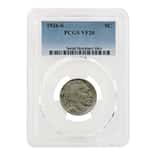
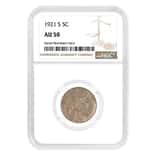
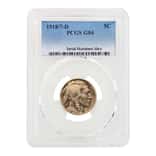
Strike quality introduces another consideration because a lack of detail does not always mean a Buffalo Nickel was worn in circulation. Some issues, particularly certain branch-mint coins, are known for weak strikes, which can leave portions of the design incompletely defined even on an uncirculated coin. Professionally certified examples from grading services such as PCGS and NGC can help collectors compare condition while providing third-party authentication—an especially useful consideration for valuable dates and varieties.
Shop Buffalo Nickels at Bullion Exchanges
Explore Buffalo Nickels at Bullion Exchanges to discover historic U.S. five-cent coins from the 1913–1938 series. Depending on current inventory, collectors may find common-date circulated pieces, Denver and San Francisco issues, higher-grade examples, key dates, collectible varieties, and professionally certified coins.
Whether you're assembling a basic date-and-mint collection, searching for a 1913 Type 1 or Type 2, pursuing scarce Buffalo Nickel dates, or looking for famous varieties such as the 1937-D Three-Legged Buffalo, the series offers multiple collecting paths within a manageable 26-year run. Fraser's celebrated design, challenging varieties, and wide range of available grades have helped keep Buffalo Nickels a prominent part of American coin collecting generations after the final pieces were struck in 1938.