
 View Charts
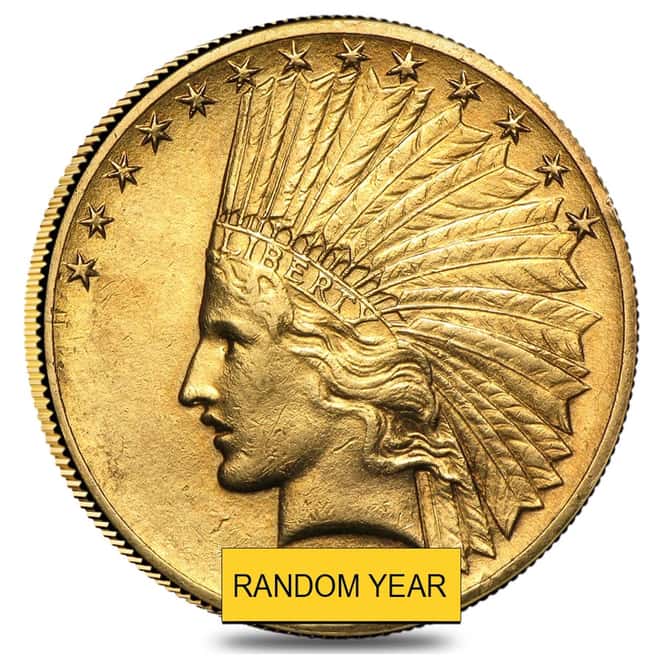
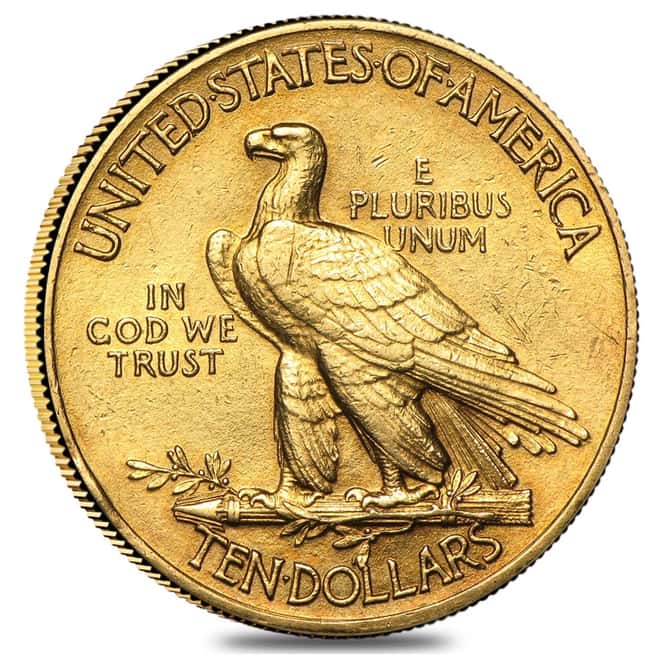
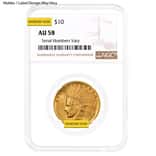
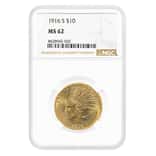
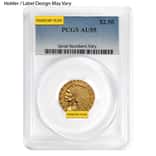
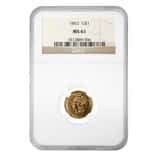
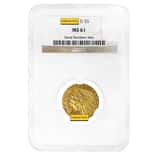
$10 Gold Eagle Indian Head - Extra Fine XF (Random Year)
All orders are insured and tracked

$10 Gold Eagle Indian Head - Extra Fine XF (Random Year)
The $10 Gold Eagle Indian Head is an outstanding coin for its extraordinary design. Probably the only design where one can see Lady Liberty in a Native American headdress. It was President Theodore Roosevelt’s idea to have Liberty wear headdress. The coin is made from .900 fine gold and these were struck by the US Mint from 1908 through 1933. These are the last coins of the $10 Eagle series. The combination of rarity, beauty, and high intrinsic value makes this a very desirable coin among collectors as well as investors.
Coin Features:
- Contains .4838 Troy Ounce of 0.900 fine gold.
- Eligible for Precious Metal IRA.
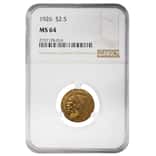
- Extra Fine (XF) condition.
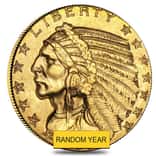
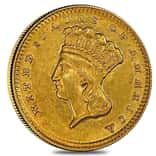
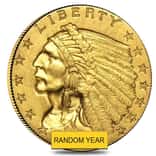
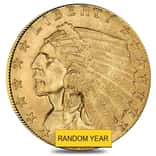
- Obverse: A beautiful leftward facing portrait of Lady Liberty wearing a war bonnet with her curls flowing out of it. The motto “LIBERTY” inscribed on the band of the bonnet. Encircled by 13 stars on top and date below.
- Reverse: Features a majestic bald eagle perched on a bunch of arrows holding an olive branch in its talons. Inscriptions: "United States of America", "E Pluribus Unum," “IN GOD WE TRUST,” and “TEN DOLLARS.”
- Designed by Augustus Saint-Gaudens.
- Minted from 1907-1933, dates and mint mark will be chosen randomly based on availability.
- U.S. Mint issue from the following mints: Philadelphia, San Francisco, or Denver.
- Individual coins will come in protective plastic flips. Multiples of 20 will come in protective plastic tubes.
-
100% Authentic.
Why Buy Gold Eagle Indian Head?
- Investing in gold coins to reduce portfolio volatility and minimize losses.
- These coins are high-quality liquid assets.
- These coins are no longer minted, hence there is a fixed supply but high demand.
- The coin is made from 0.900 fine gold with a 10% alloy which makes it durable towards damage.
-
The coin’s rarity, artistic merit, and historical significance have qualified it to be a top runner in the numismatist world. Collectors and investors have an affinity for this coin.
Detailed Information:
In 1904, plans had begun for the beautification of coins in America by President at the time Theodore Roosevelt. Since the coins had not seen much change over the past 60 or 65 years, it could be done without going through congressional authorization. One of the most popular sculptors known for his work all over America and the world, Augustus Saint Gaudens was contacted for this work by Theodore Roosevelt, who was previously impressed by Saint-Gaudens work on Roosevelt’s inaugural medal.
Thus began the saga to beautify the American coins. Augustus Saint-Gaudens had to provide new designs for five different denominations which are $20 Double Eagle, $10 Eagle, $5 Half Eagle, $2.5 Quarter Eagle, and the Cent. However, he could only design for the Double Eagle and Eagle before he passed away due to cancer.
Saint-Gaudens explored different designs of Lady Liberty including the bust portrait versions and the full-body versions. He had come up with some great designs drawing inspiration from his previous work. For the $20 Eagle, he had come up with a bust portrait of Lady Liberty, which was an inspiration from the Greek Goddess of Victory, Nike that he had previously designed and intended to use in his Sherman’s Monument but for reasons unknown, had not used it. Now, he wanted to use it in the $20 Eagle on the obverse with a combination of a majestic bald eagle inspired by the President’s Inaugural medal on the reverse.
However, the President felt that this design would be apt to use on the $10 Eagle and he further went ahead and suggested Gaudens replace the laurel wreath of Lady Liberty and replace it with a feathered headdress of war bonnet as he felt that feathered bonnet was very American and picturesque. This was an extremely unconventional design and historically impossible as war bonnets are worn by male Native American warriors. However, this was a radical new design for that time as Lady Liberty was presented in a totally new light. 13 stars above the main device and the date below the main device were inscribed on the obverse
The reverse featured a majestic bald eagle perched on a bunch of arrows and holding an olive branch in its talons to signify America’s preparedness and desire for peace.
It can also be noticed that the Gold Eagle Indian Head coins minted from 1907-1911 had 46 stars on the edge that denoting 46 states in the Union at that time. In 1912, two more stars were added to make it 48 stars together, which denotes the addition of Arizona and New Mexico to the United States.
These coins were minted from 1908-1933. After which the mint totally stopped minting gold coins as per the new law by President Franklin Roosevelt, it was illegal to hold any gold coins, and all of it was confiscated and melted. What is remaining today are those that either escaped confiscation or were sent to Europe before 1933.
Some of the rarest Indian Head Eagle coins are the 1907 wire rim with periods, 1907 rounded rim with periods, 1908-S, 1911-D, 1913-S, 1915-S, 1916-S, 1920-S, 1930-S, and 1933 issues. These coins are extremely scarce.
Bullion Exchanges is pleased to offer you these $10 Gold Eagle Indian Head at one of the most competitive prices in the industry.
Feel free to browse our vast collection of Pre-1933 gold coins today to become a proud owner of an inseparable part of American coinage history. Feel free to contact us at 800-852-6884 if you have any questions in regards to Pre-1933 US Gold coins.
You may also be interested in $10 Gold Eagle Indian Head - Brilliant Uncirculated BU (Random Year), 10 Francs Swiss Helvetia Vreneli Gold Coin AGW .0933 oz AU/BU (1911-1922, Random Year), and 10 Francs French Gold Napoleon III AGW .0933 oz Avg Circ (1854-1869, Random Year).