View Charts
What Happens to Old Coins When the U.S. Mint Stops Making Them?
 0
0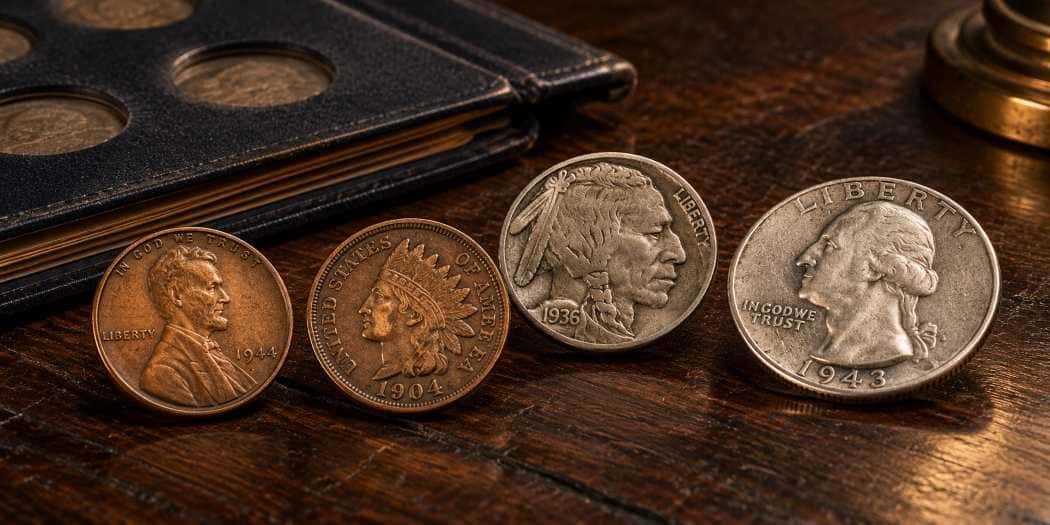
The Penny Shows What “Discontinued” Really Means
On November 12, 2025, the United States Mint struck its final circulating pennies in Philadelphia, ending 232 years of production for everyday commerce. The decision marked a historic change in American coinage, but it did not make the billions of existing pennies obsolete. They remain legal tender and can continue moving through cash transactions and financial institutions.
The penny’s retirement was driven largely by economics. According to the U.S. Mint, producing a cent cost approximately 3.69 cents by 2025, compared with 1.42 cents a decade earlier. Changing payment habits and the denomination’s declining purchasing power made continued circulation production increasingly difficult to justify.
Importantly, ending circulating production does not mean every form of the penny immediately disappears. Limited numismatic cents can still be produced for collector products. That distinction helps explain what “discontinued” actually means: a coin can stop being manufactured for everyday commerce while existing examples remain money and collector versions continue to exist.
Old Coins Can Outlive Production for Decades
American coinage history includes numerous denominations that remained valid after their production runs ended. The two-cent piece was discontinued in 1873, the three-cent denomination disappeared in 1889, and the short-lived twenty-cent piece ended production in 1878. Their eventual disappearance from commerce happened gradually as coins were saved, lost, redeemed, or absorbed into collections.
Modern dollar coins illustrate a different outcome. Some are produced primarily for collectors even though they rarely appear in everyday transactions. Their limited circulation reflects demand and distribution rather than a loss of monetary status.
Under 31 U.S.C. § 5103, U.S. coins and currency are legal tender for debts, public charges, taxes, and dues. Ending production does not automatically repeal that status. The penny therefore remains worth one cent even though the Mint no longer needs to continually manufacture new circulating examples.
Where Do Discontinued Coins Go?
For many coins, nothing dramatic happens at first. They continue passing between consumers, businesses, banks, and the Federal Reserve. Financial institutions can return excess coin inventories through the Federal Reserve’s cash services system, allowing usable pieces to be redistributed rather than replaced with newly struck coins.
Others gradually leave circulation without any formal withdrawal. Pennies accumulate in jars and drawers. Older coins enter collections. Some are lost, while others remain untouched for decades. This slow attrition can make a denomination increasingly uncommon in everyday change even when enormous numbers still exist.
The penny could follow a similar path. As fewer new cents enter commerce, the existing supply becomes increasingly dependent on coins already held by the public. That process may take years rather than occurring immediately after the final circulating strike.
What Happens When Coins Become Too Worn?
Circulation eventually takes a physical toll. Repeated handling can flatten design details, damage rims, and leave some coins unsuitable for continued use. The U.S. Mint describes recognizable but excessively worn pieces as uncurrent coins. Federal Reserve Banks can redeem these coins and forward them to the Mint for disposition, where recovered metal may be recycled.
Severely damaged coins are a different category. Bent, broken, fused, or partially destroyed pieces may be considered mutilated coins. The Mint permanently closed its Mutilated Coin Redemption Program in 2024 after citing authentication challenges, counterfeit concerns, and problems associated with processing damaged material.
Neither process functions as a numismatic screening service. Coins passing through normal banking channels are not necessarily inspected for valuable dates, overlooked varieties, or unusual mint errors before being processed.
Does Discontinuation Make a Coin Valuable?
This is where the penny’s retirement can create confusion. Ending production may increase public attention, but it does not automatically create scarcity.
Billions of Lincoln cents have been produced over generations. Common circulated examples remain abundant, and simply being part of a discontinued denomination does not make them rare. Collector value usually develops around more specific characteristics: date, mint mark, original mintage, surviving population, condition, variety, error, and demand.
The 1909-S VDB Lincoln cent demonstrates the difference. Its desirability comes from its comparatively limited mintage and long-established collector demand, not because Lincoln cents are old. The famous 1943 bronze cent became valuable for an entirely different reason: it was an unintended production rarity created during the wartime transition to zinc-coated steel cents.
Condition can magnify those differences. Two coins of the same date and mint mark may sell for dramatically different amounts when one is heavily circulated and another retains exceptional original surfaces. Cleaning can also damage a coin and reduce its collector appeal, which is why potentially significant finds should generally be preserved rather than polished.
Metal Content Can Matter More Than Retirement
Not every old coin derives its value primarily from rarity. Many pre-1965 U.S. dimes, quarters, and half dollars contain 90% silver, giving them intrinsic precious-metal value beyond their denominations. Common circulated examples may therefore trade largely according to silver content even when their numismatic premiums are modest.
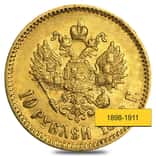
Historic U.S. gold coins can combine both forms of value. Their gold content establishes an underlying precious-metal component, while scarcity, condition, date, and collector demand can add substantial premiums. Buyers interested in that overlap can explore pre-1933 U.S. gold coins.
This is one reason “old” and “valuable” should not be treated as interchangeable terms. A relatively common silver coin can be worth more than face value because of its metal, while an older base-metal coin may remain inexpensive unless something else makes it desirable.
What the Penny’s Retirement Could Mean for Collectors
The penny now offers collectors an unusual opportunity to watch a familiar denomination transition away from everyday production. In the near term, existing cents remain plentiful. Over time, however, public behavior may change which examples are commonly encountered.
Some people will undoubtedly save rolls of later-date pennies or build Lincoln cent sets. Others may preserve particularly attractive final-production pieces, while many existing cents will simply remain in household storage instead of returning to commerce. These behaviors can affect availability without necessarily producing true rarity.
More meaningful collector questions will concern individual issues. Final-year circulation strikes, unusual varieties, mint errors, exceptionally preserved coins, and limited collector products may develop different markets. Their values will ultimately be established through actual transactions and sustained demand rather than the simple fact that circulating penny production ended.
The same principle applies whenever the Mint retires a denomination or design. Production may stop on a specific date, but a coin’s life rarely ends there. Some pieces continue circulating, others are eventually recycled, and a smaller number find permanent homes in collections.
For the penny, that transition has only begun.
Related reading you may find interesting:
1893 Chicago World's Fair Auction Highlights U.S. Commemorative Coin History