View Charts
The U.S. Mint Bicentennial Quarter: History, Value & 2026 Quarter Preview
 6
6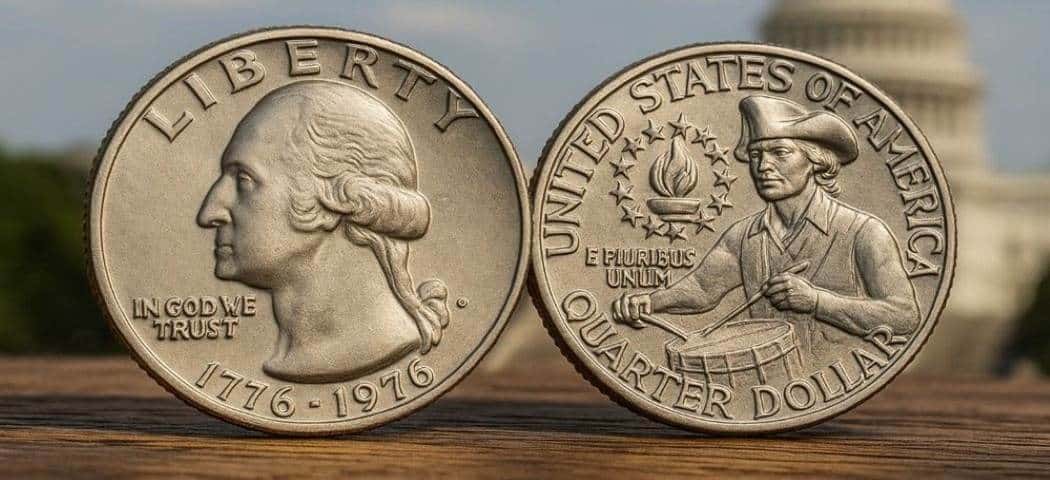
Celebrating America’s 200th Anniversary in Coinage
The U.S. Mint Bicentennial Quarter holds a special place in American numismatic history. Issued in 1975 and 1976 to honor the nation’s 200th birthday, this distinctive coin was part of a three‑denomination Bicentennial set alongside the half dollar and dollar. Rather than the traditional Washington quarter design, it featured a one‑year‑only reverse honoring the 1776–1976 milestone. These coins not only circulated widely but also became cherished keepsakes for millions of Americans, ensuring their lasting appeal in the collector market.
A Unique Patriotic Design
The obverse retained John Flanagan’s classic portrait of George Washington, but with a notable modification - beneath Washington’s profile, the date was changed to 1776–1976, symbolizing the anniversary span.
The reverse was the centerpiece of the redesign. Created by Jack L. Ahr, it depicts a colonial drummer boy in uniform, a nod to the citizen soldiers who fought for independence. Behind him, a victory torch is framed by 13 stars representing the original colonies. The inscriptions include “UNITED STATES OF AMERICA,” “E PLURIBUS UNUM,” and “QUARTER DOLLAR.”
The design was selected through a national competition, reflecting a blend of tradition and celebration that instantly set the coin apart from regular issues.
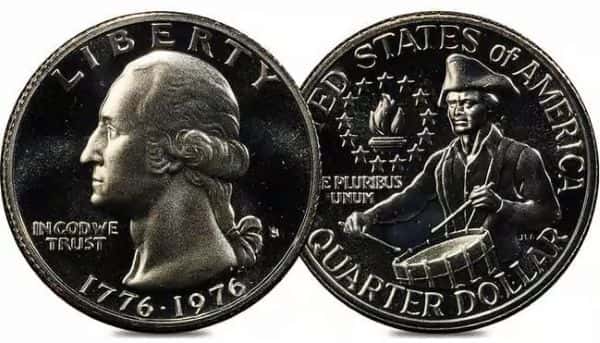
1976 Washington Quarter: Bicentennial Design
Mintage and Distribution
The U.S. Mint produced Bicentennial quarters in massive quantities to ensure availability for circulation and collectors alike. The coins were minted in both 1975 and 1976, with all bearing the 1776–1976 dual date.
In total, over 1.6 billion copper‑nickel clad quarters and millions of silver Bicentennial quarters were struck, making them one of the most widely distributed commemorative designs in U.S. history.
Philadelphia Mint (no mint mark, clad): 809,784,016
Denver Mint (“D” mint mark, clad): 860,118,839
San Francisco Mint (“S” mint mark, producing both proof and 40% silver collector versions ):
-
Clad Proof strikes: approximately 7,059,099
-
40% silver uncirculated: approximately 11,000,000
-
40% silver proofs: around 4,000,000
These figures make Bicentennial quarters some of the most widely produced commemoratives in U.S. history.
Purpose and Public Reception
The Bicentennial coin program was designed to engage the public in the country’s 200th anniversary celebration and to promote numismatic interest nationwide. These coins entered daily commerce, but many were saved as souvenirs, placed in albums, or sealed in U.S. Mint collector sets.
The patriotic drummer boy design became instantly recognizable, and for many Americans in the 1970s, these quarters were their first introduction to the world of commemorative coinage.
Collector Appeal and Current Values
Despite their high mintage, Bicentennial quarters remain a favorite among collectors for their historic and sentimental value. Circulated clad examples generally hold face value, but higher‑grade uncirculated coins can command a small premium.
Value estimates as of 2025:
-
Circulated copper‑nickel clad: $0.25–$0.50
-
Brilliant Uncirculated clad: $1–$3
-
40% silver uncirculated: $4–$7 (based on the spot price of silver: value will vary)
-
40% silver proof: $5–$8, with cameo examples often higher
-
High‑grade certified coins (MS67+ or PR70): Can exceed $100 depending on grade and demand
Some collectors prize mint errors for their rarity and added value, but no major, widely recognized error varieties are known for the Bicentennial quarter. The series’ high‑volume production and consistent quality control resulted in relatively few striking anomalies. As a result, most of the value in these coins comes from their grade, silver content, or the scarcity of top‑graded proof versions rather than from minting errors.
The investment value of common Bicentennial quarters is modest; however, silver versions and top‑graded examples remain highly collectible.
Looking Ahead: The 250th Anniversary in 2026
Coin collectors have another milestone to anticipate - the United States Semiquincentennial in 2026. The U.S. Mint has confirmed that the quarter program will feature five distinct reverse designs, each representing a defining moment or movement in American history:
-
The Declaration of Independence
-
The U.S. Constitution
-
The Abolitionist Movement
-
Women’s Suffrage
-
The Civil Rights Era
These special designs will be struck for only one year, creating a modern counterpart to the 1976 Bicentennial quarters.
In addition to the quarters, new reverse designs are also expected for the cent, nickel, dime, and half dollar - each telling a different part of the American story in a unique artistic style. This will mark the first time since 1976 that the U.S. Mint undertakes a broad, multi‑denomination redesign tied to a single national anniversary.
Final Thoughts
The Bicentennial Quarter remains a beloved piece of U.S. coinage - blending artistry, history, and patriotism into a design that resonated far beyond its years of circulation. With the 250th anniversary approaching, collectors have an unprecedented opportunity to secure another set of historic anniversary coins that will be treasured for decades to come.
Whether you collect them for their symbolism, their design, or as part of a complete U.S. quarter series, the 1776–1976 Bicentennial quarter and its upcoming 2026 counterparts are tangible reminders of America’s evolving story - captured forever in metal.
6 Comments