View Charts
The Role of Recycling in Platinum and Palladium Supply
 0
0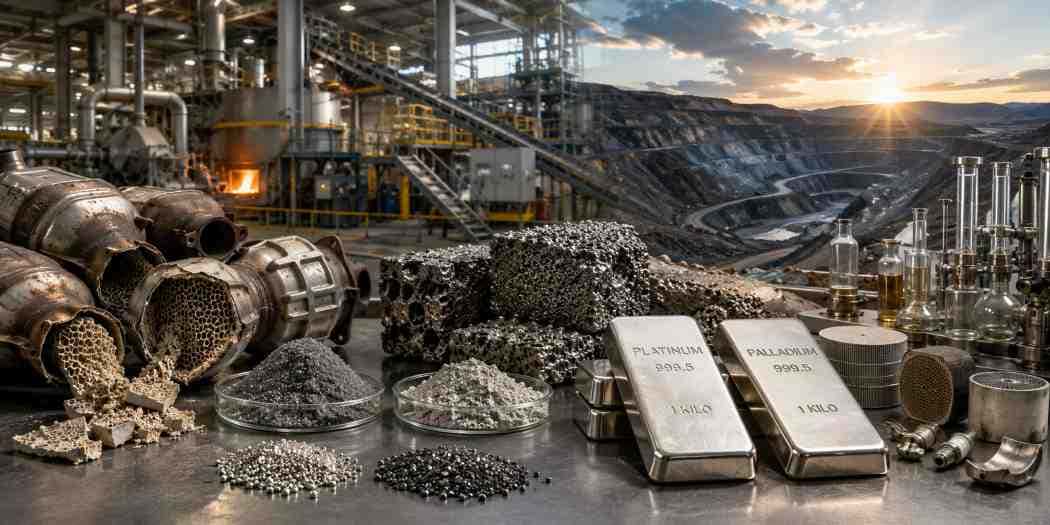
Recycling Has Become a Strategic Source of PGMs
Platinum and palladium markets have always depended heavily on mining, but recycled material now plays a far larger role in balancing global supply than many investors realize. While South Africa and Russia remain the dominant producers of newly mined platinum group metals (PGMs), a substantial portion of annual supply now comes from recovering metals already circulating through the economy. As automotive fleets age, industrial equipment reaches retirement, and jewelry or manufacturing scrap re-enters the refining system, recycling provides an increasingly reliable source of metal without requiring new mine production.
The importance of this secondary supply has grown alongside several structural changes. Years of underinvestment in mining, periodic labor disruptions, geopolitical risks, and stricter environmental regulations have made primary production less predictable. At the same time, platinum and palladium demand has remained closely tied to emissions-control technologies, where catalytic converters continue to consume significant quantities of both metals despite the accelerating transition toward electric vehicles.
Understanding the role of recycling therefore provides investors with a more complete picture of platinum and palladium pricing. Unlike mine production, which often requires years of development before new supply reaches the market, recycled material can respond more quickly to changing economic conditions, scrap availability, and metal prices. Rather than replacing mining, recycling has become an increasingly important mechanism for stabilizing supply when disruptions emerge elsewhere.
Catalytic Converter Recycling Drives the Secondary Supply Chain
Automotive catalytic converters represent the single largest source of recycled platinum, palladium, and rhodium worldwide. These emissions-control devices contain carefully engineered quantities of PGMs that help convert harmful exhaust gases into less harmful emissions throughout a vehicle's operating life. Once a vehicle reaches the end of its service life, those metals retain considerable value.
The recycling process involves far more than simply melting old components. Salvage operators recover catalytic converters before vehicles are dismantled, after which specialized processors identify the converter type, estimate its metal content, and prepare the ceramic substrate for refining. Advanced smelting and chemical separation techniques then recover platinum, palladium, and rhodium at exceptionally high purity levels, allowing the metals to re-enter industrial manufacturing with virtually no loss of performance.
Supply from catalytic converter recycling does not move in lockstep with metal prices alone. Vehicle retirement rates, scrap collection efficiency, regulations governing end-of-life vehicles, and global automobile sales from a decade or more earlier all influence how much recoverable material enters the market. During periods when consumers keep vehicles longer, the flow of recyclable converters often slows, temporarily tightening secondary supply even if metal prices remain elevated.
Because the automotive sector accounts for most palladium consumption and a significant share of platinum demand, recycled converters have become one of the industry's most closely watched indicators. Analysts frequently monitor recycling volumes alongside mine output to estimate whether total PGM supply is likely to meet industrial demand over the coming years.
Beyond Catalytic Converters: The Platinum Scrap Market Continues to Expand
Although automotive recycling dominates secondary PGM supply, it is far from the only source entering the refining pipeline. Platinum, in particular, benefits from a diverse scrap market that includes jewelry, chemical processing equipment, petroleum refining catalysts, laboratory instruments, medical devices, and electronics. Many of these industries rely on platinum because of its exceptional resistance to heat and corrosion, allowing valuable metal to be recovered when equipment reaches the end of its useful life.
Industrial recycling follows a different cycle than automotive scrap. Rather than responding to consumer behavior, it reflects capital investment decisions across manufacturing, energy, and chemical sectors. Large industrial facilities often replace catalysts or processing equipment on scheduled maintenance cycles, creating relatively predictable flows of recoverable platinum. These recycling streams can provide valuable supply even during periods when mine production faces operational challenges.
Palladium recycling remains more concentrated in the automotive sector, although growing demand for electronic components has gradually expanded additional recovery opportunities. Even so, converter recycling continues to account for the overwhelming majority of secondary palladium entering global markets.
Unlike mined production, recycled metal also carries a significantly smaller environmental footprint. Recovering platinum and palladium from existing products generally requires less energy, less water, and fewer new raw materials than extracting the same metals from underground ore. As manufacturers place greater emphasis on sustainable sourcing and governments tighten environmental standards, recycled PGMs have become increasingly attractive throughout the supply chain.
Why Recycling Cannot Fully Replace Mine Production
Despite its growing importance, recycling is not a substitute for primary mining. Secondary supply depends entirely on metal that has already been produced, meaning it cannot expand indefinitely to satisfy rising demand. If industrial consumption increases faster than recyclable material becomes available, newly mined platinum and palladium remain essential for balancing the market.
This limitation becomes especially apparent during periods of rapid technological change. Automotive production may consume large quantities of PGMs today, but catalytic converters typically remain in service for 10 to 20 years before entering the recycling stream. As a result, today's vehicle sales influence secondary supply many years into the future. A surge in demand cannot immediately create additional recyclable material, creating a natural lag between consumption and recovery.
Market conditions also influence recycling economics. Higher platinum and palladium prices encourage more aggressive scrap collection and processing because previously marginal material becomes profitable to recover. Conversely, prolonged periods of lower prices may discourage collection efforts, reducing secondary supply even though substantial quantities of recoverable metal still exist within aging vehicles and industrial equipment.
For investors, this dynamic explains why PGM recycling supply often moderates market volatility without eliminating it. Recycling can soften shortages by introducing additional material during periods of elevated prices, but it cannot quickly offset prolonged deficits caused by declining mine output or sustained growth in industrial demand. The balance between primary production and recycled supply therefore remains one of the defining characteristics of platinum and palladium markets.
Secondary Supply Will Play an Even Larger Role in Future PGM Markets
The global PGM supply chain is entering a period of gradual transition rather than dramatic change. Electric vehicles will eventually reduce demand for catalytic converters, but millions of gasoline-powered and hybrid vehicles will remain on the road for years to come. Those vehicles represent an expanding inventory of future recyclable material that will continue feeding secondary supply well into the next decade.
At the same time, platinum's growing role in hydrogen technologies, chemical processing, and other industrial applications is creating new sources of long-term demand. These emerging markets are likely to reinforce the importance of efficient recycling systems, ensuring valuable metals remain in circulation instead of being permanently lost from the supply chain.
For bullion investors, understanding recycling offers insight beyond simple production statistics. Platinum and palladium prices are shaped not only by what comes out of the ground but also by how effectively existing metal is recovered and reused. The platinum scrap market and catalytic converter recycling have evolved from niche industries into critical components of global supply, providing flexibility that mining alone cannot deliver. As sustainability, resource security, and supply diversification become increasingly important, secondary PGM supply is likely to remain one of the market's most influential—and closely watched—fundamentals.