View Charts
The Fascinating History of the $1,000 Bill: A Collector’s Guide
 0
0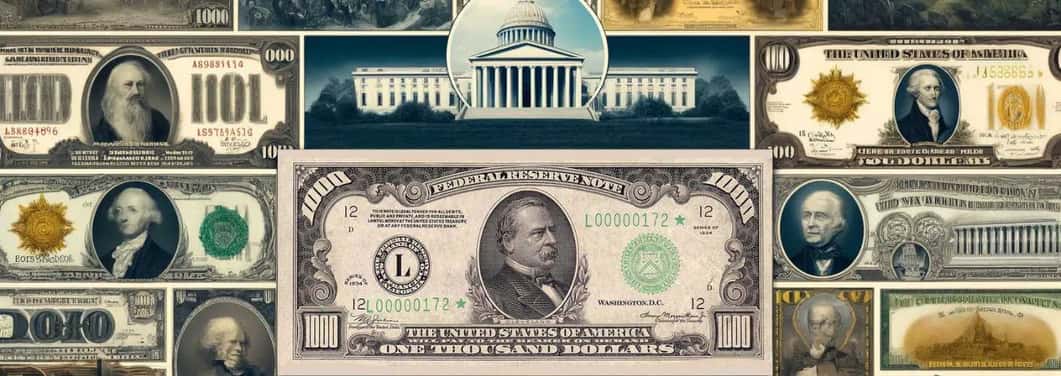
The $1,000 bill, a legendary piece of American currency, has fascinated both collectors and historians. These high-denomination notes, which played a crucial role in large financial transactions, are now valuable collectibles. At Bullion Exchanges, we delve into the intriguing history of the $1,000 bill, its significance, and what makes it a prized possession today.
Origins and Early History
The First $1,000 Bill
The earliest $1,000 bills were issued during the Revolutionary War to help finance the burgeoning nation. However, the more recognizable $1,000 bills we think of today were part of the Series of 1862-1863 during the Civil War, issued as Legal Tender Notes. These early notes were crucial for financing government operations during times of conflict.
The Evolution of the $1,000 Bill
Series 1878 and 1880 Silver Certificates
Silver Certificates issued in the late 19th century were among the first $1,000 bills designed for everyday large transactions. These notes were backed by silver deposits and featured intricate designs, making them visually appealing and historically significant.
Series 1918 Federal Reserve Notes
The Federal Reserve Notes of 1918 marked a significant evolution in the design and use of the $1,000 bill. These notes featured a portrait of Alexander Hamilton on the obverse and an image of the United States Treasury Building on the reverse. They were primarily used for large transactions between Federal Reserve Banks.
Iconic Designs and Features
1934 $1,000 Federal Reserve Note
The 1934 series is one of the most well-known and widely collected $1,000 bills. The $1,000 bill, a legendary artifact of American currency, has captivated the interest of both collectors and historians. The reverse side displays an ornate design typical of the era’s currency. These notes were used mainly for interbank transactions and are highly sought after by collectors today.
1928 $1,000 Gold Certificate
The 1928 $1,000 Gold Certificate is another iconic piece. Unlike other $1,000 bills, these certificates were backed by gold reserves, making them particularly valuable during the gold standard era. These notes featured a distinctive gold seal and serial numbers, along with a portrait of Alexander Hamilton.
Discontinuation and Rarity
End of High-Denomination Bills
In 1969, the U.S. government discontinued all high-denomination bills, such as the $500, $1,000, $5,000, and $10,000 notes, due to their lack of use. The advent of electronic banking and wire transfers rendered these large notes obsolete. Although no longer in circulation today, these high-denomination bills remain legal tender and are highly valued by collectors.
Scarcity and Value
The scarcity of $1,000 bills in the modern era has significantly increased their value. Collectors and investors seek these notes not only for their monetary worth but also for their historical significance and intricate designs. The value of a $1,000 bill can range from a few thousand dollars to over $100,000, depending on its condition, series, and rarity.
Tips for Collecting $1,000 Bills
- Condition: The condition of the bill is paramount. Uncirculated notes in pristine condition command the highest prices.
- Authentication: Ensure the bill is authenticated by reputable sources. Counterfeits are rare but do exist.
- Series and Rarity: Research the specific series and rarity of the bill. Some series are more common than others, impacting their value.
- Storage: Store your bills in a climate-controlled environment, preferably in protective holders to maintain their condition.
Conclusion
The $1,000 bill is more than just a piece of currency; it’s a tangible link to America’s financial history. Whether you’re a seasoned collector or a new enthusiast, understanding the history and significance of these high-denomination notes enhances their value and appeal. At Bullion Exchanges, we celebrate the rich legacy of American currency and offer a range of collectibles to suit every interest.
Explore our collection and add a piece of history to your portfolio today!
Another article that may interest you:
The Enduring Legacy of the $500 Bill: A Rare Numismatic Treasure